

In short
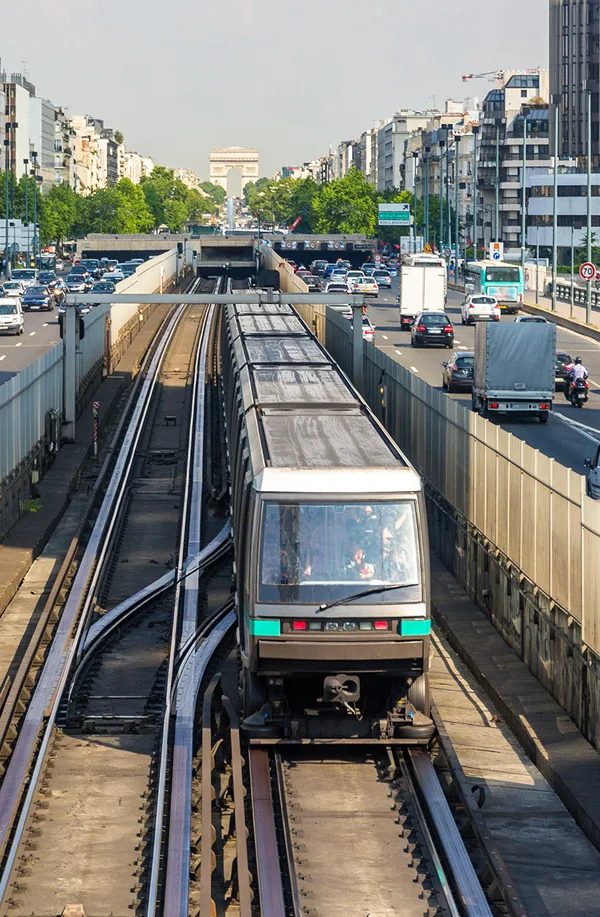
This imposing city district represents the international showcase of Parisian elegance, famous for its legendary tree-lined avenue, its exhibition halls, and theArc de Triomphe. An essential stop for those who wish to be captivated by the grand urban views and historic boutiques.
- A monumental perspective unique in the world.
- Historical symbols of the imperial Napoleonic epic.
- International high-fashion shopping hub
- Home to prestigious national art museums .
☰ Table of Contents
What to know before visiting the Champs-Élysées
The neighborhood extends along a very wide and busy thoroughfare, requiring long walks to fully explore. The area is characterized by a constant flow of visitors, and the prices in the cafes located directly on the main avenue are among the highest in the city.
The strong points
- Photographic perspectives of extraordinary impact.
- Exclusive boutiques of world brands.
- Large pedestrian spaces on the sidewalks.
- Excellent public transport links.
To keep in mind
- Heavy and noisy car traffic.
- Medium-priced and touristy restaurants.
- Few central shaded green spaces.
- Very crowded on weekends.
What to see on Champs-Élysées
The district offers a spectacular transition between the royal gardens of the Place de la Concorde and the geometric solemnity of the Place de l'Étoile.
Arc de Triomphe Not to be missed
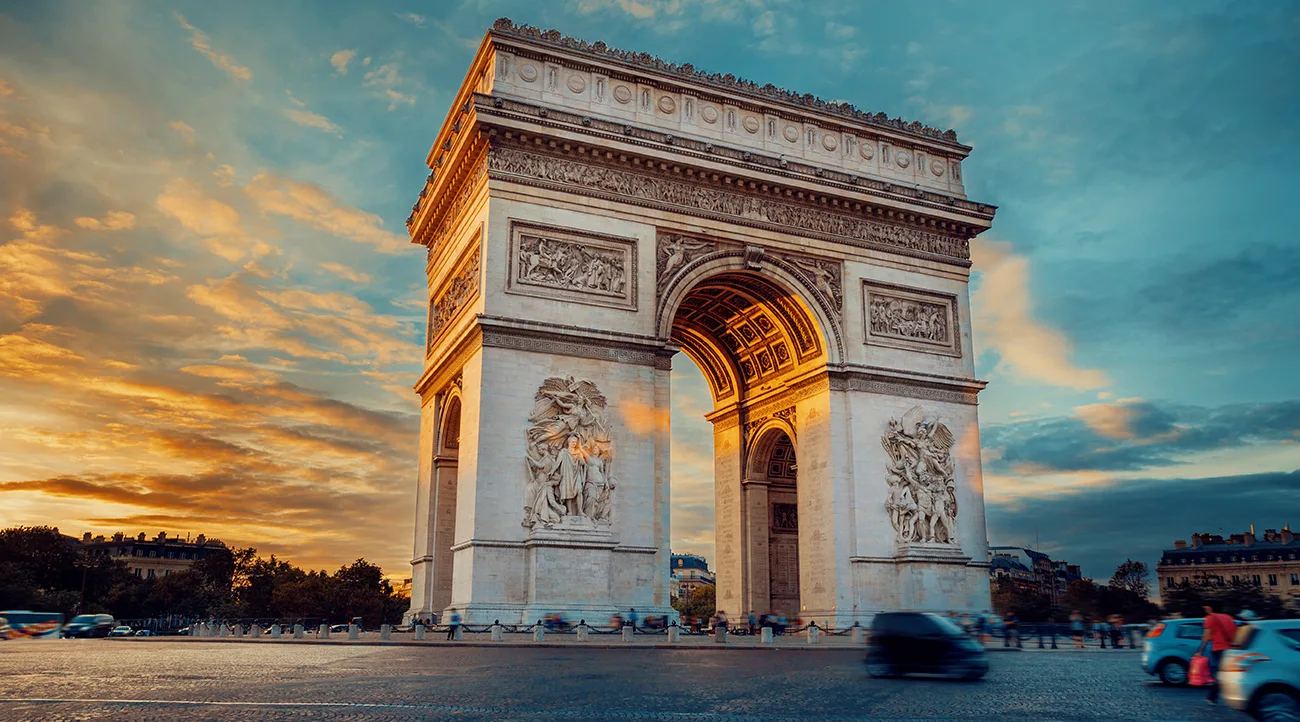
The majestic patriotic monument commissioned by Napoleon which dominates the famous Place de l'Étoile with its panoramic terrace.
Avenue des Champs-Élysées
The two kilometers of tree-lined avenue famous throughout the world that connects the Arc de Triomphe to the Luxor Obelisk.
Grand Palais
The monumental iron and glass exhibition structure built for the 1900 Universal Exhibition, surmounted by the national flag.
Petit Palais
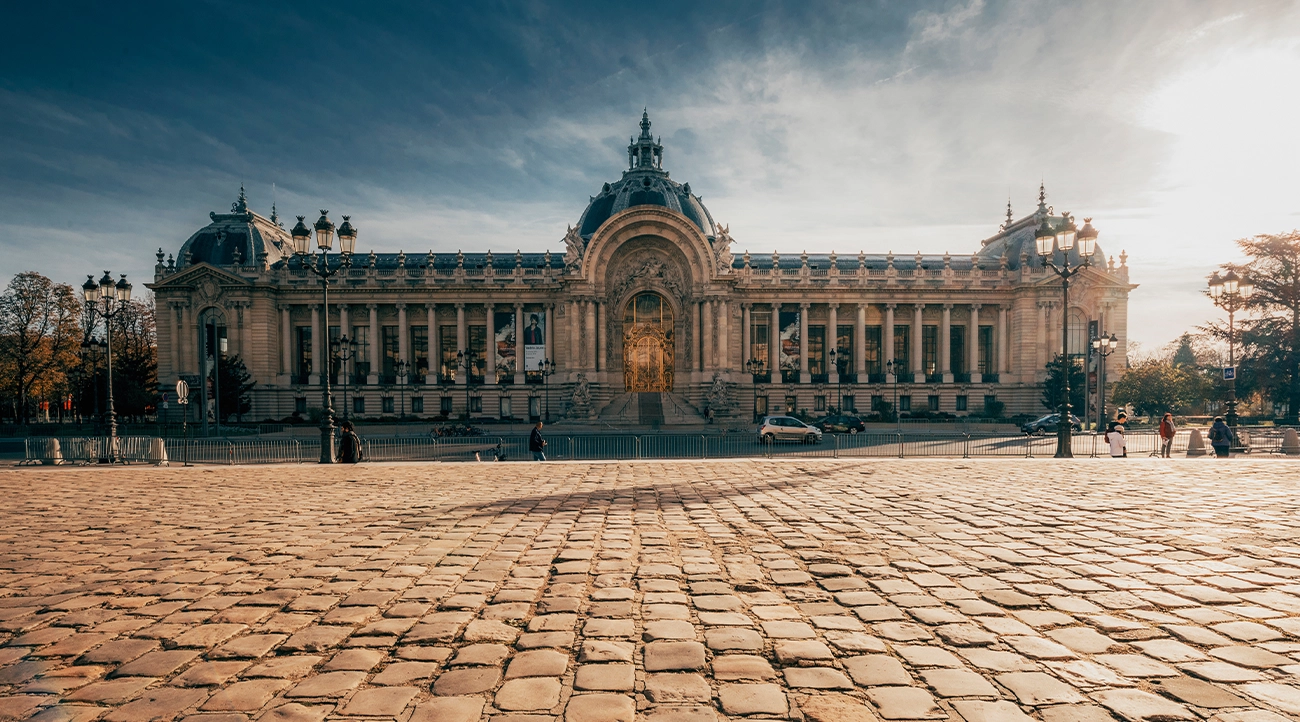
A splendid period building that houses the city's Museum of Fine Arts within an exceptional architectural setting.
Place de la Concorde
The vast octagonal historic square famous for its monumental fountains and ancient Egyptian obelisk.
Théâtre des Champs-Élysées
An Art Deco architectural jewel famous for its rich and prestigious classical music programming.
Avenue Montaigne
The luxurious and elegant side street that hosts the most exclusive high fashion workshops and boutiques on the planet.
Palais de l'Elysée
The sumptuous eighteenth-century palace protected by high gates, the official seat of the Presidency of the French Republic.
Visiting the Champs-Élysées
The discovery of this district focuses mainly on the perspective walk, ideal for lovers of shopping, celebratory architecture and large urban views.
Experiences to do on Champs-Élysées
Admire the spectacular free art collections inside the Petit Palais before indulging in a stroll among the monumental windows of the haute couture brands that light up the avenue or a Segway tour.
Need to know
- The name evokes the Elysian Fields, the paradise of the heroes of Greek mythology.
- The area was originally an expanse of marshes and uninhabited agricultural fields.
- The avenue hosts the annual military parade on July 14th for the national holiday.
- The monumental stained glass window of the Grand Palais is the largest metal structure in Europe.
Practical advice
- Use the pedestrian underpass to reach the Arc de Triomphe.
- Visit the Petit Palais to access its interior garden.
- Avoid places without prices displayed on the outside tables.
- Stroll in the evening to admire the illuminated views.
How to get to Champs-Élysées
The district's central location and importance make it one of the most easily accessible and best-connected points on the city's entire transport network.
Line 1 stops at George V or Franklin D. Roosevelt to find yourself in the exact center of the tree-lined avenue.
Lines 28, 32, 42, 73, 80 and 93 serve all internal road sectors extensively.
You can reach it by walking straight from the Tuileries Gardens and crossing the scenic Place de la Concorde.
Line A stops at Charles de Gaulle - Étoile station, located just under the Arc de Triomphe.
Central point: Pl. Charles de Gaulle, 75008
Official Transport Paris
- Paris Metro Map
- RER tickets and fares
- Taxis in Paris (numbers and alternatives)
History of the Champs-Élysées
Until the mid-seventeenth century, this vast area west of the Tuileries Palace consisted exclusively of muddy marshes, woods, and cultivated vegetable gardens. The urban transformation came in 1667 at the behest of Louis XIV, who commissioned the renowned landscape architect André Le Nôtre to design a long tree-lined avenue that would extend the visual perspective of the royal gardens. This new pedestrian avenue, initially named the Grand Cours, was planted with double rows of elm trees and quickly became a destination for the nobility's carriage rides.
Read moreShow less
Read moreShow less
During the eighteenth century, the street officially took on its current mythological name, and its layout began to urbanize with the construction of sumptuous patrician residences in the surrounding area. It was during the nineteenth century, however, that the neighborhood acquired its monumental and celebratory character. In 1836, work was inaugurated on the Arc de Triomphe, commissioned decades earlier by Napoleon Bonaparte to celebrate the victories of his armies, transforming the end of the avenue into the fulcrum of the city's new star-shaped layout.
The staging of the great Universal Expositions of 1855 and 1900 definitively established the Champs-Élysées as the world center of modernity, luxury, and culture. Exhibition halls were built along the Seine, the first gas lamps were installed, and elegant cafés, theaters, and grand hotels opened. Over the course of the 20th century, the old noble palaces gradually gave way to the headquarters of major banks, avant-garde car dealerships, and haute couture boutiques, transforming the avenue into a universal symbol of French prestige.
Curiosities about Champs-Élysées
The long road axis and its historic buildings are home to engineering records, legendary sporting events and anecdotes linked to international history.
- The golden finish line: since 1975, the avenue has hosted the final catwalk and the finish line of the last stage of the famous Tour de France.
- The air tunnel: in 1919 the aviator Charles Godefroy accomplished the legendary feat of flying under the arch of the Arc de Triomphe in a biplane.
- The eternal flame: the flame of the Unknown Soldier has burned under the Arch since 1923, rekindled every evening at six thirty pm.
- The Palazzo del Cinema: for decades, the avenue has hosted world premieres inside historic monumental cinemas.
- The first boutique: the designer Paul Poiret established the first fashion salons in these streets, detached from the old traditional ateliers.
- The Place du Blood: Place de la Concorde was the main site of the revolutionary guillotine where King Louis XVI was executed.
What to book in and around the Champs-Élysées
Where to sleep in Champs-Élysées
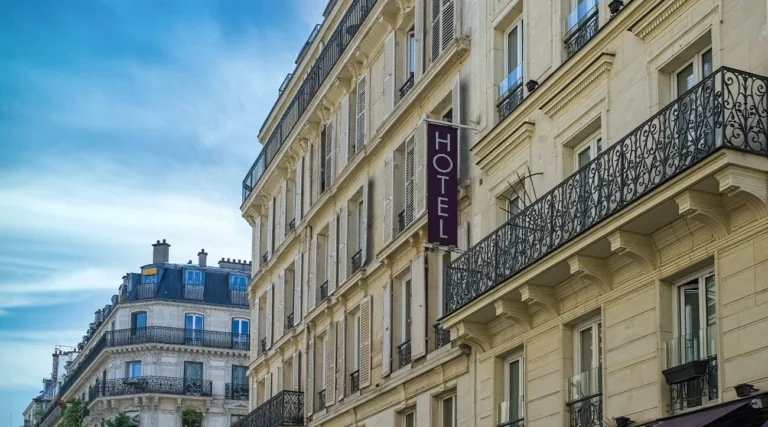
Find the ideal accommodation near the Arc de Triomphe, a trendy area of Paris.
Where to eat on Champs-Élysées
Ladurée Paris Champs-Élysées
The avenue's most famous pastry shop, renowned throughout the world for its exquisite macarons served in imperial-style rooms.
75 Avenue des Champs-ÉlyséesLe Fouquet's
A historic, high-class brasserie with red curtains, a legendary meeting place for the world of Parisian cinema, culture, and politics.
99 Avenue des Champs-ÉlyséesFlora Danica
A refined Scandinavian restaurant offering salmon specialties and Nordic dishes in a beautiful and peaceful internal garden.
142 Avenue des Champs-ÉlyséesFrequently Asked Questions
Where does the Champs-Élysées' worldwide fame come from?
Its fame is due to the perfect combination of the monumental majesty of the Arc de Triomphe and the presence of the most prestigious luxury fashion boutiques.
Which metrostations are best for visiting?
The Franklin D. Roosevelt stop is ideal for starting your walk from the center, while Charles de Gaulle – Étoile takes you directly under the Arc de Triomphe.
Is it possible to access the terrace of the Arc de Triomphe?
Yes, by purchasing an entrance ticket you can climb to the top of the monument to enjoy a spectacular panoramic view of the twelve radial roads.
Are there any free museums in the neighborhood?
Of course, the permanent art collections inside the Petit Palais are accessible completely free of charge to all visitors throughout the year.
How long does it take to walk the entire avenue?
A continuous walk without commercial stops from the Place de la Concorde to the top of the Place de l'Étoile takes about forty minutes.
Are shops along the Champs-Élysées open on Sundays?
Yes, as it is an excellent international tourist area, almost all of the large boutiques and megastores are open seven days a week.
Is the Tomb of the Unknown Soldier outdoors?
Yes, the tomb is located exactly in the centre of the sheltered road base under the great vault of the Arc de Triomphe, freely accessible on foot.
Is this a recommended area for a cheap lunch?
No, the places located on the main avenue have very high prices. To save money, it's better to move to the neighborhood's side streets or internal alleys.
Is the Champs-Élysées suitable for strollers?
Yes, the sidewalks are remarkably wide, smooth, and barrier-free, making walking very comfortable for families.