

In short
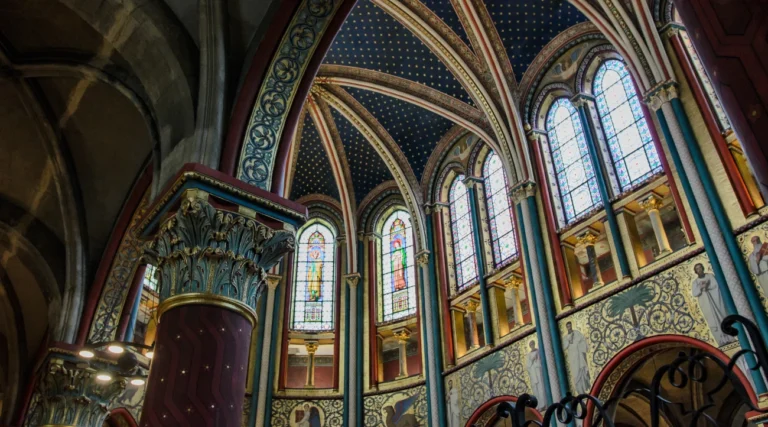
Second in size only to Notre-Dame, the Church of Saint-Sulpice is striking for the grandeur of its interior spaces and the unique history of its construction. Located in the artistic heart of the Left Bank, its unfinished double-loggia façade houses treasures of Parisian art and a historic 18th-century astronomical instrument.
Period: 17th century
Architecture: Jesuit and classical
Function: place of worship and church
Best time: early afternoon
☰ Table of Contents
Opening hours and prices for the Church of Saint-Sulpice
The temple doors remain open continuously from morning until evening, allowing you to easily enter the stage at any time of the day.
Times and masses
-
Everyday 08:00 - 19:45
-
Midweek Masses 7:00, 9:00, 12:05, 18:45
Monday to Friday
-
Masses on Saturday 18:30
Pre-holiday mass
-
Sunday Masses 7:00, 9:00, 11:00, 18:30
Festive Mass
What to see at the Church of Saint-Sulpice
Look for the Parisian frescoes hidden in the side chapels to discover the Parisian power of French painting.
The Chapel of the Angels
Admire the splendid and famous frescoes created by Eugène Delacroix.
The Solar Gnomon
Discover the historic white marble and brass astronomical sundial from 1743.
The Great Pipe Organ Cavaillé-Coll
Witness one of Europe's most majestic and complex musical instruments.

Shell-shaped holy water stoups: An Italian jewel
Look at the two enormous natural shells donated by the Republic of Venice to Louis XV.
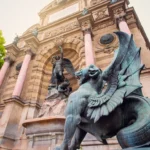
The Fountain of the Four Bishops
Admire the monumental sculptural structure that adorns the center of the external square.
Visiting the Church of Saint-Sulpice
Use these quick tips to better appreciate the historical secrets held in the temple.
Best moment
Early afternoon to observe the light on the sundial.
Crowding
Moderate, ideal for a quiet visit.
Suitable for children
Yes, for large holy water shells.
What not to miss
The Delacroix paintings immediately to the right of the entrance.
Type of experience
Cultural, artistic and linked to historical curiosities.
What to expect
Large spaces, solemn silence and imposing naves.
How to visit the Church of Saint-Sulpice
You can access the monumental building by crossing the large square of the same name, passing through the central portal located under the large lower Doric loggia.
Need to know
- Construction work lasted for over one hundred and thirty years in total.
- The two external bell towers have different heights and styles.
- Architect Giovanni Niccolò Servandoni won the competition for the facade.
- The site hosted the baptisms of illustrious writers such as Charles Baudelaire.
Practical advice
- Keep your voice low to respect the sacredness of the place.
- Look for the brass line on the floor to follow the gnomon's path.
- Take the time to visit the first chapel on the right as you enter.
- Stop in the external square to photograph the monumental fountain.
How to get to the Church of Saint-Sulpice
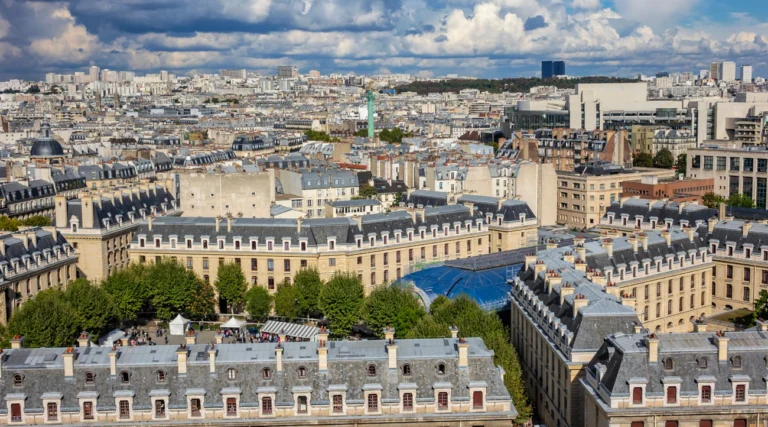
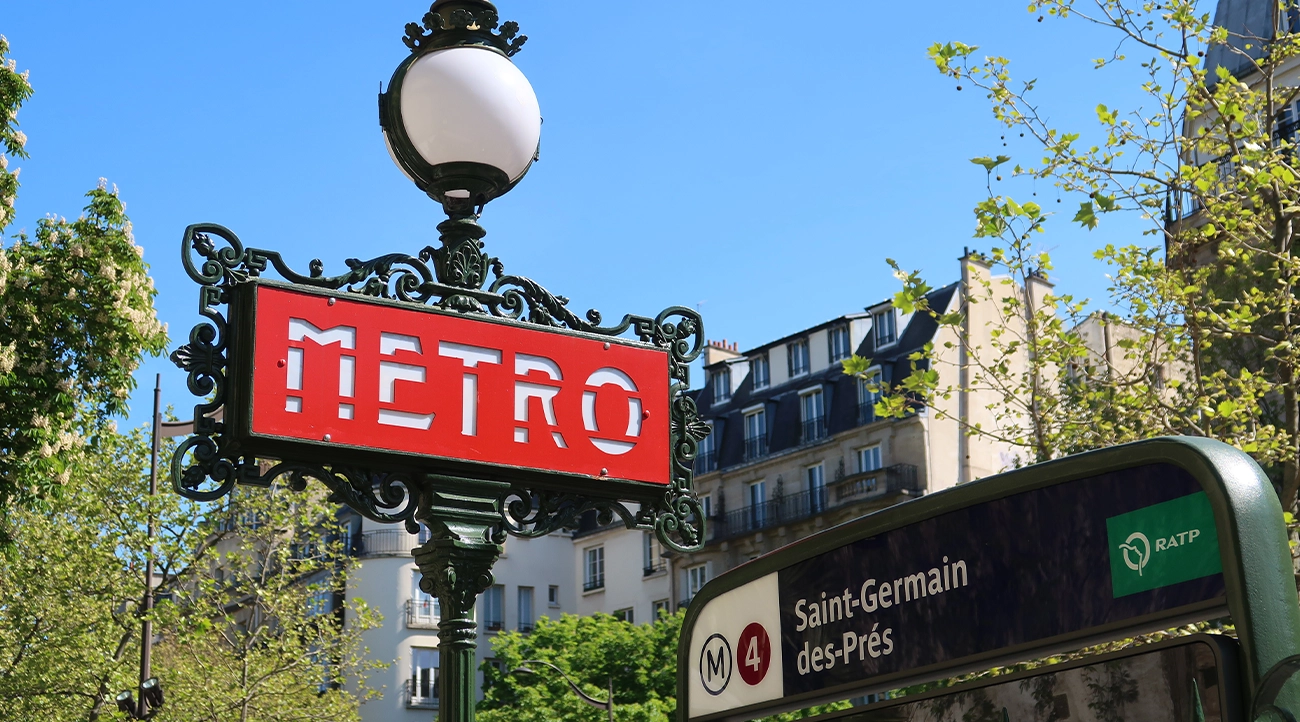
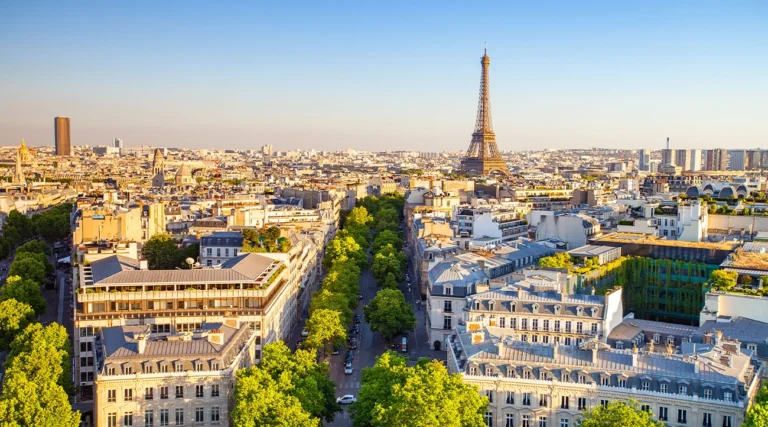
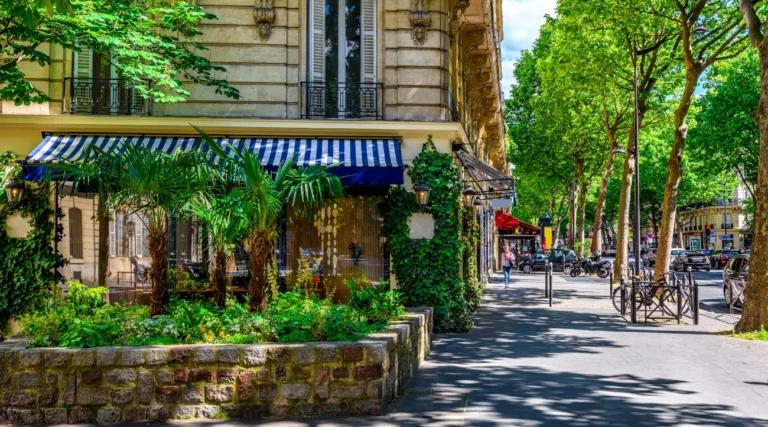
The church is located in the heart of the sixth arrondissement, a short distance from the Luxembourg Gardens and Saint-Germain-des-Prés.
Line 4 stops at the convenient Saint-Sulpice station.
station (RER B) is about a twelve-minute walk southeast.
Lines 63, 70, 84, 86 and 96 stop right in front of the square.
Walk along Rue Bonaparte from Boulevard Saint-Germain.
2 Rue Palatine, 75006
Official Transport Paris
- Paris Metro Map
- RER tickets and fares
- Taxis in Paris (numbers and alternatives)
History of the Church of Saint-Sulpice
The church's origins date back to a small medieval religious building from the twelfth century, intended for the peasants who worked the lands of the powerful Abbey of Saint-Germain-des-Prés. In the seventeenth century, the enormous population growth of the neighborhood prompted the design of a colossal temple.
Read moreShow less
Read moreShow less
The foundation stone was laid in 1646 by Queen Anne of Austria, marking the beginning of a turbulent construction project that was repeatedly halted by lack of funds and civil wars. Various architects succeeded one another in overseeing the interior structural work.
In 1732, the Florentine architect Servandoni won the competition to design the façade, proposing an imposing classical-inspired design inspired by Parisian cathedrals. The artist died before completing the two large towers, leaving them asymmetrical.
During the years of the French Revolution, the temple was desecrated and transformed into a Temple of Victory, becoming the venue for public banquets and political meetings. Much of the original sacred furnishings were dispersed or destroyed in the urban riots.
In the nineteenth century, the church regained its spiritual role and was enriched with the impressive decorations commissioned from Eugène Delacroix, who worked for years in the Chapel of the Angels. Recent structural restorations have strengthened the north tower, restoring the dignity of the entire historic complex.
Curiosities about the Church of Saint-Sulpice
Fascinating anecdotes and scientific oddities enrich the centuries-old memory of this great basilica.
The fake meridian: the brass line on the floor of the astronomical gnomon is used to calculate the equinox and does not represent the Paris Meridian, unlike what is described in famous works of fiction.
The different towers: the north tower was modified by the architect Chalgrin, while the south tower remained unfinished due to lack of state funds.
The giant shells: the marble supports of the holy water stoups at the entrance were sculpted by the famous artist Jean-Baptiste Pigalle.
Wedding parade: the wedding of the famous writer Victor Hugo to Adèle Foucher was celebrated within its historic walls in 1822.
Tickets and tours nearby
Find accommodation near the Church of Saint-Sulpice
If you're looking for accommodation near Saint-Sulpice quickly and easily, check out the map and our selection of hotels in Saint-Germain-des-Prés.
Frequently Asked Questions
Does the astronomical sundial still work today?
Yes, on sunny days the ray of light hits the brass line indicating the solar cycles.
Is it possible to climb the external bell towers?
No, the tower stairs are not accessible to tourist traffic.
Is flash photography permitted when photographing the frescoes?
No, photographs are permitted but only without the use of flash to protect the canvases.
Is the church near the Luxembourg Gardens?
Yes, the Royal Gardens are less than a five-minute walk south.
How long does a full interior tour take?
Generally, about thirty-five minutes are enough to observe the main works.
Are there strict security checks at the entrance?
Quick visual checks of visitors' bags and backpacks are carried out
Are organ concerts held inside the building?
Yes, the historic Cavaillé-Coll instrument is used for international concert series.
Is the facility entirely wheelchair accessible?
Yes, the main entrance has ramps for easy step-free entry .