

Saint-Germain-des-Prés: the oldest church in Paris

A thousand-year-old treasure that has survived centuries of history, where Parisian style blends with a spectacular explosion of 19th-century color in the heart of Paris's most intellectual district.

In short

Table of Contents

Opening hours and prices for the Church of Saint-Germain-des-Prés

Find out how and when to access the nave to enjoy the artistic masterpieces without encountering closed doors.

Times and masses

  • Everyday 08:30 - 20:00

    Monday and Sunday from 9:30 am

  • Midweek Masses 19:00

    Monday to Friday

  • Masses on Saturday 12:15, 19:00

    Pre-holiday mass

  • Sunday Masses 11:00, 19:00

    Sunday Mass, at 5:00 PM in Spanish

What to see at the Church of Saint-Germain-des-Prés

Walk along the aisles to spot ancient medieval columns and monuments dedicated to the nation's great thinkers.

1

The suggestive 12th century bell tower

Admire one of the very few purely Parisian structures surviving in the city.

2

The starry vaults and the restorations

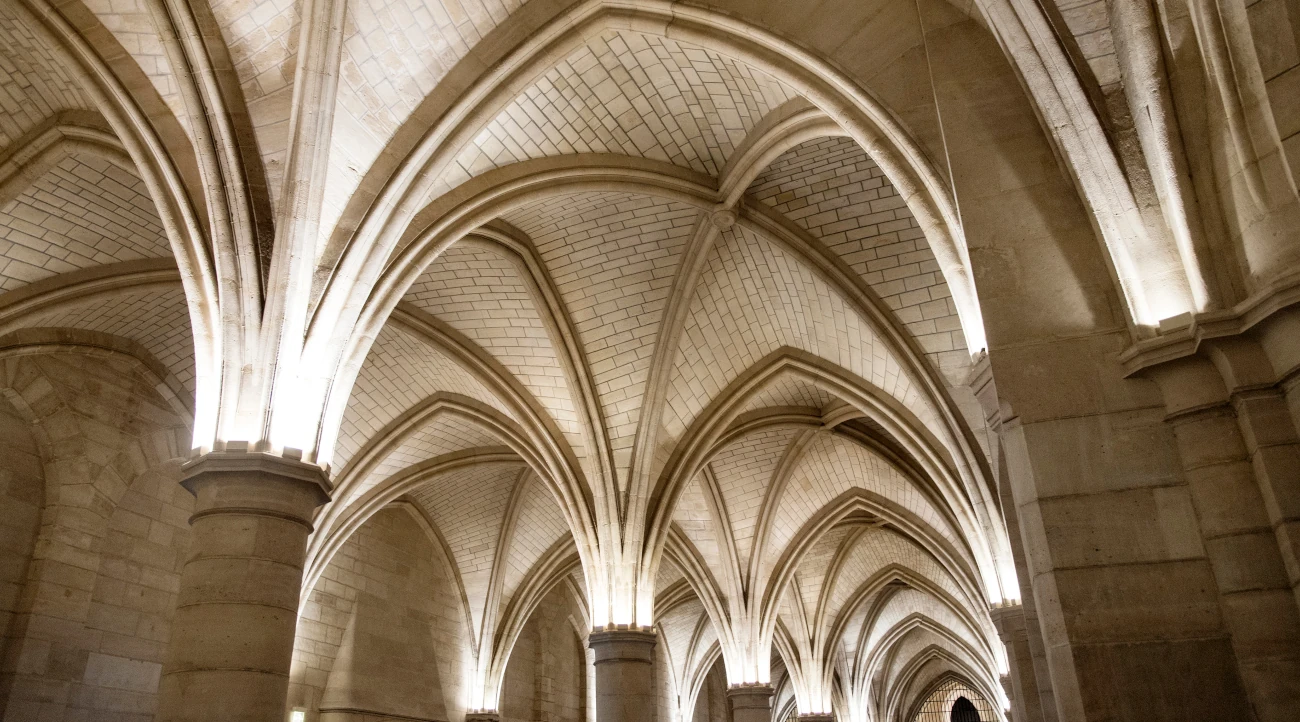
Observe the extraordinary ceiling painted blue and studded with golden stars.

3

The tomb of René Descartes (Descartes)

Look for the sober black tombstone that holds the remains of the famous philosopher of "Cogito ergo sum".

4

The frescoes of Hippolyte Flandrin

Discover the monumental cycle of 19th-century paintings that decorate the walls of the nave.

5

The Chapel of San Sinforiano

Explore the oldest corner of the church, where the 6th-century Merovingian foundations are located.

The visit to the Church of Saint-Germain-des-Prés

Take advantage of these quick practical notes to move around the monument while respecting the atmosphere of the place.

How to visit the Church of Saint-Germain-des-Prés

Access to the church is via the small tree-lined square that looks directly onto Boulevard Saint-Germain, in the Saint Germain des Prés.

Powered by GetYourGuide

Need to know

  • The original abbey was so wealthy that it owned much of the land on the left bank.
  • The Benedictine monks of this site created one of the most important libraries in Europe.
  • During the Revolution the church was transformed into a gunpowder factory.
  • A huge explosion in 1794 destroyed much of the cloister and monastic buildings.

Practical advice

  • Watch out for the weather-worn steps near the ambulatory chapels.
  • Turn off your phone and avoid talking loudly; locals insist on silence.
  • If you visit the church in winter, wrap up warm: the thick medieval walls keep the cold out.
  • Look up at the column capitals: some are originals from the twelfth century.

How to get to the Church of Saint-Germain-des-Prés

The church is located in the heart of the sixth arrondissement, at the intersection of Boulevard Saint-Germain and Rue Bonaparte.

Metro

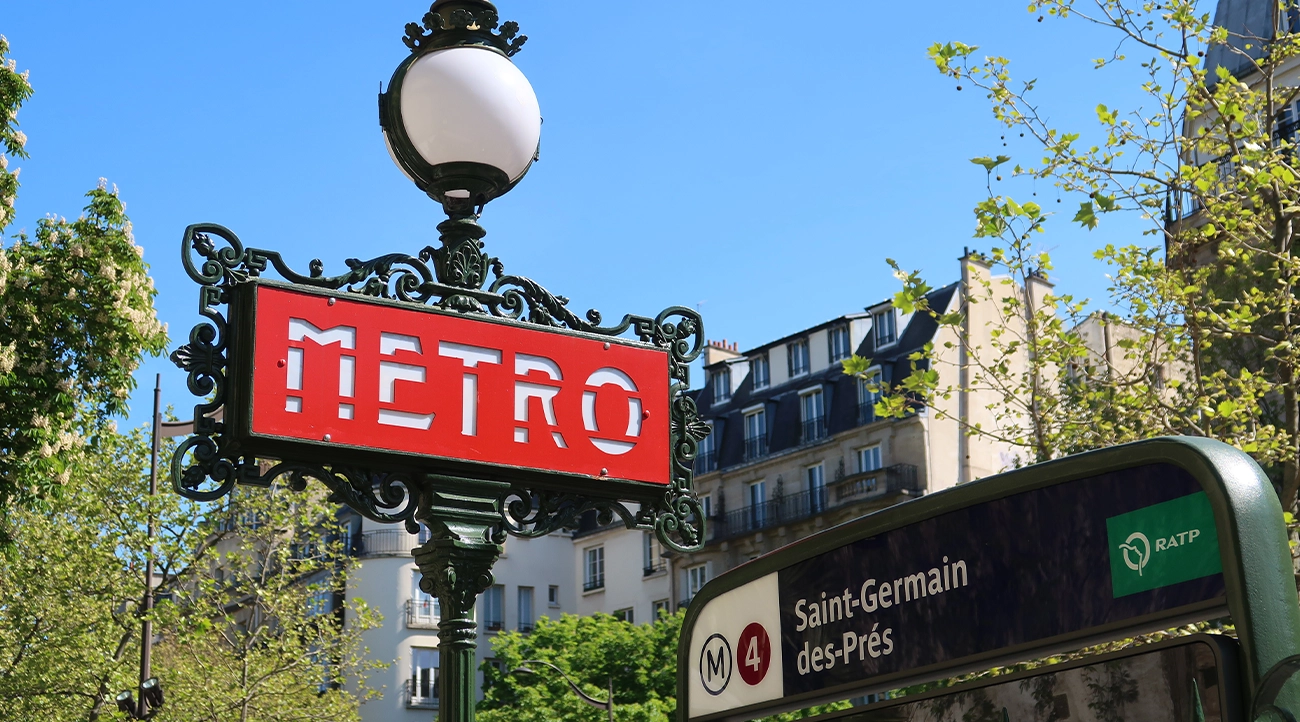
Line 4 stops at the Saint-Germain-des-Prés station, right in front of the entrance. Alternatively, line 10 (Mabillon station) is a three-minute walk away.

Rer

The Saint-Michel Notre-Dame station (RER B and C) is about a twelve-minute walk east along the boulevard.

Bus

Lines 39, 63, 70, 86 and 95 stop exactly in front of the church square.

Standing

From the Louvre Museum, cross the Pont des Arts and walk south along Rue de Seine for ten minutes.

3 Pl. Saint-Germain des Prés, 75006

History of the Church of Saint-Germain-des-Prés

The history of this church coincides with the very foundation of Paris. In 558, the Merovingian king Childebert I built a basilica to house a precious relic of the True Cross and the tunic of Saint Vincent. Upon his death, the king was buried here, inaugurating the first royal necropolis in French history. In 576, after the death of Bishop Germain, the church took his name.

During the ninth century, the abbey became a favorite target of Viking pirates, who sailed up the Seine in their longships. The monastic complex was sacked and burned four times, prompting the monks to rebuild the entire temple in stone, equipping it with mighty fortifications and a deep moat fed by the river's waters.

During the Middle Ages, the Abbey of Saint-Germain-des-Prés became a true autonomous town outside the walls of Paris. The Benedictine monks answered not to the bishop but directly to the Pope, managing their own markets, fairs, and courts. The monastery became an international cultural beacon for manuscript copying and theological studies.

Decline came with the French Revolution: the abbey was suppressed, the monks expelled, and the immense library burned. The church was converted into a nitrate warehouse for army munitions. In 1794, a colossal gunpowder fire destroyed the refectory and the magnificent Gothic cloisters, leaving only the main church standing.

In the mid-19th century, the architect Baltard saved the structure from total collapse. The painter Hippolyte Flandrin was commissioned to completely redecorate the interior, creating a golden pictorial cycle inspired by Byzantine art. Today, the church is the spiritual heart of a neighborhood world-famous for philosophy and literature.

Curiosities about the Church of Saint-Germain-des-Prés

Saint-Germain-des-Prés Church Tickets and Tours

Find accommodation near the Church of Saint-Germain-des-Prés

The neighborhood named after the church is a very important part of Paris, well-connected both on foot and by metro. Find your ideal accommodation among the best places to stay in the area.

Frequently Asked Questions

Is there a strict dress code for entry?

Formal attire isn't required, but since this is a sacred place, shoulders must be covered and shorts or a beach tank top are not permitted. Hats and caps must always be removed upon entry.

Yes, taking photographs for personal remembrance is permitted throughout the church, but the use of flash or tripods is strictly prohibited so as not to ruin the paintings and disturb those praying.

Strollers are welcome and can be carried freely. However, trolleys and large travel bags are not permitted for safety reasons and due to the limited space between counters. There is no on-site luggage storage. To best plan a trip to Paris with children, read our guide.

The church has very thick medieval walls that keep the interior very cool. In winter, the temperature inside can be quite cold, so it's advisable to keep your coat on during the tour.

Yes, there are several spaces dedicated to tealights and candles near the side chapels. You can leave a free-will offering in the designated metal containers.

It takes about ten to twelve minutes of a relaxing walk. Simply cross the river via the Pont des Arts pedestrian bridge and walk down Rue Bonaparte, and you'll arrive at the Louvre.

Yes, the main entrance under the bell tower has a flat ramp that allows you to easily climb the steps. The central nave is completely level.

Yes, free brochures in several languages, including Italian, explaining the history of the restoration and a map of the tombs are often available at the information desk near the entrance

Explore Paris with these tickets and tours

You might also be interested in...

The journey continues…

External courtyard of the Rodin Museum
Panorama of Paris with the Eiffel Tower and balconies of hotels and buildings
Aerial view of Paris and the Seine
Outdoor garden of the Petit Palais
Internal courtyard of the Carnavalet Museum
Typical Parisian stairs leading to the Metro

Activities and tours you can't miss

Share:
Previous
Notre-Dame: the queen of Parisian Gothic
Next
Saint-Eustache: Art and Architecture in the Heart of Paris