

Louvre Museum: What to See and Tips for Visiting

The most famous, largest, and most visited museum on the planet, an extraordinary treasure trove of beauty that preserves millennia of human creativity within a monumental royal palace.

In short

Table of Contents

Louvre opening hours and prices

Plan your entry by checking up-to-date details on museum time slots and ticket.

Opening hours

  • Mon, Thu, Sat, Sun 09:00 - 18:00

    Last admission 1 hour before

  • Wed, Fri 09:00 - 21:00

    Last admission 1 hour before

  • Ordinary closures

    Every Tuesday, January 1st, May 1st and December 25th

Prices

  • EU adults from €22
  • NON-EU Adults 32€
  • Free entry Free

    Minors under 18, disabled people with companion, EU Under 26s

What to see at the Louvre

Let yourself be guided through the monumental rooms to discover the secrets of the most sought-after and admired immortal masterpieces in the world.

1

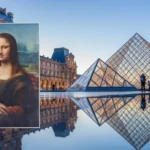
Leonardo da Vinci's Mona Lisa Most requested

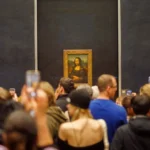
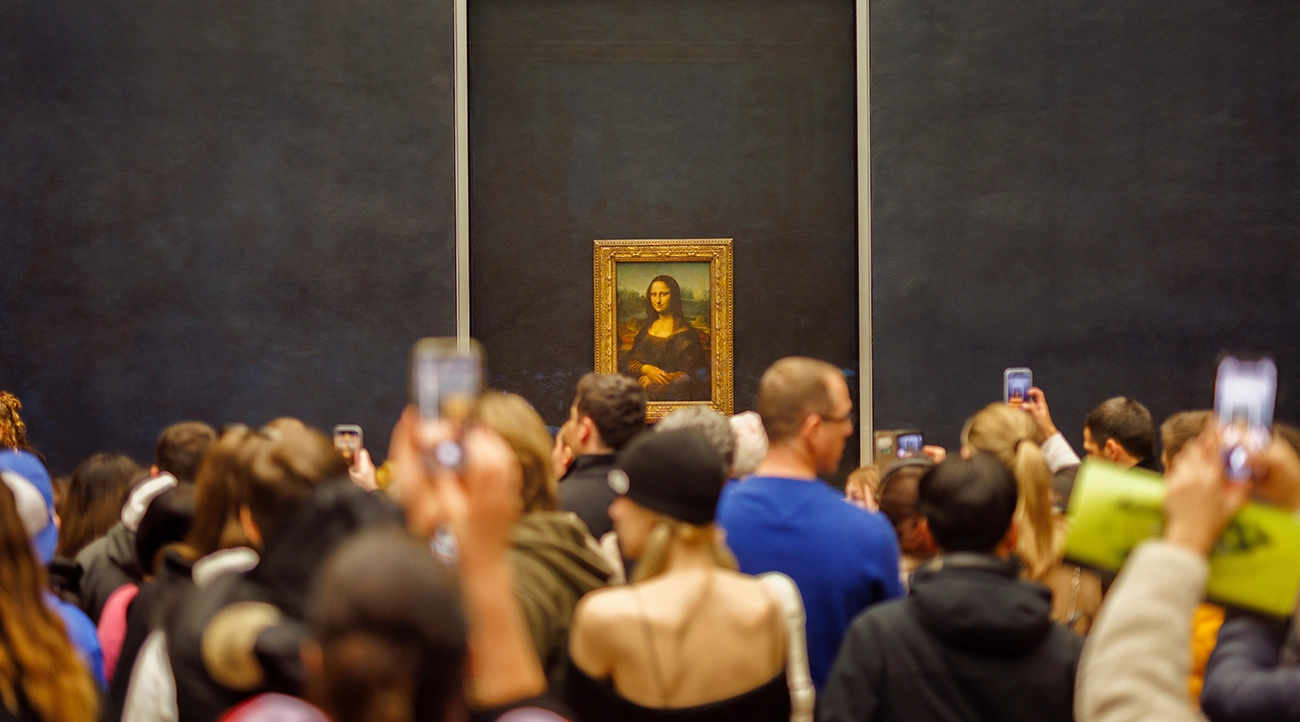
Admire the world's most famous painting, protected by special glass in the Hall of Estates. Don't forget the other paintings in the room, such as Veronese's Wedding at Cana.

2

The Venus de Milo

Observe the sublime and eternal perfection of Greek sculpture from the second century BC.

3

The Nike of Samothrace

Let yourself be struck by the dramatic momentum of the monumental winged statue placed on the Daru staircase.

4

The Italian Renaissance and the Northern Masters

Explore the great galleries that house absolute masterpieces such as Leonardo da Vinci's Virgin of the Rocks, Antonio Canova's Cupid and Psyche, Georges de La Tour's The Cardsharp and Rembrandt's meticulous portraits.

5

The large formats of French painting

Admire the colossal walls displaying impressive canvases including The Raft of the Medusa by Théodore Géricault, Liberty Leading the People by Eugène Delacroix, and The Coronation of Napoleon by Jacques-Louis David.

The visit to the Louvre

Use this practical summary to understand how to manage people flows and avoid delays between rooms.

How to visit the Louvre

You can enter the complex by passing through security (not metal detectors) under the Glass Pyramid if you have already booked a guided tour. Once in the underground atrium (Hall Napoléon), divide your route between the three large symmetrical wings called Denon, Sully, and Richelieu.

Powered by GetYourGuide

Need to know

  • The palace was built in the twelfth century as a defensive fortress commissioned by King Philip Augustus.
  • The museum exhibits approximately thirty-five thousand works of art, which represent only a small portion of the total holdings.
  • In 1911, the Mona Lisa was sensationally stolen by an Italian house painter and found two years later.
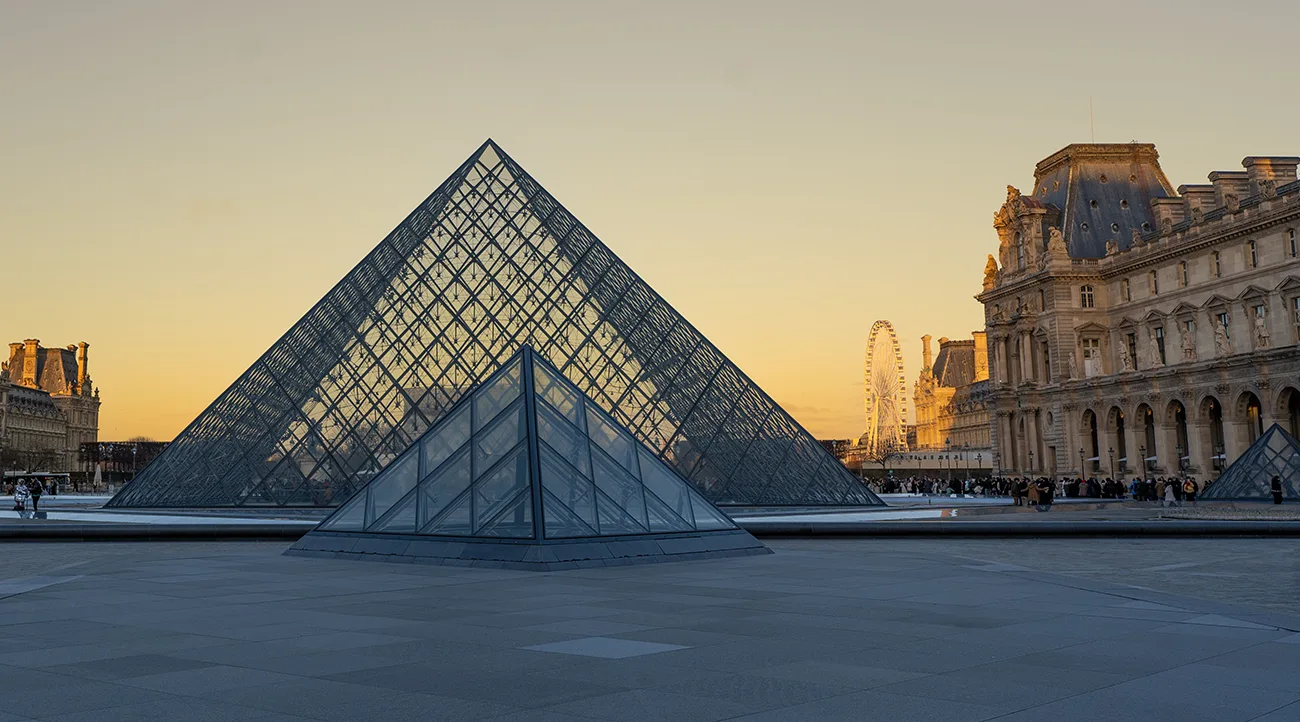
  • The Glass Pyramid, designed by architect Ioh Ming Pei, was inaugurated in 1989 amidst much controversy.

Practical advice

  • Pick up a free paper map at the entrance or download the digital map to your phone before you start.
  • Avoid the Pyramid entrance if you notice a long queue and try using the underground access of the Carrousel du Louvre.
  • Wear the most comfortable sneakers you own: you'll be walking several miles down the halls.
  • Bring a bottle of water with you and take breaks on the benches located along the ambulatory of the main rooms.

How to get to the Louvre

The museum occupies an immense area on the right bank of the Seine, in the geographical center of the first arrondissement.

Metro

Lines 1 and 7 stop at the Palais Royal - Musée du Louvre station, which has direct underground access.

Rer

Châtelet - Les Halles station (RER A, B and D) is about a ten-minute walk west.

Bus

Lines 21, 27, 39, 68, 69, 72 and 95 stop right in front of the Pyramid or on the riverbanks.

Standing

Cross the Pont des Arts from the left bank or walk along Rue de Rivoli from Place de la Concorde.

Louvre Pyramid 75001

History of the Louvre

The history of the Louvre is closely tied to that of power in France. In 1190, King Philip Augustus built a fortified castle to protect western Paris from Norman and English raids. In the fourteenth century, King Charles V transformed the fortress into a splendid royal residence, but it was Francis I, during the Renaissance, who ordered the demolition of the old medieval keep to build a grandiose palace on the Italian model, and began collecting the first paintings by masters such as Leonardo da Vinci.

Each successive sovereign chose to expand the structure by adding wings, galleries, and pavilions. Louis XIV brought a monumental twist with the construction of the eastern colonnade, but when in 1682 he decided to move the entire royal court to the new and immense Palace of Versailles, the Louvre lost its central function. The building became the seat of art academies and a residence for artists, hosting the first periodic public exhibitions known as the famous "Salons."

The turning point came with the French Revolution. In 1793, the National Assembly decreed the palace's transformation into a state-owned public museum, allowing the public to admire collections previously reserved exclusively for the monarchy and the church. During Napoleon Bonaparte's military campaigns, the museum was enriched with thousands of works of art requisitioned from across Europe, temporarily taking the name of Musée Napoléon, before the Congress of Vienna forced the return of much of the stolen goods.

During the nineteenth and twentieth centuries, the complex took on its current form with the completion of the side wings and the definitive removal of the ministerial offices. In 1981, President François Mitterrand launched the "Grand Louvre" project, which led to the complete restoration of the spaces and the construction of the famous transparent pyramid in the main courtyard. Today, the museum combines the historicity of its baroque facades with the efficiency of a contemporary cultural center.

Curiosities about the Louvre

Louvre Tickets and Tours

Find accommodation near the Louvre

Frequently Asked Questions

Can I bring my travel backpack or do I have to leave it in a luggage storage room?

Small backpacks and personal bags are admitted after being scanned at the metal detector. However, it is strictly forbidden to enter with hiking backpacks, trolleys, suitcases, or large bags exceeding 55 x 35 centimeters. The museum offers a free self-service checkroom under the pyramid where you can deposit small items, but it does not accept bulky luggage.

Unlike churches, the Louvre does not enforce strict religious dress codes. You are welcome to enter in shorts, open-toed shoes, a tank top, or casual sportswear. The only formal rule is that you are not allowed to walk around barefoot or shirtless in the exhibition galleries.

Reservations guarantee access within a thirty-minute grace after the time indicated on the ticket. If you arrive later than this, you lose priority entry and the staff will place you in the queue for visitors without reservations, subject to the maximum capacity of the day rooms, with the real risk of being denied entry.

Yes, photography and videography for strictly personal use are permitted in almost all rooms of the museum, including the room housing the Mona Lisa. However, the use of flash, tripods, stabilizers, or selfie sticks remains strictly prohibited for safety reasons and to protect the conservation of the paintings' pigments.

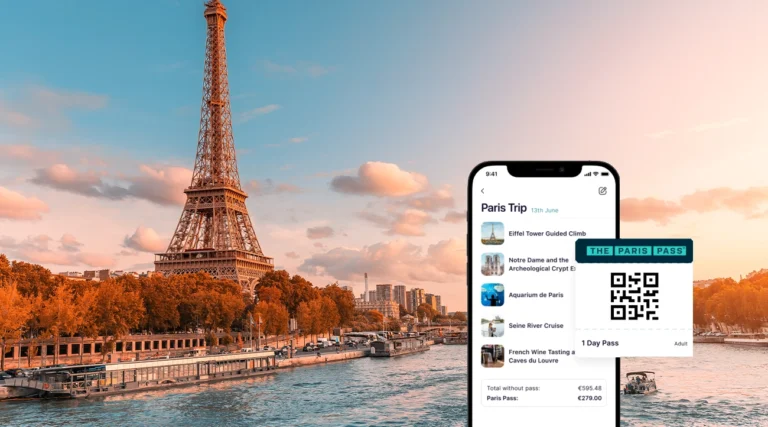
No, the Louvre ticket is strictly a single entry. Once you pass through the turnstiles in one of the three wings of the palace and exit themetro , the ticket is invalidated by the electronic systems and cannot be used to re-enter the exhibition halls. If you're looking to save money, consider purchasing a Paris Pass.

The only way to observe the painting with a shred of tranquility is to book the very first time slot in the morning (9am) and rush directly to the Denon wing before the organized groups arrive, or take advantage of the final hours of the evening openings on Fridays after 7.30pm.

Yes, the entire museum has been upgraded by removing the main architectural barriers. Beneath the pyramid is a futuristic open cylindrical elevator, and along the wings are ramps, lifting platforms, and internal elevators. Manual wheelchairs are also available for free rental in the central atrium upon presentation of an ID.

Yes, within the perimetermetro the galleries are several historic eateries, including the famous Café Mollien (in the Denon Wing, featuring a splendid summer terrace) and Café Richelieu. Furthermore, the atrium below the Pyramid connects directly to the Carrousel du Louvre shopping arcade, full of fast food outlets and international restaurants.

Tickets and Tours for Other Paris Attractions

You might also be interested in...

The journey continues…

Hotel with sign in Paris
Restaurant on the Champs Elysée in the evening
Aerial view of Paris and the Seine
Petit Palais facade at sunset
View from above of the Arc de Triomphe
Paris MetroPolitana

Activities and tours you can't miss

Share:
Previous
Musée d'Orsay: Must-See Works and Useful Information
Next
Notre-Dame: the queen of Parisian Gothic