

Musée de l'Orangerie: Where to See Monet's Water Lilies

An extraordinary art gallery nestled on the edge of the Tuileries Gardens, famous throughout the world for the almost spiritual atmosphere of its oval rooms dedicated to Claude Monet's masterpieces.

In short

Table of Contents

Orangerie Museum opening hours and prices

Plan your entry by checking up-to-date details on museum time slots and ticket.

Opening hours

  • Every day except Tuesday 09:00 - 18:00

    Last admission 45 minutes before, closes at 11pm on Thursdays

  • Ordinary closures

    Every Tuesday, May 1st, December 25th, and the morning of July 14th

Prices

  • Full price from €11
  • Reduced 8,50€

    18-25 non-EU

  • Free entry Free

    Minors under 18, disabled people with companion, EU Under 26s

What to see at the Musée de l'Orangerie

Let yourself be guided through the monumental rooms to discover the secrets of the most sought-after immortal masterpieces.

1

Water Lilies Most requested

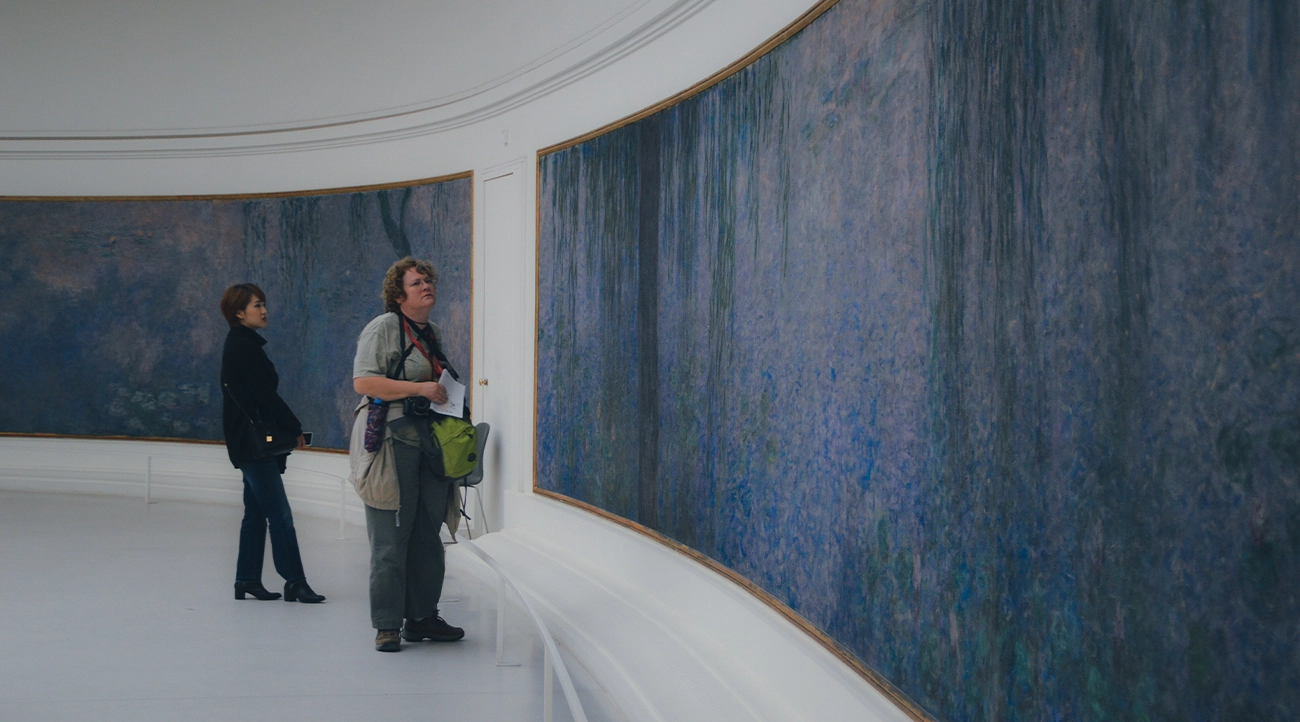
Admire the eight gigantic mural panels arranged in two mirrored oval rooms.

2

Modigliani's Portrait of Paul Guillaume

Observe the famous painting by the Italian master dedicated to his Parisian gallery owner.

3

The Bathers by Pablo Picasso

Let yourself be struck by the solid and monumental forms of the figures painted in the 1920s.

4

The Jean Walter and Paul Guillaume Collection Not to be missed

Explore the lower floor which houses exceptional Impressionist and Post-Impressionist paintings by Pierre-Auguste Renoir, Paul Cézanne, Henri Rousseau le Douanier and Chaim Soutine.

5

The masterpieces of André Derain and Matisse

Discover the Parisian liveliness of the rooms dedicated to Fauvism, full of still lifes, Provençal landscapes and studies of human figures.

Visit to the Orangerie Museum

Useful information to understand how to manage crowd flow and avoid delays between rooms.

How to visit the Musée de l'Orangerie

You enter through the entrance portal located on the western side of the Tuileries Gardens. Begin your tour by admiring the two Water Lilies rooms on the ground floor, then descend the stairs to explore the 20th-century collections.

Need to know

  • The building was built to protect the orange trees from the harsh winter weather.
  • Claude Monet personally chose the oval shape of the large rooms.
  • The panels were donated to the State the day after the armistice.
  • During the Second World War the walls suffered artillery damage.

Practical advice

  • Book your time slot online well in advance.
  • Don't use the flash to avoid damaging the canvas.
  • Visit the internal bookshop, it is full of beautiful artistic gadgets.
  • Visit in broad daylight to maximize natural light and minimize artificial light.

How to get to the Musée de l'Orangerie

The gallery occupies the southwestern tip of the central Tuileries Gardens.

Metro

Lines 1, 8 and 12 stop at Concorde station.

Rer

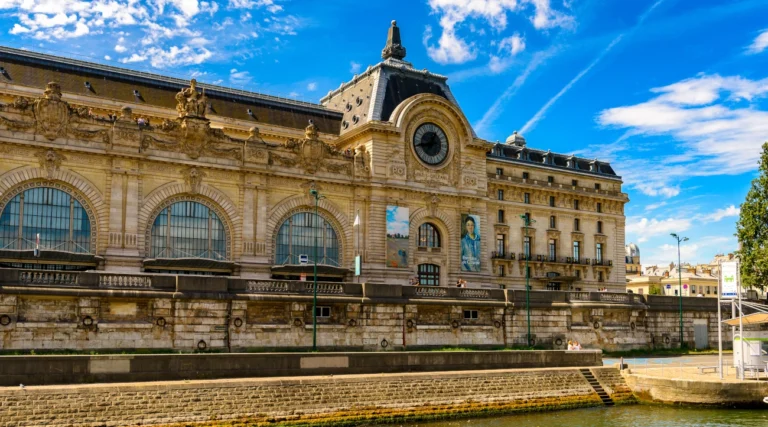
Line C serves the Musée d'Orsay underground station, across the bridge.

Bus

Lines 42, 45, 72, 73, 84 and 94 stop nearby.

Standing

Walk along the tree-lined avenues of the Tuileries starting from the Louvre.

Tuileries Garden, 75001

History of the Orangerie Museum

In 1852, architect Firmin Bourgeois completed construction of a large greenhouse on the riverbank, designed to house the orange trees from the royal gardens of the Tuileries Palace during the colder months. The building featured a southern façade entirely made of glass to capture the sun's heat and a simple structure. With the fall of the Empire, the greenhouse was temporarily used as a warehouse, a state banquet hall, and even a space for flower competitions.

The artistic turning point came at the end of the First World War, when the painter Claude Monet decided to donate to the French nation a monumental series of panels dedicated to the water lilies in his garden, as a symbol of peace and reconciliation. Prime Minister Georges Clemenceau proposed installing this immense work inside the now-empty greenhouse, entrusting the renovation work to architect Camille Lefèvre.

Monet worked closely with the designers until his death, defining every detail of the exhibition space: the oval floor plan to convey the idea of ​​an infinite circle, the bare white walls to avoid distracting the eye, and the natural lighting from above to showcase the true changes in color. The complex was officially inaugurated in 1927, a few months after the death of the great master of Impressionism.

In the 1960s, the museum doubled in importance thanks to the acquisitionof the extraordinary Jean Walter and Paul Guillaume collection, which brought masterpieces of the early twentieth-century avant-garde to Paris. A major restoration completed in 2006 eliminated the old internal structures, restoring the oval rooms to their original natural sunlight, exactly as Monet had dreamed.

Curiosities about the Musée de l'Orangerie

Orangerie Museum Tickets and Tours

Find accommodation near the Musée de l'Orangerie

The Orangerie Museum is located just steps from the Concorde station, making it an excellent option for staying near the Metro.

Frequently Asked Questions

Can you observe all the water lilies while sitting in the center of the room?

Yes, the oval architecture and the large central benches were designed specifically to allow you to admire the entire pictorial cycle from a 360-degree angle without having to continually get up.

Yes, the glass ceiling lets in real sunlight. This means you'll see the colors of the canvases change dramatically whether you visit the museum on a clear day or in the rain.

No, they are two separate tickets, but on the website you can find a special combined pass that allows you to visit both museums while saving on the final price.

Yes, the museum accepts the city pass, but even in this case you must still book your time slot for free on the official portal to be able to pass through security at the door.

No, the lower rooms house works by Cézanne, Renoir, Picasso and Modigliani, while Van Gogh's paintings are all in the Musée d'Orsay, on the opposite bank of the river.

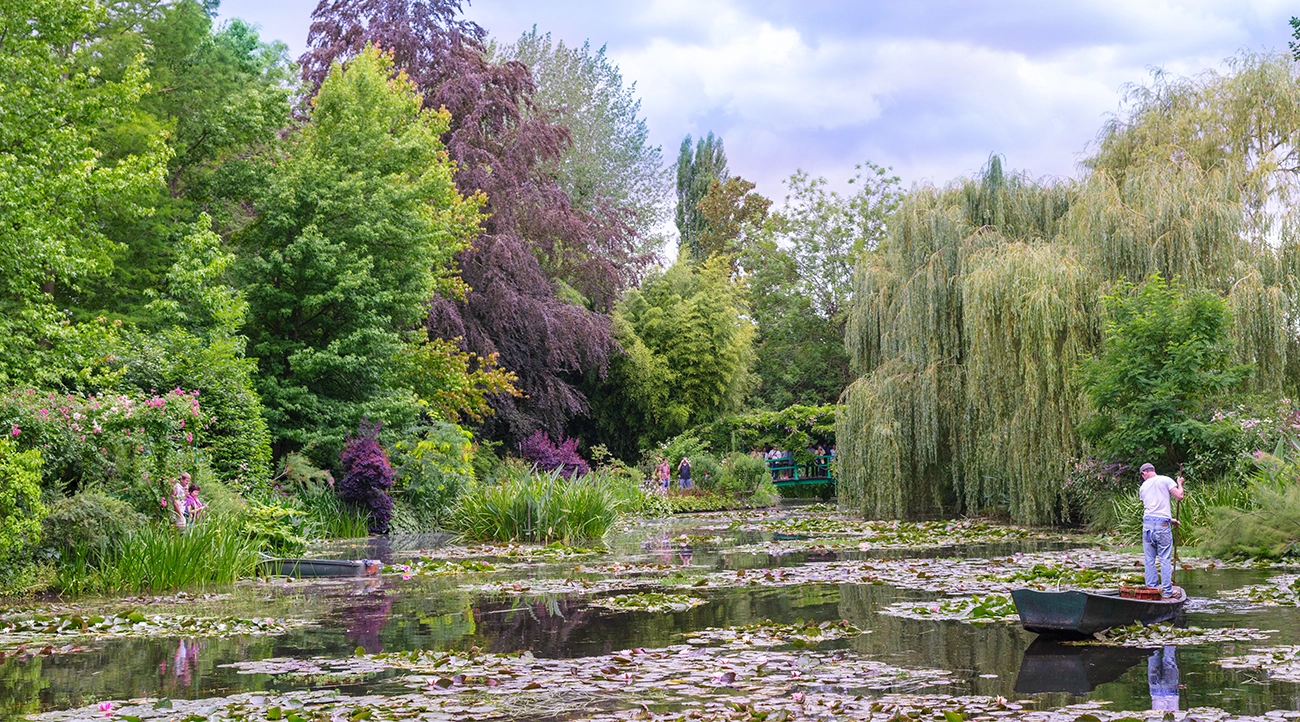
No, it's strictly forbidden to approach beyond the black line drawn on the floor. The canvases have no protective glass, and even the slightest skin contact could damage the historic pigments. If you're a Monet enthusiast, check out the tour of his house in Giverny (including travel from Paris).

Today the greenhouse no longer houses plants inside, but large historic pots containing citrus trees are still placed on the outside square and along the avenues of the Tuileries during the warm months.

Yes, personal videos are allowed, but you must move very calmly so as not to disturb the peace and quiet that visitors seek within this sacred space of art.

Tickets and Tours for Paris' Top Attractions

You might also be interested in...

The journey continues…

Overview of the Luxembourg Gardens
Aerial view of the Montparnasse Cemetery
Stained glass windows of Saint Germaine des Prés
View from above of the Arc de Triomphe
Bois de Boulogne and its large lake
View of the fountain in Place des Volgi in the Marais district

Activities and tours you can't miss

Share:
Previous
Picasso Museum: works and useful information for your visit
Next
Musée Rodin: the museum dedicated to the French sculptor