
















































Paris Metro : Lines, Tickets, Maps, and Helpful Tips

Whether you're visiting the Eiffel Tower, the Louvre, or Montmartre, the metro is often the fastest way to get around the city.

In short

Table of Contents

Things to know about the Paris metro

The Paris metro is one of the most convenient ways to get around the city, but there are some peculiarities it's helpful to know before you begin. Some stations are very large, some lines operate differently, and it's not always easy to find your way around the system the first time you use it. Knowing these details can make your journeys easier and save you time.

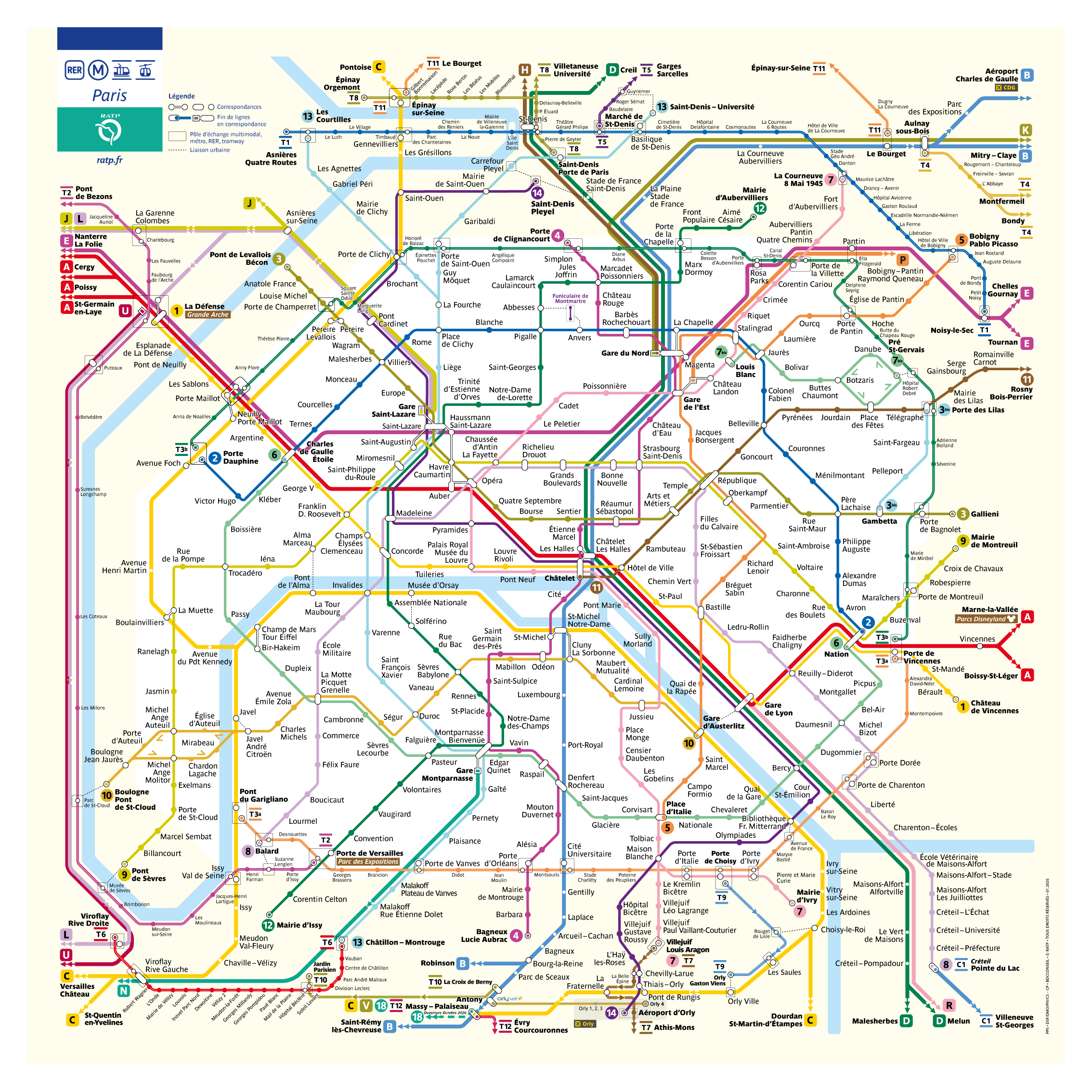
Paris Metro Map

The Paris metro network comprises 16 lines and over 300 stations throughout the city. Consult the map to quickly locate the lines connecting the main tourist attractions.

Quick tip

If this is your first visit to Paris, locate the stations serving the Eiffel Tower, Louvre, Notre-Dame, and Montmartre on the map. Many of the most common tourist routes pass through these areas.

Download the official map

Official RATP map of the Paris Metro, RER and Tram network.

High-resolution PDF format

Ideal for printing or offline viewing

Always updated

Official RATP Edition

Complete with legend

All Metro, RER and Tram lines

Official source: RATP Paris • All rights reserved

How to use the map

Find your departure station

Follow the color of the line

Count the stops for your route

Plan your trips

The most useful lines for tourists

Not all metro lines are equally useful for those visiting Paris. Some directly connect many of the main attractions and can become your best allies during your stay.

Which ticket should I choose?

The Paris metro offers several options for tourists and residents. The choice depends primarily on the length of your stay and the number of trips you plan to make.

Quick tip

For most visitors spending 2 to 4 days in the city, Navigo Easy is often the simplest and most practical solution for using metro, buses and trams.

The most popular tourist passes in Paris

Many tourists choose to combine transportation with visits to the city's main attractions. These passes provide access to the city's most popular museums, monuments, and experiences.

Powered by GetYourGuide

Need to know

  • The Paris metro has 16 lines and over 300 stations.
  • The lines are recognizable by number and color.
  • Some connections require long distances on foot.
  • Lines 1, 4, 6, and 12 are among the most useful for those visiting the city.

Practical advice

  • Avoid peak times between 8:00–9:30 and 17:30–19:00.
  • Always check the final direction of the line before climbing.
  • Keep your ticket until you exit.
  • For 2-4 days Navigo Easy is often the most practical solution.

History and curiosities of the Paris metro

The metro Paris inaugurated in 1900, on the occasion of theUniversal Exhibition, and is today one of the most recognizable urban transport systems in Europe. With over 300 stations distributed throughout the city, it is still the most used means of quickly moving between neighborhoods, monuments, and central areas.

Metro or RER? Which should I use?

In Paris metro and RER coexist and often intersect, but they don't serve the same purpose. Understanding the difference helps you choose the most suitable means of transport based on distance and destination.

Frequently Asked Questions

Is the Paris metro easy to use?

Yes, after the first few trips it becomes quite intuitive. The most important thing is to always check the end of the line to choose the correct direction.

The metro primarily serves the city center with stops close together, while the RER connects more remote areas, airports, and destinations like Versailles or Disneyland. Learn more about the comparison in the dedicated guide.

It depends on the length of your stay and the number of trips you'll be making. A single ticket may be sufficient for a few trips, while for multiple days, a card like Navigo Easy or Paris Visite is often more convenient.

Not directly to everyone. For Charles de Gaulle and Orly, the main RER lines or dedicated connections are used .

Generally, yes, especially on the central and busiest lines. As in all large cities, however, it's advisable to be careful in crowded stations or late at night.

Yes. The last trains usually finish around 1:15 AM on weekdays and later on weekends.

No, to Versailles you use the RER C, not the metro .

In many cases, yes, but it depends on the type of ticket purchased. Some passes cover metro, bus, tram, and RER in selected zones.

Yes, but not all of them. The more modern lines, such as line 14, are generally more accessible than the historic ones.

In central Paris, many attractions are often close to each other. For short trips, walking can be quicker and more pleasant.

Tickets for the attractions easiest to reach by metro

You might also be interested in...

The journey continues…

Basilica of the Sacred Heart in Paris seen from below Montmartre
View of the Palace of Versailles through the gate
Place Dauphine seen from the entrance
Disneyland Paris Studio Tower
Eiffel Tower seen from the Passy district
Degradation near a Paris metro station

Activities and tours you can't miss

Share:
Previous
Champagne Tours and Tastings from Paris
Next
Guided tours of Mont Saint-Michel from Paris