

In short
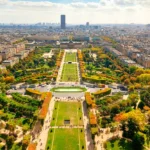
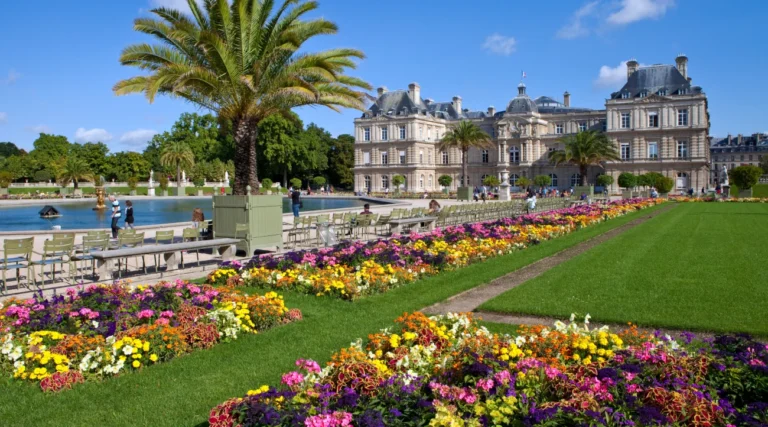
Designed in the 17th century by André Le Nôtre at the behest of the Sun King, the Tuileries Garden is the absolute masterpiece of French gardening. Its perfect axial symmetries combine imposing octagonal water basins with long flower-lined avenues, offering a scenic stroll through the political and cultural heart of the capital.
Period: founded in 1564 (redesigned in 1664)
Services: Wooden boat rentals, outdoor bar and restaurant kiosks, three children's play areas, a vintage carousel, public restrooms, bicycle rental and smartphone charging stations.
Points of interest: Grand Bassin Octogonal, Musée de l'Orangerie, Jeu de Paume, the triumphal arch of the Carrousel and the rich collection of bronze sculptures by Aristide Maillol
Best time: Early morning to enjoy the deserted view, or sunset when the sun aligns perfectly with the Arc de Triomphe in the distance
☰ Table of Contents
The ideal stop
Ideal as a visual decompression corridor immediately after visiting the crowded exhibition halls of the Louvre Museum.
-
Recommended parking time 60'
An hour is the ideal length of time to cross the park from one end to the other without rushing.
-
The local rite
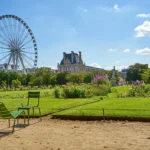
Take one of the historic dark green metal reclining chairs and place it in front of the octagonal tub to soak up the sun.
What to see in the Tuileries Garden
Walk along the central gravel path to appreciate the harmony of royal proportions and discover the contemporary art masterpieces nestled among the groves.
The Grand Bassin Octogonal
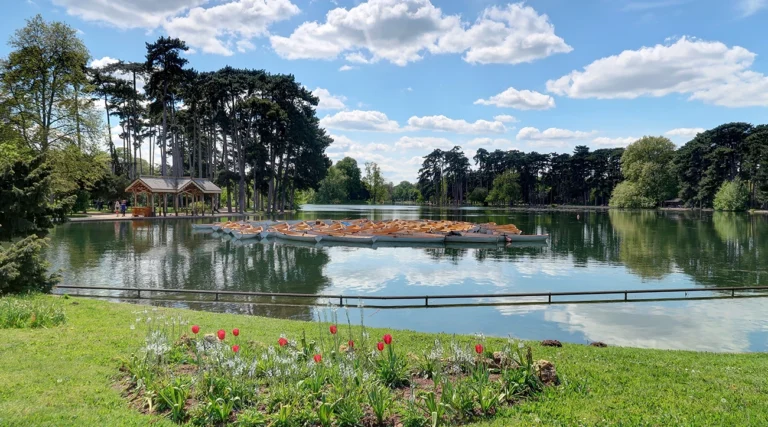
A giant eight-sided pool located on the western side, where passers-by relax while watching the ducks and small wooden sailing boats steered by children.
The Orangerie Museum Not to be missed
The old orangery located along the Seine, now a famous art gallery housing Claude Monet's monumental Water Lilies paintings
The sculptures of Aristide Maillol
Discover the incredible open-air museum composed of dozens of bronze statues depicting sinuous female forms, nestled in the meadows near the entrance to the Louvre.
The Jeu de Paume
Notice the historic twin building located on the Rue de Rivoli side, originally a royal tennis court and now a major exhibition center dedicated to avant-garde photography.
The Large Flower Parterres
Be amazed by the geometric precision of the central flowerbeds, periodically redesigned by the museum gardeners to offer spectacular blooms in every season of the year.
Visiting the Tuileries Garden
Moving along this monumental geometric axis requires a few simple precautions to manage the summer heat and orient yourself between the different levels of the park.
Best moment
At six in the evening in summer, when the air cools and the golden light aligns with the monuments of the Champs-Élysées in a perfect straight line.
Crowding
Extremely high during the central hours of the day, especially along the main avenue connecting the two corner museums.
Suitable for children
Yes, children really enjoy the historic carousel with wooden horses, the paid trampolines, and the boat pond.
What not to miss
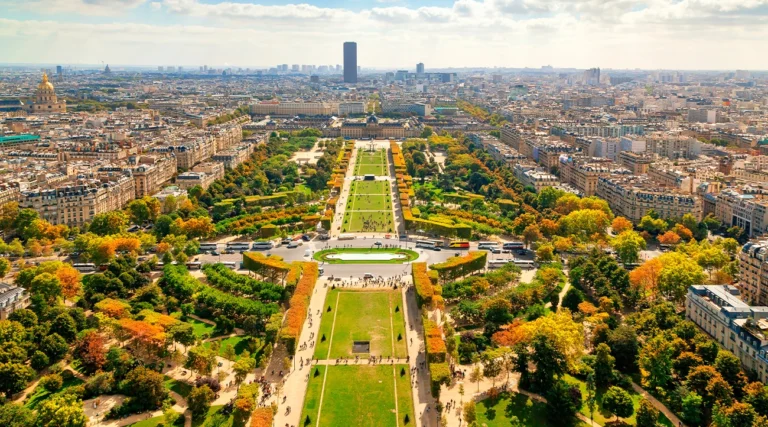
The magnificent visual perspective that starts from the courtyard of the Louvre, passes the Luxor obelisk and ends at the Arc de Triomphe.
Type of experience
Scenic, historic, airy and monumental, capable of making you perceive the true architectural scale of royal Paris.
What to expect
Street artists, tourists from all over the world, the whiteness of the limestone and the roar of the large central jets of water.
How to visit the Tuileries Garden
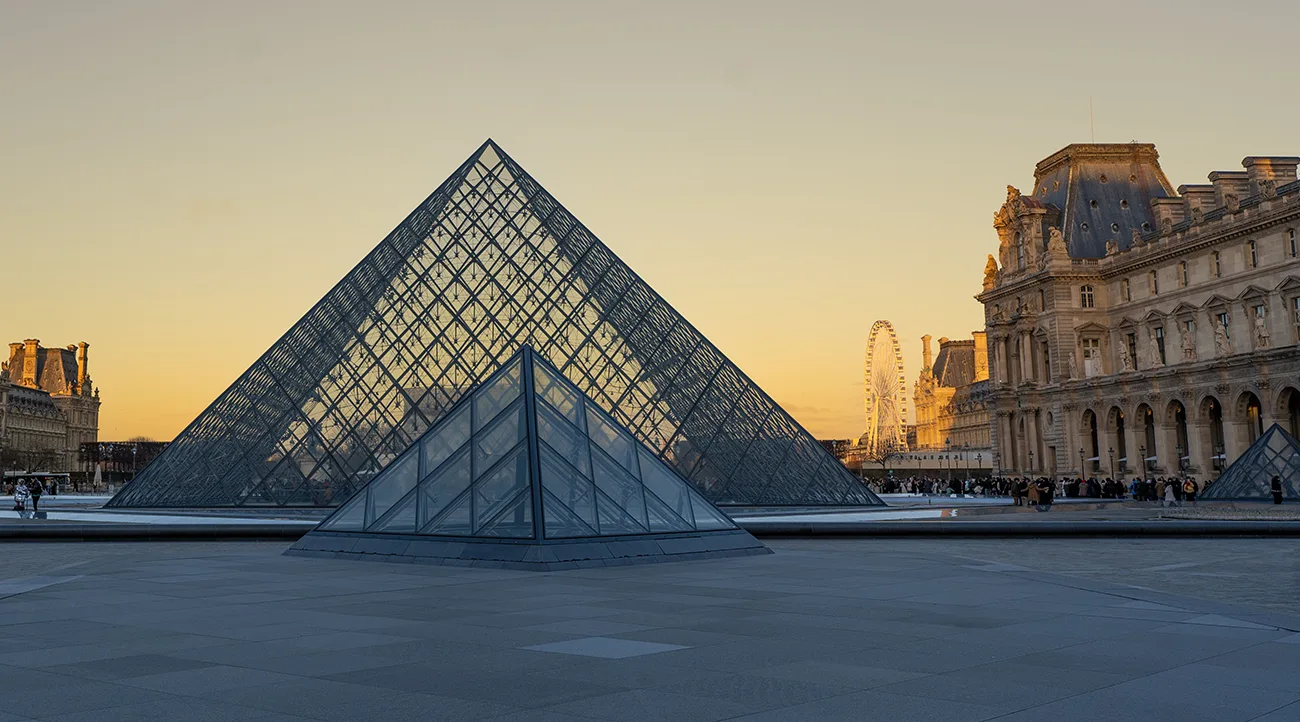
We recommend starting your walk by crossing the Arc du Carrousel, right in front of the Louvre Pyramid. Walk along the central avenue, keeping your gaze fixed on the horizon, then wander into the symmetrical groves to the sides to discover the outdoor cafés and elevated terraces overlooking the Seine. For museum tickets and other activities, check the calendar:
Need to know
- The name “Tuileries” comes from the ancient tile factories (tuiles) that occupied the area.
- Queen Catherine de' Medici ordered the construction of the Tuileries Palace in 1564.
- During the Paris Commune of 1871, the royal palace was burned and destroyed by revolutionaries.
- André Le Nôtre introduced the use of infinite perspective here, inventing the concept of the monumental axis.

Practical advice
- Protect yourself from the sun: the main avenue is entirely exposed and without shade.
- Respect the lawns: access to grassy areas is strictly prohibited everywhere except in limited designated areas.
- If you want to play tennis or petanque, go to the courts on the west side, which are freely accessible or by reservation.
- Do not touch the historic sculptures displayed along the paths: many are original works from the eighteenth and nineteenth centuries.
How to get to the Tuileries Garden
The park is located in the first arrondissement, along the right bank of the Seine.
Line 1 serves the Tuileries underground station located halfway through the garden, while lines 1, 8 and 12 stop at Concorde.
The Musée d'Orsay station (line C) is located exactly on the opposite bank of the river, connected by the Solférino pedestrian bridge.
Lines 24, 42, 68, 72, 73, 84 and 94 make regular stops along Rue de Rivoli and the quays of the Seine.
Exit the Louvre's main courtyard and cross the Place du Carrousel in a westerly direction.
Tuileries Garden, 75001
Official Transport Paris
- Paris Metro Map
- RER tickets and fares
- Taxis in Paris (numbers and alternatives)
History of the Tuileries Garden
In 1564, following the death of King Henry II, his widow Catherine de' Medici decided to build a new and majestic residence, detached from the medieval core of the city. She chose a peripheral area occupied by tile workshops and commissioned landscape architect Bernard de Palissy to design a large formal garden in the Italian Renaissance style, featuring fountains, artificial ceramic grottoes, and a long perimeter wall that protected the royal family's privacy.
Read moreShow less
Read moreShow less
The geometric turning point came in 1664, when Minister Jean-Baptiste Colbert commissioned the famous landscape architect André Le Nôtre to completely redesign the area to conform to the Baroque taste of the young Sun King. Le Nôtre demolished the old Renaissance walls, opened up the great central viewing corridor, and dug the two large, mirrored water basins. It was Le Nôtre who allowed public access for the first time, transforming the royal estate into a place of promenade for Parisian high society.
The garden became the main setting for the most dramatic events of the French Revolution. In 1789, an enraged mob forced King Louis XVI and Marie Antoinette to abandon Versailles and move under guard to the Tuileries Palace. In 1792, the bloody assault on the palace marked the definitive end of the monarchy, and the baroque flowerbeds were temporarily transformed into potato fields to feed the population during the Years of Terror.
In 1871, during the tragic end of the Paris Commune, a group of insurgents set fire to the Tuileries Palace, which burned for three days until it was reduced to rubble. While the ruins of the palace were finally demolished in 1883, the garden survived intact, revealing the spectacular view of the Louvre we admire today. Recent restorations in the 1990s restored Le Nôtre's original botanical drawings, integrating avant-garde sculptures within the historic plant backdrop.
Curiosities about the Tuileries Garden
Unusual historical elements hidden among the geometric flowerbeds of the Louvre park.
The missing two-tone chair: originally, access to the park's famous iron chairs was not free. Until the 1970s, a guard walked along the paths to collect a small fee of a few cents from anyone who chose to sit down and rest.
The first balloon flight: in December 1783, the physicist Jacques Charles made the first historic human flight inside a hydrogen-filled hot-air balloon, taking off from the large central parterre of the garden, in front of an immense crowd of astonished Parisians.
Napoleon's secret tunnel: under the terrace that runs along the Rue de Rivoli there is still a small underground brick tunnel that Emperor Napoleon III had dug to allow his young son to reach the horse paddocks without having to cross the crowds of passers-by in the park.
Bullet marks: Looking closely at the limestone of the rear facade of the Jeu de Paume Museum, you can see the holes left by bullets during the violent urban fighting in August 1944 for the liberation of Paris from the occupying troops.
Tickets and tours nearby
Find accommodation near the Tuileries Garden
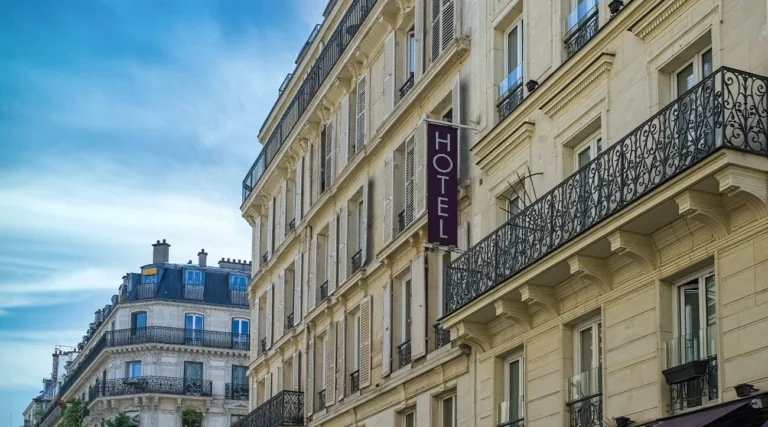
How to find the right hotel? You can scroll through the map below or choose one of our recommendations for places to stay near the Louvre.
Frequently Asked Questions
Can you enter the Tuileries Garden by bicycle to ride along the avenues?
No, bicycles are strictly prohibited within the entire pedestrian areametro the park; cyclists must leave their bikes in the designated outdoor spaces located along Rue de Rivoli.
Where exactly is Rodin's original statue of The Thinker located in the park?
The famous bronze sculpture of the Thinker is no longer located in the Tuileries: it has been permanently moved to the gardens of the Rodin Museum in the arrondissement of the same name.
Are there working Wallace fountains with free drinking water inside the garden?
Yes, there are two historic Wallace green cast iron fountains connected to the city's drinking water supply, located near the lateral groves near Place de la Concorde.
Will the park remain open to the public if there is a strong storm or strong wind in Paris?
In the event of a weather alert with wind gusts exceeding seventy kilometers per hour, management orders the immediate closure of all historic gates to protect passers-by from falling branches.
What are the large white metal structures you see in the summer on the Rue de Rivoli side?
Every summer, in the months of July and August, that portion of the garden hosts the historic Fête des Tuileries, a large open-air pop fair filled with rides, sweet stalls and a Ferris wheel.
Is there free access to the panoramic terrace overlooking Place de la Concorde?
Yes, the stone ramps located on the sides of the Orangerie and Jeu de Paume museums are accessible free of charge and offer splendid views of the square and the beginning of the Champs-Élysées.
Can dogs walk on gravel paths if kept on a short leash?
Dogs are only allowed in the limited elevated green area located in the Place du Carrousel, while access to the rest of the historic garden is strictly prohibited.
Why are there no aquatic plants or water lilies at the bottom of the large octagonal pool?
The basin was designed by Le Nôtre as a clean geometric mirror, devoid of internal vegetation, to maximize the symmetrical reflection of the sky and the facades of the surrounding royal palaces.