

In short
A former hunting reserve of the French monarchs, the Bois de Boulogne is a gigantic green space twice the size of New York's Central Park. Its vast oak groves surround two large artificial reservoirs and are home to important cultural centers, offering the ideal escape from the concrete city.
Period: public transformation in 1852
Amenities: rowboat rentals, bicycle rentals, Michelin-starred restaurants, picnic areas, riding stables, playgrounds, public restrooms, and miles of cycle paths.
Points of interest: Lac Inférieur, the Louis Vuitton Foundation, the Jardin d'Acclimatation, the Parc de Bagatelle and the Grande Cascade
Best time: morning and central hours of the day, to explore the flower-filled paths and waterways in complete safety
☰ Table of Contents
The ideal stop
To be combined with a cultural visit to the futuristic structure of the Louis Vuitton Foundation.
-
Recommended parking time 6 hours
Half a day is the minimum time to explore an area and enjoy a boat ride.
-
The local rite
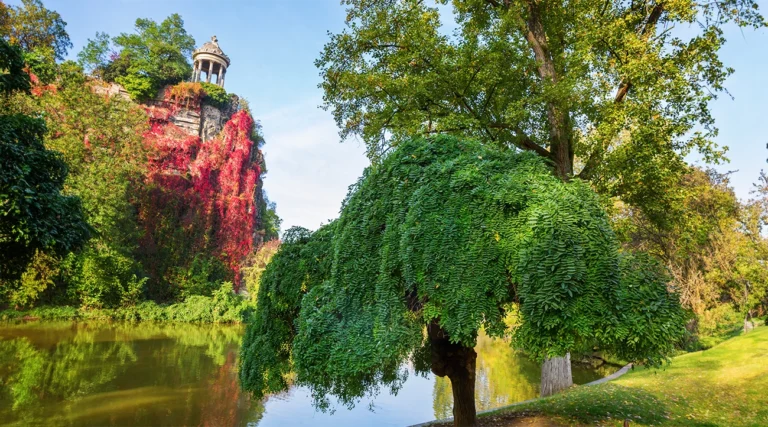
Rent a rowboat on the lake to reach the historic Swiss chalet located on the central island.
What to see in the Bois de Boulogne
Venture through the avenues of this immense urban forest to discover a surprising variety of romantic landscapes, 19th-century greenhouses, and futuristic architecture.
Lac Inférieur Not to be missed
The largest body of water in the forest, where residents and tourists lazily row wooden boats to the central islet.
The Louis Vuitton Foundation
Admire the spectacular contemporary building designed by architect Frank Gehry, a monumental cloud of glass and steel that hosts world-class art exhibitions.
The Parc de Bagatelle
Discover the splendid eighteenth-century castle immersed in a botanical garden famous for its monumental rose garden with over nine thousand plants.
The Great Waterfall
Be amazed by the imposing fourteen-metre-high artificial waterfall, built with gigantic blocks of sandstone brought from Fontainebleau.
The Acclimatization Garden
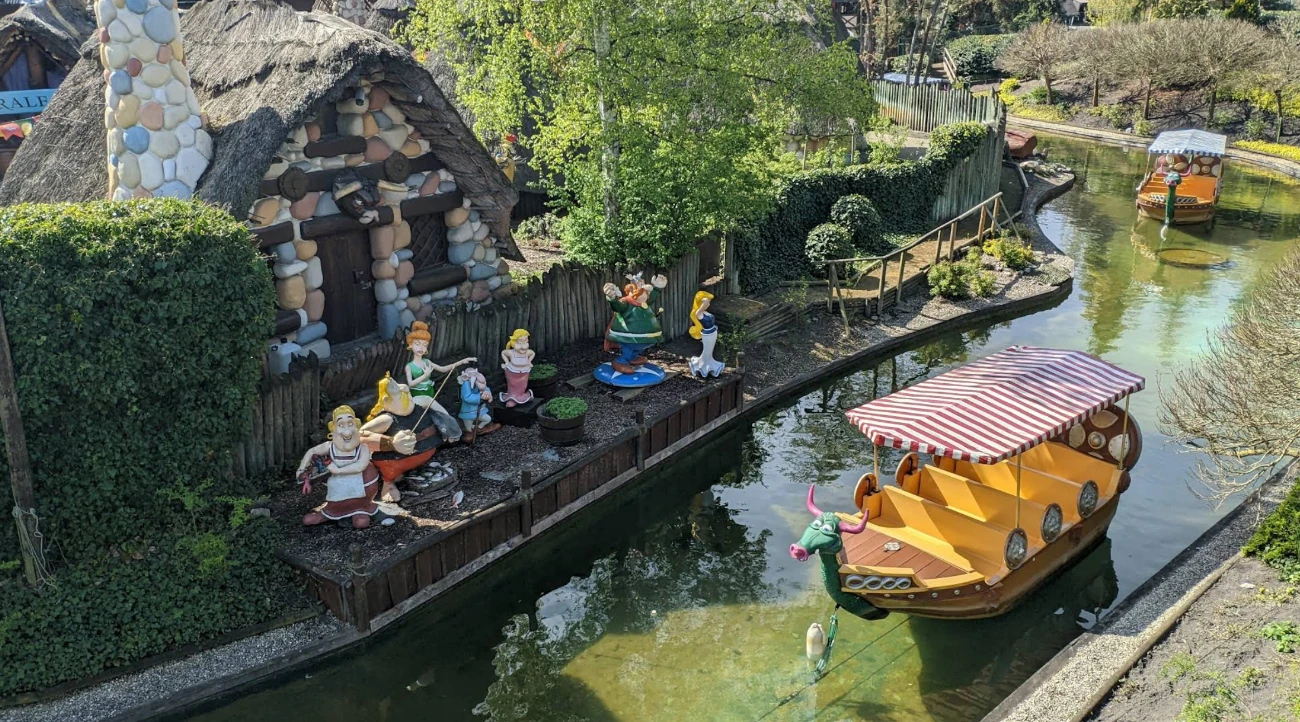
Explore the historic children's amusement park opened by Napoleon III, filled with vintage rides, canals, and small zoos.
Visiting the Bois de Boulogne
Visiting such a vast forest area requires careful orientation and clear planning of internal movements.
Best moment
From ten to three on spring weekends, when the forest comes alive with cyclists, athletes, and families on foot.
Crowding
Moderate and very scattered due to its extension, concentrated mainly around the shores of the lower lake.
Suitable for children
Yes, especially in the northern area where the Jardin d'Acclimatation is located with its dedicated attractions.
What not to miss
The evocative garden of the Auteuil greenhouses, a complex of iron and blue glass architecture dating back to the late 19th century.
Type of experience
Natural, sporty, immense, regenerating and totally detached from the classic rhythms of the monumental Parisian boulevards.
What to expect
Long tree-lined avenues, the rush of water, flocks of wild birds and the passing of carriages and horses.
How to visit the Bois de Boulogne
We recommend starting your tour by exiting the Porte Dauphine metrostation. Walk west along the Route de la Muette to reach the shores of the main lake in just a few minutes, where paths lead to the historic gardens. The park also features a small amusement park; book your tickets now
Need to know
- The forest was the core of the ancient Rouvray forest.
- King Philip Augustus purchased the woods in 1300.
- Emperor Napoleon III donated the land to the municipality.
- The park is home to the historic Longchamp racecourse.
Practical advice
- Absolutely avoid entering the woods after sunset.
- Rent a bike at Velib stations to get around.
- Bring a paper map if you have no sense of direction.
- Use the internal ferries to reach the islands.
How to get to the Bois de Boulogne
The vast forest estate extends beyond the road boundaries of the sixteenth arrondissement, bordering the town of Neuilly-sur-Seine.
Lines 1, 2, 9 , and 10 serve several perimeter stops, including Porte Maillot and Porte d'Auteuil.
Line C makes useful stops at the Avenue Foch station.
Lines 32, 43, 52, 63, 73, 244 and PC border the vegetation.
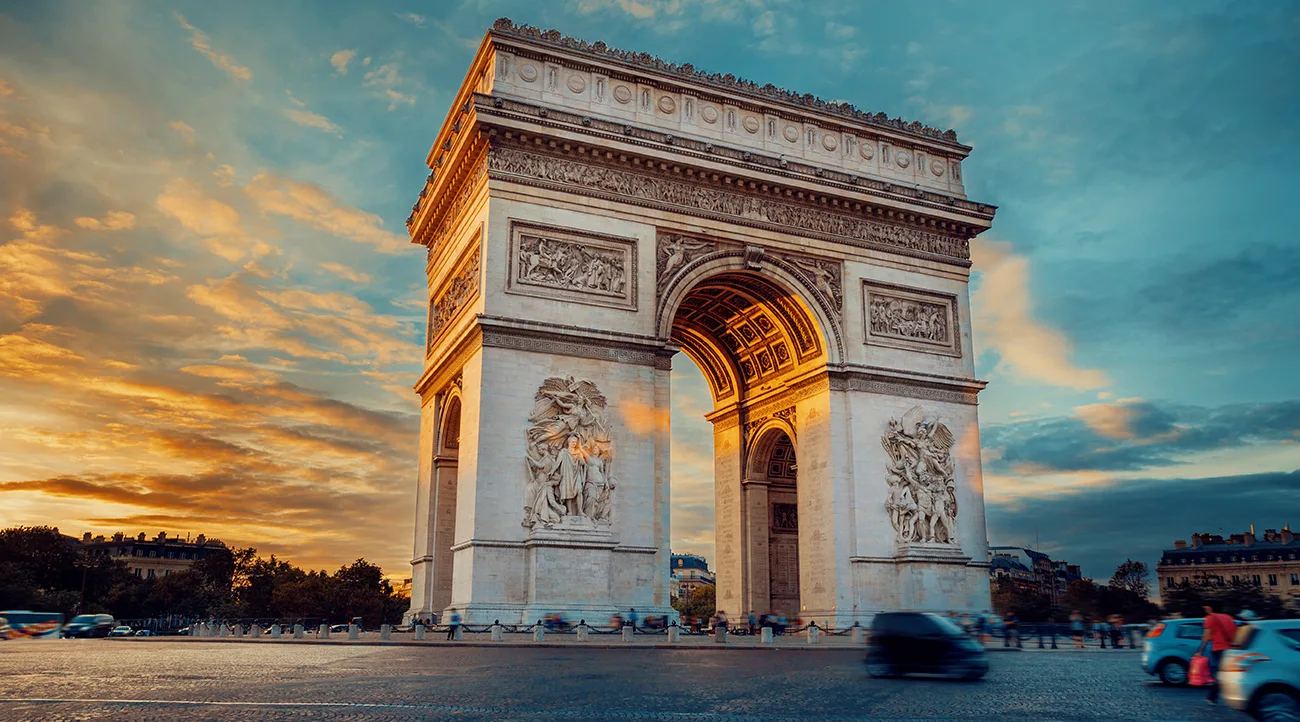
Walk west from theArc de Triomphe along Avenue Foch.
Parc Monceau, 75008
Official Transport Paris
- Paris Metro Map
- RER tickets and fares
- Taxis in Paris (numbers and alternatives)
History of the Bois de Boulogne
In the Middle Ages, this immense portion of western territory was occupied by the dense and feared Rouvray Forest, an immense oak forest frequented by bandits and wolves. In 1308, King Philip the Fair made a pilgrimage to Boulogne-sur-Mer; upon his return, he decided to build a church dedicated to Our Lady of Boulogne on the outskirts of the town, giving the village and the surrounding forest the definitive name of Boulogne. In the 18th century, Louis XVI opened the paths to the public for the first time, transforming the woods into a place for the court to stroll.
Read moreShow less
Read moreShow less
The complete urban revolution occurred in 1852, when Emperor Napoleon III decided to cede ownership of the state-owned forests to the City of Paris, imposing one strict condition: the area had to be transformed into an immense public park modeled on Hyde Park in London, where the emperor had been in exile. The monumental project was entrusted to Baron Haussmann and engineer Jean-Charles Alphand, who transformed the forest's flat appearance by introducing the canons of Romantic English-style parks.
Alphand faced colossal hydraulic problems. The first attempt to dig a long artificial river failed because the slope of the land caused the upper basin to empty; the engineer solved the problem by creating an artificial waterfall to join the two new large lakes dug at different levels. More than four hundred thousand trees were planted and over ninety kilometers of carriage routes were laid out, transforming the wild forest into the most chic meeting place for the wealthy nineteenth-century Parisian bourgeoisie.
During the twentieth century, the forest was officially incorporated into the city's municipal boundaries. Over the decades, it has hosted major world-renowned sporting facilities, such as the Roland Garros tennis stadium and horse racing tracks. In recent years, the inauguration of major contemporary cultural centers has confirmed the role of the Bois de Boulogne as a unique space, where the protection of forest biodiversity coexists with art and leisure.
Curiosities about the Bois de Boulogne
The unique stories and unusual anecdotes kept among the foliage of the largest urban forest.
The Queen's Bet: The splendid Château de Bagatelle, located in the heart of the forest, was born from a lightning-fast bet between Queen Marie Antoinette and her brother-in-law, the Count of Artois; the building was designed and entirely constructed in just sixty-four days of uninterrupted construction.
The concrete rocks: The spectacular structure of the Great Waterfall hides a 19th-century technological secret; to support the immense weight of the water, engineer Alphand built an internal framework of brick and concrete, then clad it with natural rocks and modeled imitation wood.
The first airplane flight: in September 1906, aviation pioneer Alberto Santos-Dumont made one of the first official flights in the history of world aviation within the Bagatelle field, rising approximately eleven meters from the ground aboard his bizarre biplane.
The trees that survived the storm: In December 1999, a massive storm with record winds felled more than ten thousand historic trees in the forest; municipal gardeners have since launched a reforestation plan that prioritizes the growth of hardy native trees.
Tickets and tours nearby
Find accommodation near the Bois de Boulogne
Occupying a large area just behind Passy (or Trocadéro), the accommodations here are an excellent compromise for those who want to sleep in Paris without spending much.
Frequently Asked Questions
Can the restaurant located on the island in the lake be reached on foot via a bridge?
No, the historic Chalet delle Isole has no stable land connections and can only be reached aboard a small motorized ferry boat for a fee.
Can you ride horses on the trails of the Bois de Boulogne?
Yes, the park is home to several official equestrian centers and has over fourteen kilometers of dirt trails reserved exclusively for horses.
Are the historic Auteuil greenhouses open to the public or are they only used for growing crops?
The monumental blue glass pavilions are open to the public free of charge and house extraordinary collections of tropical plants, rare orchids, and carefully tended exotic trees.
Are there equipped pitches where I can light an outdoor barbecue?
No, lighting fires and barbecues is strictly prohibited throughout the forest to prevent the risk of forest fires.
Is the Jardin d'Acclimatation amusement park free for park ticket holders?
Entrance to the Jardin d'Acclimatation requires a separate specific ticket, and the individual internal mechanical rides operate through the purchase of special tokens.
Where does the water that feeds the complex system of artificial lakes come from?
The plant uses non-potable water pumped directly from the Seine through the historic Suresnes hydraulic station, built specifically in the 19th century.
Can you rent bicycles directly on the shores of the lower lake?
Yes, near the boat rental dock there is a seasonal kiosk that rents out bicycles, mountain bikes, and family rickshaws.
Why is it not recommended to walk along forest paths at night?
After dark, most of the unlit internal streets become the scene of prostitution and micro-urban crime activities, making the area unsafe.