

The Panthéon in Paris: What to See and How to Visit

A mausoleum where the grandeur of France meets neoclassical architecture, becoming the eternal guardian of the country's most brilliant minds.

In short

Table of Contents

Opening hours and prices for the Panthéon in Paris

You can access the monument to admire the interior spaces and the crypt, checking the opening times and updated prices here.

Opening hours

  • Everyday 10:00–18:00

    In summer it closes half an hour later

  • Last access 45 minutes before
  • Special hours

    First Monday of the month (opens at 12:00), December 24th and 31st (closes at 17:00)

Prices

  • Adults from €16

    Varies according to the season

  • EU Youth (18–25) Free
  • Under 18s Free
  • Free Entry Included

    Disabled person with companion, first Sunday of January, February, March, November, December

What to see at the Panthéon in Paris

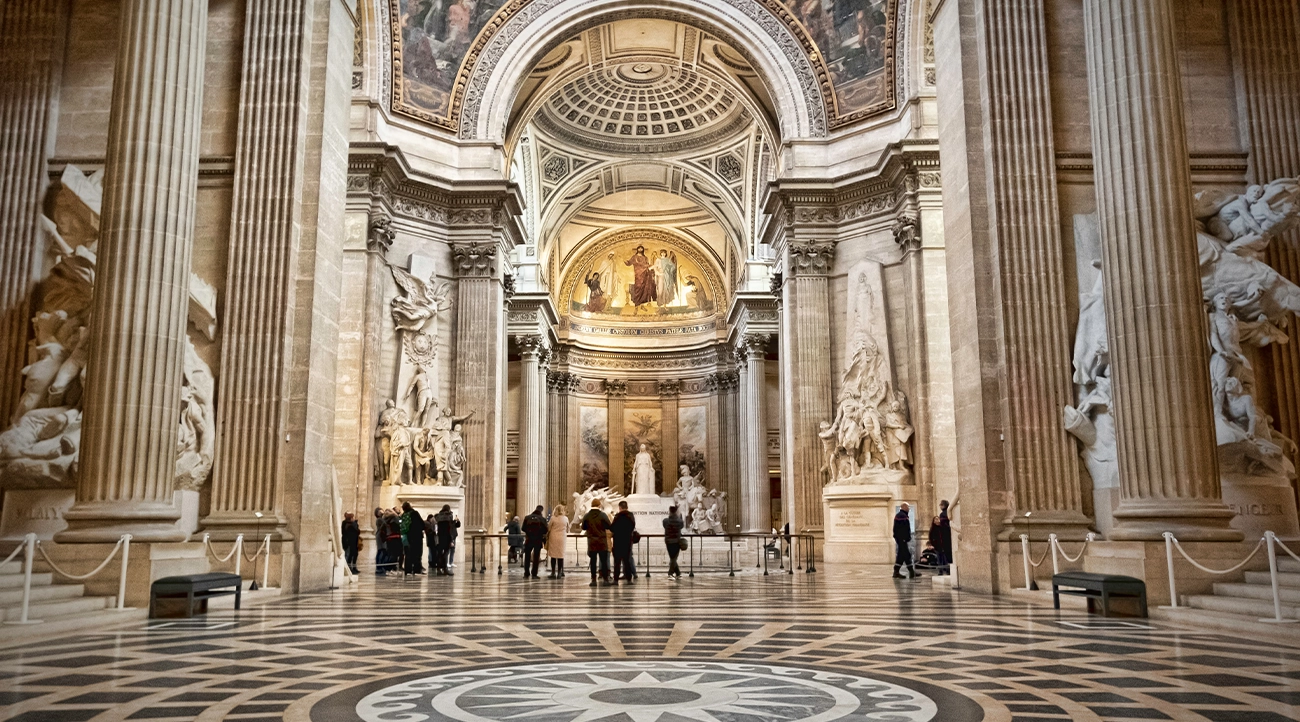
Walking through these naves means immersing yourself in a tale of marble, national glory, and era-defining scientific discoveries.

1

The neoclassical facade

A majestic portico with Corinthian columns that explicitly recalls the aesthetics of the Pantheon in Paris.
2

Foucault's Pendulum Historical Detail

A marvel of physics, suspended beneath the dome, which continues to bear witness to the Earth's rotation before the eyes of tourists.

3

The dome

An architectural element that unmistakably characterizes the Left Bank skyline.

4

The crypt

An intimate and silent underground path where historical figures such as Voltaire, Rousseau and Victor Hugo lie buried.

5

The frescoes

A series of pictorial cycles on the walls illustrating the life and legends of Saint Genevieve.

Visiting the Panthéon in Paris

Planning your entrance requires careful planning, as the monument's austere atmosphere can vary depending on the time of day and the flow of tourists. Here are some tips to help you plan your arrival.

How to visit the Panthéon in Paris

The available solutions allow you to optimize your time and enjoy your visit with peace of mind.

Need to know

  • The climb to the dome is only accessible during certain periods of the year.
  • Respectful behavior is required given the nature of the mausoleum.
  • Audio guides are available at the entrance for an in-depth tour.
  • The monument is an integral part of the French national heritage.

Practical advice

  • Booking tickets online allows you to skip the lines at the ticket office.
  • Explore the surrounding area of ​​the Latin Quarter.
  • Always check the calendar for any official events or ceremonies.
  • Visit the area around sunset for stunning outdoor photos.

How to get to the Panthéon in Paris

Getting to the Panthéon is quite simple: the area is well served by public transport and is perfect for exploring on foot.

Metro

The nearest station is Cardinal Lemoine (line 10), followed by a short uphill walk.

Rer

Line B stops at Luxembourg station, located a few minutes away from the monument.

Bus

Several lines (such as 21, 27 or 84) stop in the immediate vicinity of the Panthéon.

Standing

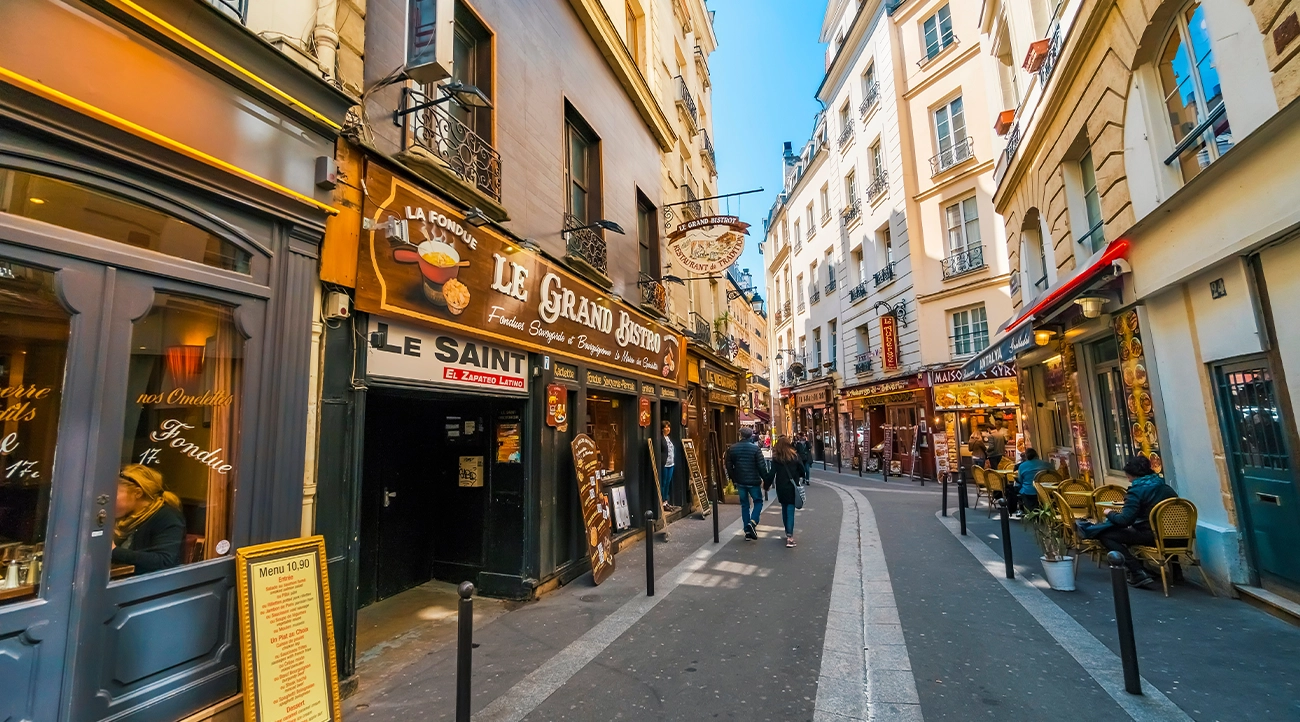
Strolling through the Latin Quarter is the best way to appreciate the surrounding architecture before reaching the entrance.

Place du Panthéon, 75005

History of the Panthéon in Paris

The origins of this building lie in a vow made by King Louis XV, who promised to erect a monumental church if he could overcome a serious illness. The task was entrusted to Jacques-Germain Soufflot, who conceived a project in a striking neoclassical style.

Construction began in 1758, but the progress of the project was plagued by ongoing financial difficulties and structural difficulties. By the time the structure was completed in 1790, the revolutionary climate had already radically changed the building's destiny, depriving it of its ecclesiastical vocation.

A decree of the Constituent Assembly sanctioned the site's new mission, transforming it into a temple dedicated to the country's illustrious men. The famous inscription on the façade, "Aux grands hommes la patrie reconnaissante," became the manifesto of the civil mausoleum.

During the 19th century, the Panthéon experienced a period of political uncertainty, often oscillating between reopening to Catholic worship and reaffirming itself as a secular republican symbol. These shifts perfectly reflected the turbulence shaking the entire nation.

The site's final consecration as a solemn burial place came in 1885, during Victor Hugo's funeral. Since then, the Panthéon has become the final destination for the remains of the most eminent figures in French history.

Today, the monument remains a fundamental pillar of Parisian cultural identity. Every year, huge numbers of people cross its threshold to pay homage to the giants who shaped French thought, science, and politics.

Curiosities about the Panthéon in Paris

Panthéon Tickets and Tours in Paris

Find accommodation near the Panthéon in Paris

Sleeping near the Panthéon in Paris means finding accommodation in the Latin Quarter, one of the most peculiar microcosms of the City of Light.

Frequently Asked Questions

How long does it take to visit the Panthéon?

On average, it takes about 1-2 hours for a complete, calm visit.

Certainly, it is located in the crypt together with those of other great authors.

Yes, most of the building is accessible via dedicated paths.

Entrance is subject to a fee, but discounts are available for specific categories.

The nearest stop is Cardinal Lemoine, on Line 10.

No, access to the upper panorama is seasonal and subject to weather conditions.

Yes, taking photos for personal use without flash is permitted.

Originally a church, today it is a secular mausoleum managed by the state.

Other tickets and experiences to book

You might also be interested in...

The journey continues…

Place de la Rèpublique with the statue in the foreground
View of the Palace of Versailles through the gate
Place de la Bastille with traffic around
Paris RER on the tracks
View of the fountain in Place des Volgi in the Marais district
Buses in Paris on a foggy day

Activities and tours you can't miss

Share:
Previous
Palais Garnier: Visit to the Paris Opera
Next
Eiffel Tower Tickets: Prices, Options, and Online Booking