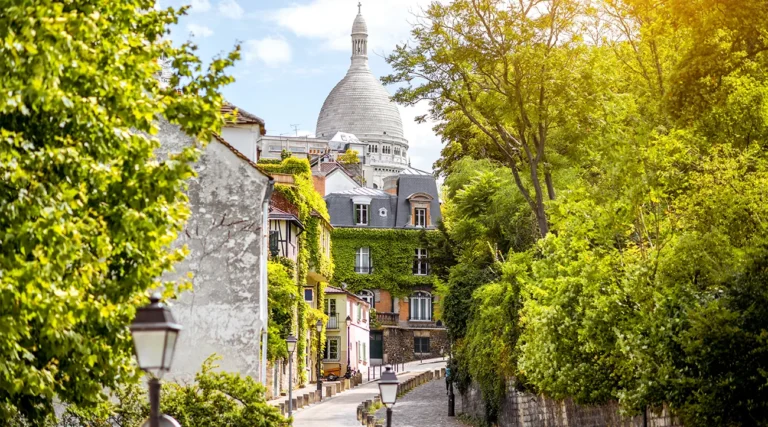
This historic automatic system allows you to ascend the thirty-six meters to the top of the artists' quarter without any physical effort. Operated by the city's transport company, the funicular runs parallel to the historic steps of Square Louise Michel.
- Absolute comfort: avoid the tiring climb on foot while conserving energy.
- Fare integration: works with the same travel tickets as the metro.
- Total accessibility: ideal for strollers, the elderly and people with reduced mobility.
- Sudden departures: the two independent cabins move in continuous flow.
Things to know about the Montmartre Funicular
The operation of this means of transport follows the same logic as the traditional surface metronetwork.
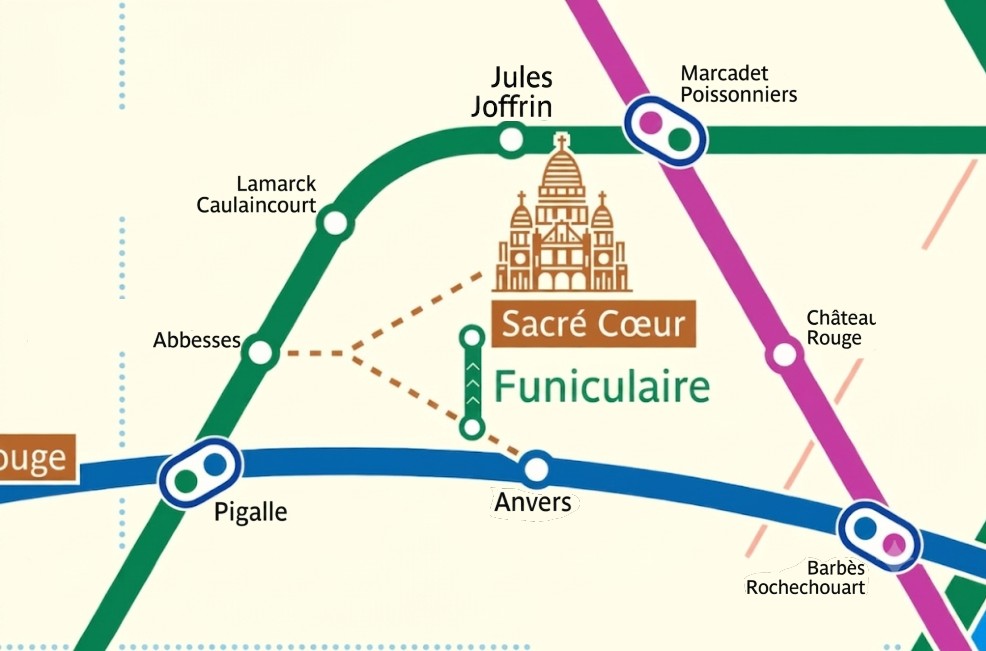
Map of the Montmartre Funicular
The line runs along a single, very short straight line connecting the lower station to the upper station. It can be easily reached from the Anvers (blue) and Abbesses (green) stops.
If you have a Navigo Weekly or Monthly pass or the Paris Visite pass, access to the funicular is completely free and unlimited: just validate your card at the entrance turnstiles.
Official source: RATP Paris • All rights reserved
The access stations and connections of the Funicular
Since it isn't a line with multiple urban stops, the funicular runs along a single straight axis. The table describes the key access points at the base and summit of the hill, including the best ways to reach them from the surrounding metrostations.
Which ticket should I choose?
Depending on your travel tickets or how often you use public transport, access to the funicular can be managed using different validation methods.
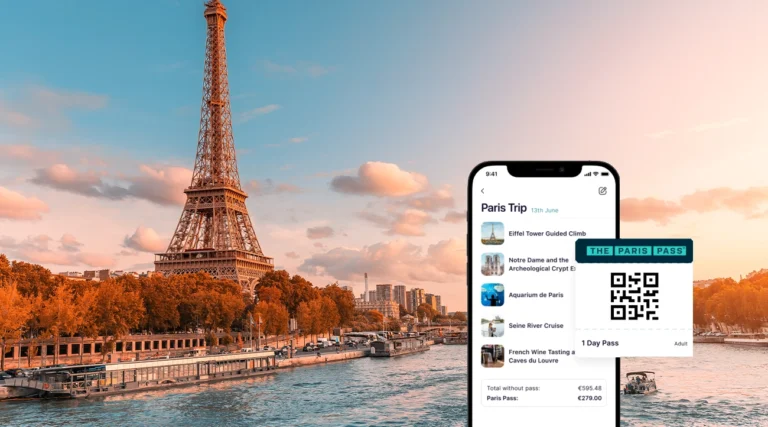
The most popular tourist passes in Paris
The Montmartre is fully integrated into the public transport network operated by the RATP, making it extremely accessible to anyone using standard city passes.
- Heavy queues on weekends: Sunday afternoon sees the highest concentration of passengers at the lower turnstiles.
- Ticket checks are frequent: teams of inspectors often man the exit gates of the upper station.
- No reserved seating: the passenger compartment is designed primarily for standing passengers to maximize capacity.
- Unfolded strollers allowed: the large interior space allows strollers to fit inside without having to fold them.
- Buy tickets in advance: Buying t+ tickets at the Politana metrostation avoids the lines at the funicular ticket machines.
- Take the funicular up and walk back down: the ideal option is to use the funicular to go up and then walk down the historic steps to admire the view.
- Use the side access from Rue Foyatier: the street runs alongside the tracks and offers excellent photo opportunities to capture the moving cabins.
- Check the information screens: the monitors located at the entrance report any temporary technical delays in real time.
History and curiosities of the Montmartre Funicular
The plant accompanied the development of the bohemian neighborhood, modifying its technological structure over the course of different historical eras.
- Inaugurated in 1900: the first system came into operation at the end of July to facilitate access to the nascent Basilica.
- Original hydraulic operation: the first version used a system of water counterweights to fill and empty special tanks.
- Electrification in 1935: the plant was completely transformed by replacing the old machinery with modern electric motors.
- Complete reconstruction in 1991: RATP completely renovated the cabins, adopting the current transparent glass and steel design.
- Over two million passengers: the structure is among the most used attractions in the French capital on an annual basis.
- Technological twinning with elevators: from a regulatory point of view, the line is classified as an inclined rail elevator.
- Famous film backdrop: the stations appear in numerous films dedicated to the Montmartre district.
- Periodic nighttime maintenance: Technicians check the tensile cables every night to ensure maximum structural safety.
Funicular or stairs? Which is better?
While the stone staircase remains the most poetic, romantic, and photographed option for lovers of urban strolls, the funicular proves to be an unbeatable tool for efficiency, comfort, and speed, especially after a long day spent walking the streets of the city center.
Frequently Asked Questions
Tickets for the attractions easiest to reach by Tram, Metro, RER, Bus