

In short
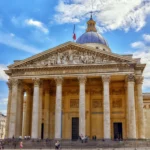
Initially designed in the eighteenth century and radically redesigned by Napoleon Bonaparte as a monument to the glory of his army, the Madeleine Church is striking for its complete absence of bell towers and external crosses. Its imposing peripteral structure dominates the eponymous square, constituting one of the most brilliant and intact examples of architectural classicism.
Period: 19th century
Architecture: neoclassical
Function: place of worship and church
Best time: late morning
☰ Table of Contents
Madeleine Church opening hours and prices
Entrance to the main nave of the church is completely free and open to all visitors during the entire daily opening hours.
Times and masses
-
Everyday 09:30 - 19:00
-
Midweek Masses 12:30
Monday to Friday
-
Masses on Saturday 18:00
Pre-holiday mass
-
Masses on Sunday 10:30 and 18:00
Festive Mass
What to see at the Madeleine Church
Admire the geometric harmony of the fifty-two monumental columns that surround the entiremetro of the building.
The suggestive external Corinthian colonnade
Observe the majestic twenty-meter-high pillars that support the tympanum.
The Monumental Pediment
Look at the large external bas-relief dedicated to the Last Judgement.
The statue of Saint Mary Magdalene
Admire the white marble sculptural group placed above the main altar.
The great pipe organ Aristide Cavaillé-Coll
Discover the historic musical instrument, one of the most prestigious in the capital.
The fresco of the apse dome
Look at the large painting illustrating the history of Christianity.
Visit to the Church of the Madeleine
Make the most of your time by reading this brief information before crossing the historic entrance portal.
Best moment
Late morning to enjoy the light of the domes.
Crowding
Moderate compared to other sanctuaries in the center.
Suitable for children
No, due to the purely artistic nature of the site.
What not to miss
Details of the bas-reliefs on the bronze doors.
Type of experience
Cultural, solemn and inspired by classical art.
What to expect
A quiet environment, skylight domes and large spaces.
How to visit the Madeleine Church
You can climb the monumental front staircase facing Rue Royale, gaining free access through the imposing entrance portal after passing a quick visual check. Wheelchair access is available via an elevator on the Boulevard Malesherbes side
Need to know
- The building was at risk of being transformed into the city's first railway station.
- The final project was signed by the architect Pierre-Alexandre Vignon.
- The external bronze doors are directly inspired by the Baptistery of Florence.
- The temple hosted the solemn funeral of the composer Fryderyk Chopin.
Practical advice
- Keep your voice moderate in the aisle.
- Climb the outside steps for a great photo opportunity overlooking the Place de la Concorde.
- Check the internal signs to avoid interfering with religious services.
- Take advantage of the fine food shops in the square for a break.
How to get to the Madeleine Church
The church is located in the central-western area of the right bank, a short distance from the Place de la Concorde and the department stores.
Lines 8, 12 and 14 stop at the convenient Madeleine station.
station (RER A) is less than a ten-minute walk north.
Lines 42, 52, 84 and 94 stop right around the square.
Walk the entire length of Rue Royale starting from Place de la Concorde.
Place de la Madeleine, 75008
Official Transport Paris
- Paris Metro Map
- RER tickets and fares
- Taxis in Paris (numbers and alternatives)
History of the Church of the Madeleine
Construction began in the mid-eighteenth century during the reign of Louis XV, based on a design that called for a traditional church with a Latin cross plan. The turbulent events of the French Revolution drastically interrupted construction, leaving the foundations incomplete for several years.
Read moreShow less
Read moreShow less
In 1806, Emperor Napoleon Bonaparte ordered the demolition of the existing structures to build a Temple to the Glory of the Grand Army. The sovereign imposed a radical change in style, demanding a monument that mirrored the heroic forms of the temples of ancient Paris.
After the fall of the empire and the return of the Bourbon monarchy, the complex returned to a permanent religious use. Work progressed slowly due to ongoing political and economic debates over the future of the colossal limestone structure.
The building was finally completed and consecrated for worship in 1842, during the reign of Louis-Philippe, serving as the city's parish church. The interior was enriched with impressive pictorial and sculptural cycles by leading Parisian artists.
Over the course of the twentieth century, the church consolidated its prominent role in the capital's social and cultural events. Major restoration work on the exterior facades removed the black patina caused by smog, restoring the monument's splendor.
Curiosities about the Church of the Madeleine
Extraordinary anecdotes and singular historical facts characterize the centuries-old memory of this imposing building.
Record-breaking funeral: Mozart's famous Requiem was performed during Chopin's funeral, overcoming the bans of the time on female singing in church.
No windows: the nave has no side windows, all the light comes directly from the zenithal openings placed on the upper domes.
The statue of the Pope: among the numerous sculptures inside there is a depiction of Saint Joan of Arc blessed by the pontiff.
Perfect perspective: the facade aligns symmetrically with the Palais Bourbon building located on the opposite bank of the Seine.
Madeleine Church Tickets and Tours
Find accommodation near the Madeleine Church
Explore the best accommodations in the Marais districtby browsing this interactive map.
Frequently Asked Questions
Is it possible to take photographs during the internal visit?
Yes, using the camera for personal purposes is permitted without flash.
Is the church wheelchair accessible?
Yes, there is a dedicated access ramp and lift on the side of the building .
Are concerts held inside the church?
Yes, the temple regularly hosts evening concerts of classical and organ music.
How long does it take to visit the building?
Typically, about thirty minutes are enough to observe the interior.
Is there a crypt open to the public to visit?
The crypt houses a social restaurant run by an association, which can be visited by reservation.
Is the church close to the Opéra Garnier?
Yes, the theater is about a five-minute walk northeast.
Is entry permitted during Mass?
Tourist visits are partially limited during liturgical services.
Are there discounts for evening concerts?
Ticket prices vary by organizer and include student discounts.