

In short
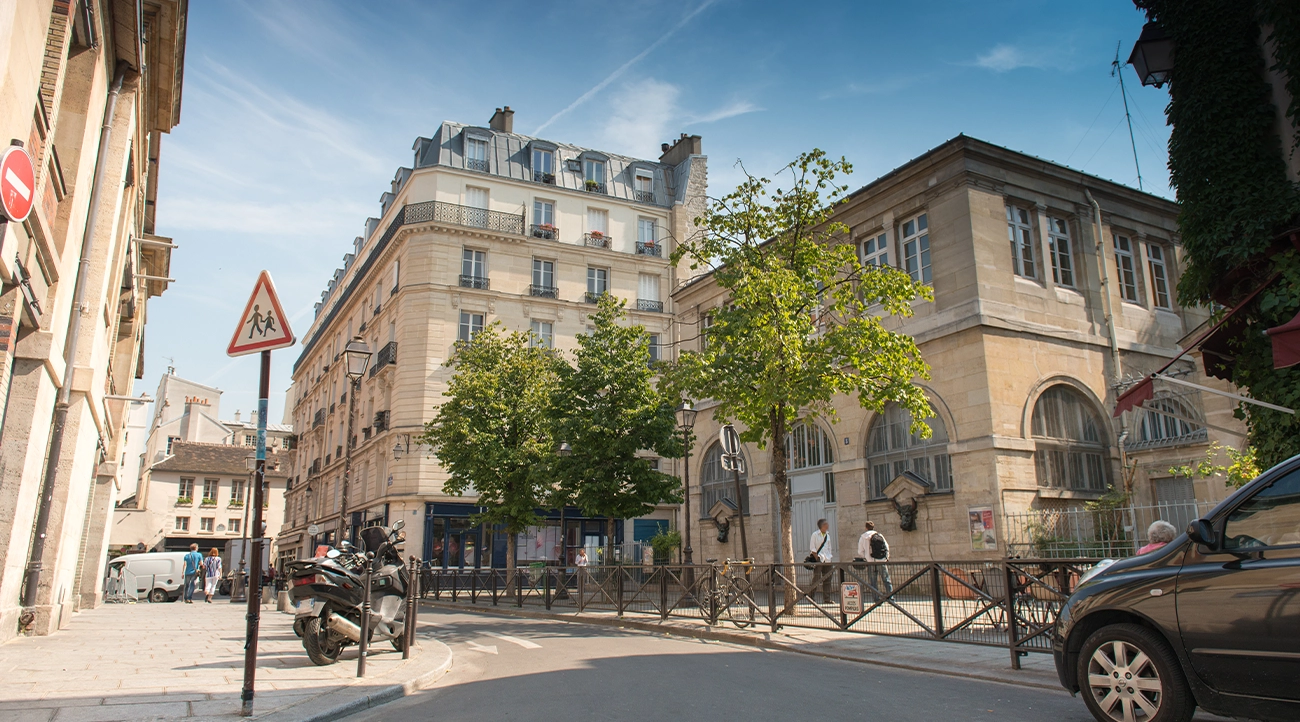
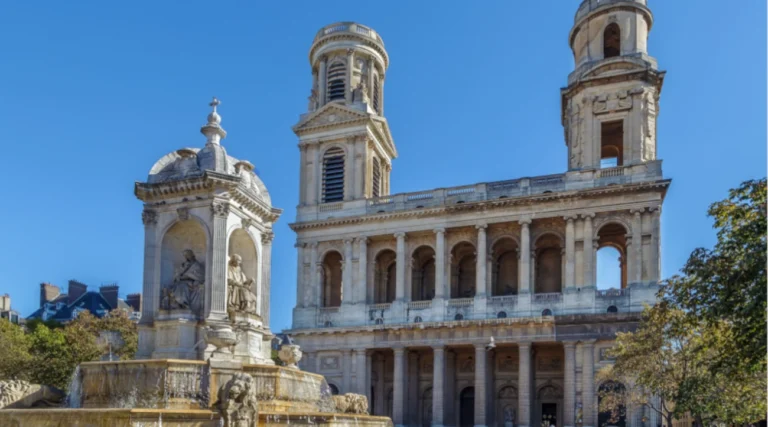
Built over the course of over a century, the Church of Saint-Eustache is striking in its colossal dimensions, rivaling those of a cathedral. Located a short distance from the Centre Pompidou, its imposing hybrid architectural structure houses works of art ranging from classical masters to contemporary installations.
Period: 16th century
Architecture: Gothic-Renaissance
Function: place of worship and church
Best time: Late morning for Sunday organ concerts
☰ Table of Contents
Opening hours and prices for the Church of Saint-Eustache
No travel pass or entrance ticket is required to admire the masterpieces housed inside.
Times and masses
-
Everyday 7:15 - 19:30
On weekends it opens at 10:00
-
Midweek Masses 7:30 - 19:00
Monday to Friday
-
Masses on Saturday 18:30
Pre-holiday mass
-
Sunday Masses 11:00 - 18:30
Festive Mass
What to see at the Church of Saint-Eustache
Observe the majesty of the sacred furnishings that testify to the glorious past of this historic royal parish of Paris.
The Great Pipe Organ
Admire the monumental instrument, one of the largest and most powerful in all of France.
The Chapel of the Virgin
Discover the splendid apse space dominated by the sculpture of Jean-Baptiste Pigalle.
The Martyrdom of Saint Eustace
Observe the large period canvas painted by the famous master Simon Vouet.
Keith Haring's work
Admire the bronze triptych dedicated to the life of Christ by the iconic contemporary artist.
The bakers' stalls Historical detail
Look for the sculptural details dedicated to the historic guilds of the general markets.
Visit to the Church of Saint-Eustache
We present you with a quick outline to help you understand in a flash what awaits you once you cross the threshold of the church.
Best moment
Sunday afternoon during the organ reviews.
Crowding
Moderate, lower than other sanctuaries in the center.
Suitable for children
Yes, for the airy spaces and colors of modern works.
What not to miss
The unique contrast between the Pigalle sculptures and Haring's triptych.
Type of experience
Artistic, monumental and full of stylistic contrasts.
What to expect
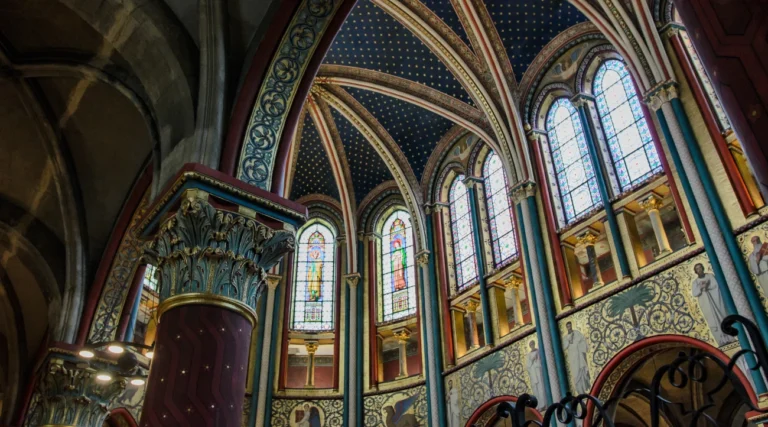
High Gothic vaults, evocative dim light and silence.
How to visit the Church of Saint-Eustache
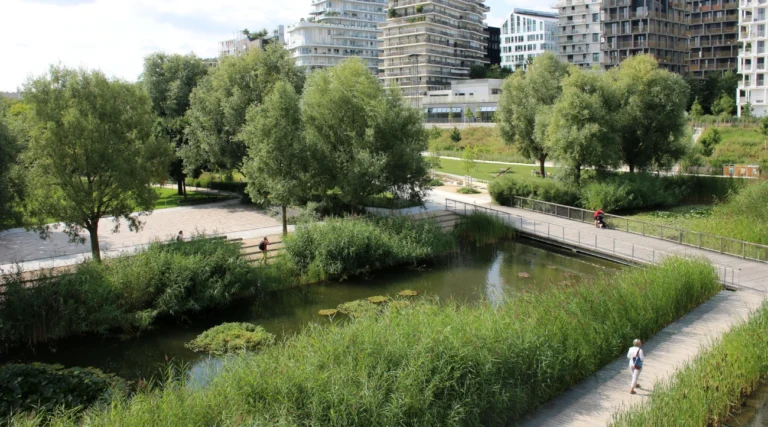
The main entrance opens directly onto the modern Nelson Mandela Garden. You can enter freely through the historic Renaissance portal on the south side of the building.
Need to know
- The building was constructed taking Notre-Dame Cathedral as a structural model.
- The historical Sun King received his first communion here in the seventeenth century.
- The western facade remained unfinished and was partially rebuilt in the classical style.
- The church hosted the solemn funeral of the mother of the composer Wolfgang Amadeus Mozart.
Practical advice
- Respect the silence so as not to disturb the faithful and the moments of prayer.
- Check the parish's official website to make sure you don't miss the free Sunday concerts.
- Photograph the exterior from the central garden to capture the full mass of the building.
- Be careful of the steps and shaded areas along the side chapels.
How to get to the Church of Saint-Eustache
The church stands in the heart of the first arrondissement, immediately above the large underground hub of Les Halles.
Line 4 stops at the convenient and nearby Les Halles station.
Lines A, B and D serve the gigantic adjacent Châtelet - Les Halles station.
Lines 29, 38, 47, 74 and 85 stop near the square.
Walk along Rue Rambuteau heading west from the Centre Pompidou.
2 Imp. Saint-Eustache, 75001
Official Transport Paris
- Paris Metro Map
- RER tickets and fares
- Taxis in Paris (numbers and alternatives)
History of the Church of Saint-Eustache
The site's history began in the 13th century with the construction of a small chapel dedicated to Saint Agnes, funded by taxes on fish baskets from the nearby Les Halles markets. In 1532, the growing importance of the neighborhood prompted King Francis I to decree the construction of a grandiose parish church.
Read moreShow less
Read moreShow less
Construction lasted over a century, spanning the bloody religious wars that significantly slowed the construction of the imposing supporting structures. The architects decided to maintain the Flamboyant Gothic plan and proportions, while decorating every single element in Renaissance style.
During the seventeenth and eighteenth centuries, its proximity to the Louvre Palace made it the favorite parish of the royal court and the great noble families. Historical figures such as Cardinal Richelieu and Jean-Baptiste Colbert regularly frequented its naves.
During the French Revolution, the building was looted, stripped of its precious furnishings, and temporarily transformed into the Temple of Agriculture. A disastrous fire in the mid-19th century damaged part of the interior, necessitating a major restoration overseen by Victor Baltard.
In the twentieth century, the demolition of the historic market halls of Les Halles radically altered the surrounding urban landscape. Today, the church stands as a bastion of history and spirituality, fully integrated into the modernity of the city's new pedestrian and commercial district.
Curiosities about the Church of Saint-Eustache
Extraordinary anecdotes and cultural intersections enrich the historical memory of this colossal Parisian building.
Homage to New York: Keith Haring's bronze work, entitled The Life of Christ, was donated to the church shortly before the artist's death in 1990.
The Minister Protector: the monumental tomb of Colbert, Louis XIV's famous finance minister, is kept inside one of the apse chapels.
Royal music: monumental works by great composers such as Hector Berlioz and Franz Liszt were first performed within the walls of the church.
The Reclining Sculpture: On the external square there is a large modern stone sculpture entitled Listening, depicting a giant head resting on a hand.
Tickets and tours of the Church of Saint-Eustache
Find accommodation near the Church of Saint-Eustache
Not sure what to do? You can always check out our selection of options near Le Marais.
Frequently Asked Questions
Are there any admission fees for Sunday organ concerts?
No, the traditional Sunday organ performances are entirely free.
Is the church located near the Louvre Museum?
Yes, the museum complex is less than ten minutes away walking southwest.
Can you take pictures of Keith Haring's work?
Yes, photography for personal purposes is permitted as long as you do not use flash.
Is the facility conveniently wheelchair accessible?
Yes, the entrance on the Mandela Garden side is barrier-free.
How long does it take to visit the building?
Generally, about thirty minutes to see the main chapels. Since it's very close to other important Parisian monuments, you could even include it in a weekend itinerary in Paris.
Are there any historic restaurants near the square?
Yes, the nearby Rue Montorgueil is famous for its historic cafés and pastry shops.
Is the church open on holidays throughout the year?
Yes, the building remains open, ensuring regular liturgical services can be held.
Are there any brochures in Italian to help you follow the artistic path?
Yes, multilingual paper guides provided by the parish are often available at the entrance