

In short
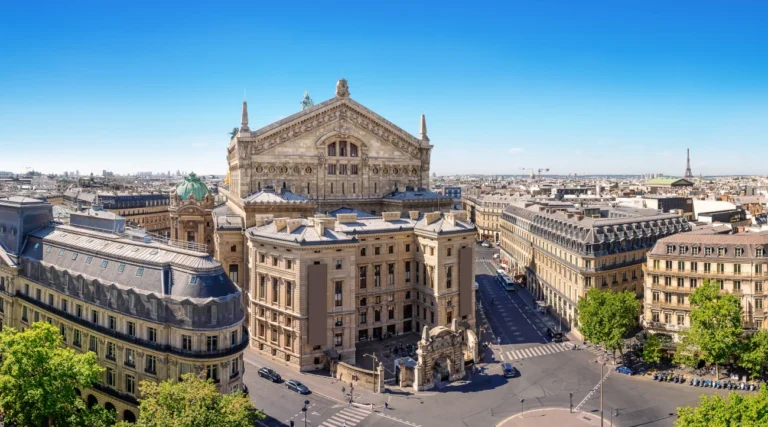
The Opera district is one of the most elegant and lively in Paris, famous for the Palais Garnier, its historic department stores, and the elegant boulevards of the city center. With shopping, Haussmannian architecture, and theaters, it's one of the best areas to visit for those who want to experience classic Paris.
- Presence of themost sumptuous theatre building in Europe.
- World center of shopping in historic department stores.
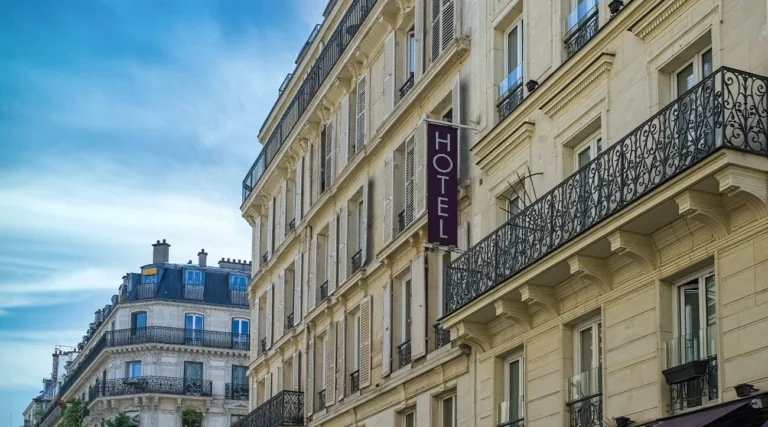
- Perfect examples of Haussmannian urban planning.
- Proximity to the evocative covered passages .
☰ Table of Contents
What to know before visiting the Opéra district
The neighborhood is one of the most dynamic, busy, and commercial in Paris, frequented by both office workers and crowds of shoppers. Walking along the main avenues is easy thanks to the wide sidewalks, but the interiors of the department stores can be very chaotic during rush hour.
The strong points
- Architectural monuments of extraordinary visual impact.
- Unique concentration of fashion shops and brands.
- Splendid panoramic terraces with free access.
- Exceptional transport hub to get anywhere.
To keep in mind
- Heavy road and pedestrian traffic at all hours.
- Commercial and often very crowded restaurants.
- Very few green areas or parks to rest.
- Frequent queues for entrance to the theatre tours.
What to see in the Opéra district
The urban fabric develops around the monumental theatre square, extending towards the large commercial avenues and adjacent financial districts.
Palais Garnier (Opéra National de Paris) Not to be missed
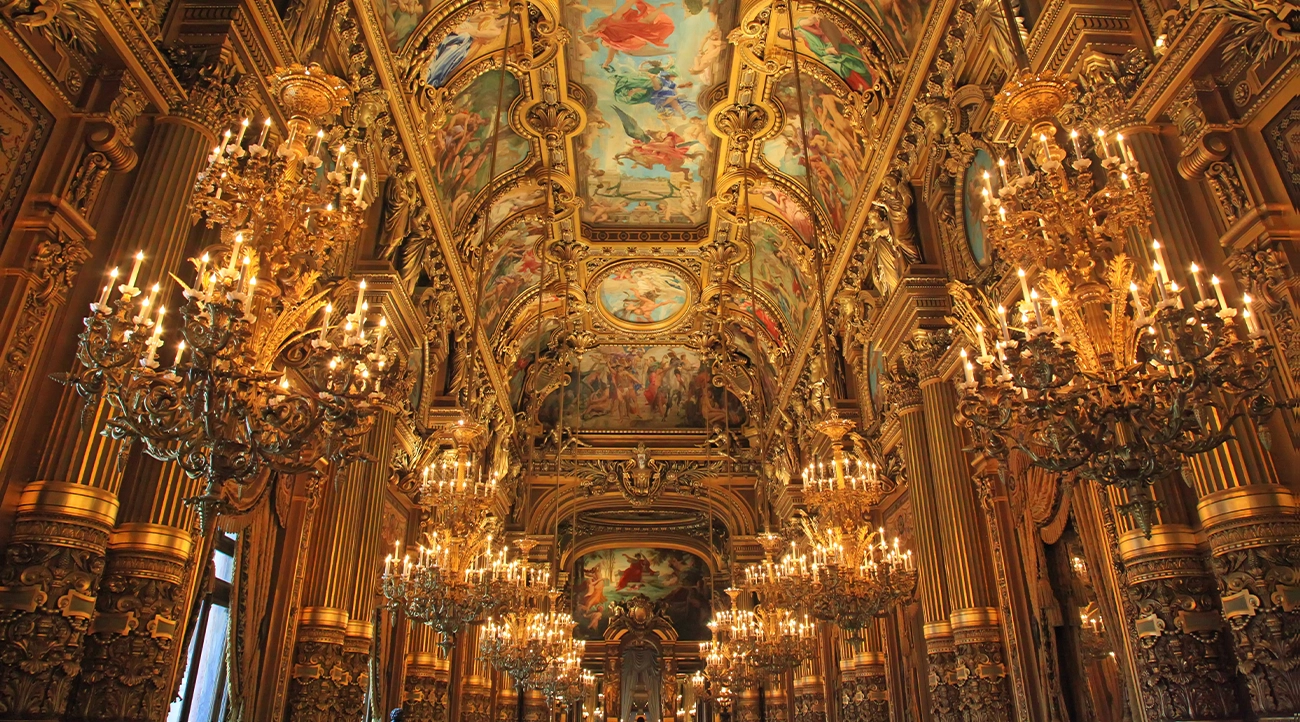
Charles Garnier's architectural masterpiece , famous for its monumental marble staircase, the gold of the interior and the ceiling painted by Chagall.
Galeries Lafayette Haussmann
The historic shopping temple famous for its gigantic Art Nouveau stained-glass dome and panoramic terrace.
Printemps Haussmann
Another monumental period department store, renowned for its refined architecture and splendid view over the rooftops of Paris.
Place de l'Opera
The large, perspective square designed by Baron Haussmann, a true crossroads of social and cultural life.
Musée de la Parfumerie Fragonard
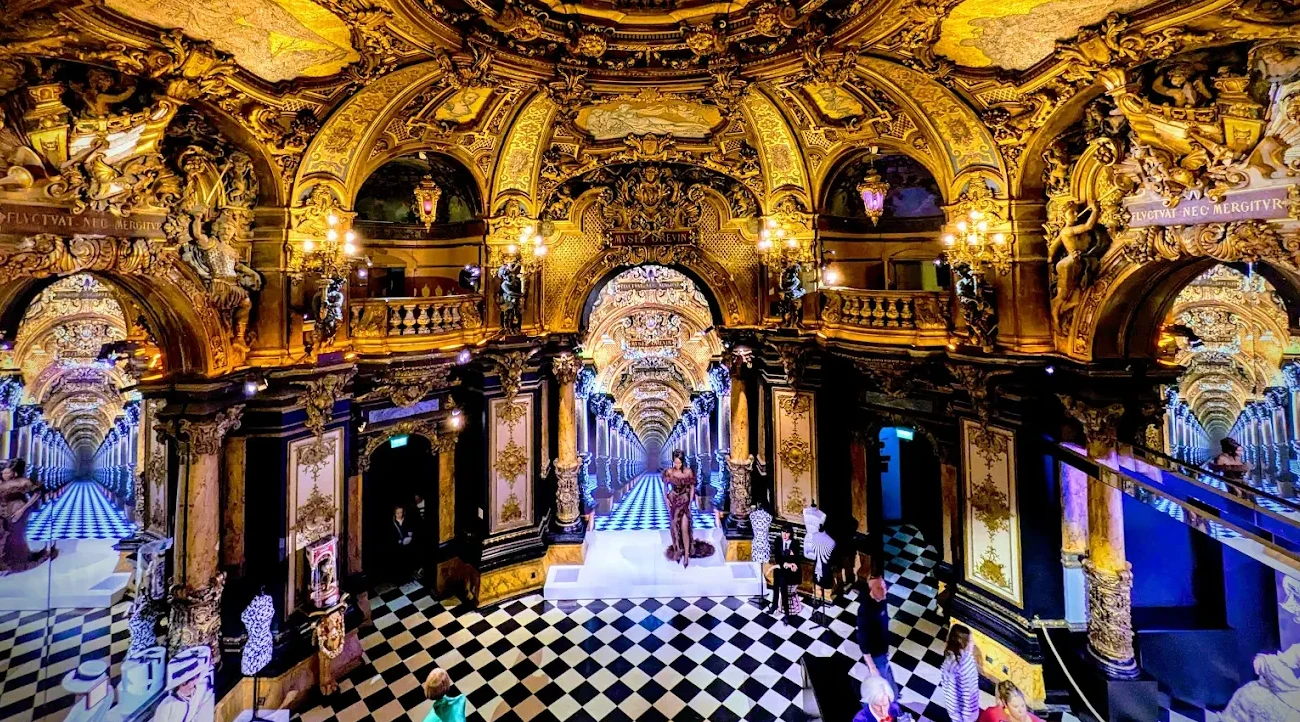
A fascinating free journey inside a 19th-century palace to discover the secrets of the creation of French perfumes.
Boulevard Haussmann
The grandiose thoroughfare, a symbol of 19th-century development, is now the shopping street par excellence.
Passage Jouffroy and Passage Verdeau
Enchanting shopping arcades covered in iron and glass that preserve intact the atmosphere of nineteenth-century Paris.
The Olympia
The oldest and most legendary variety theatre still active in Paris, which has hosted the greatest stars of world music.
Visiting the Opéra district
Exploring this district perfectly combines the artistic wonder of theater visits with the frenetic pace of shopping and urban strolls.
Best moment
Morning for the theatre, late afternoon for the terraces.
Crowding
Very high, especially during sales and holidays.
Suitable for children
Yes, for the stained glass windows and covered passages.
What not to miss
The dome of the Galeries Lafayette.
Type of experience
Cultural, commercial, architectural and social.
What to expect
Nineteenth-century pomp, department stores and lively streets.
Experiences to do in the Opéra district
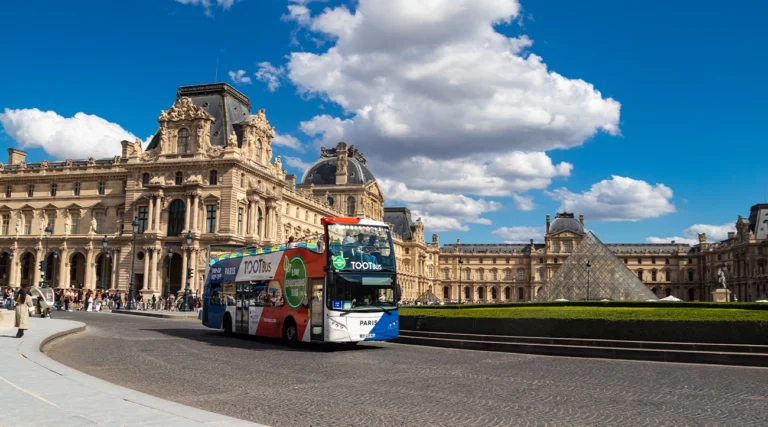
Explore the gilded details of the Palais Garnier during an interior tour before climbing to the terrace of the Galeries Lafayette for free to admire one of the most beautiful views of the Paris skyline, and then treat yourself to a hop-on hop-off bus tour of the neighborhood.
Need to know
- The Opéra building inspired the famous novel The Phantom of the Opera.
- Under the theatre there is actually a large artificial underground pool of water.
- Baron Haussmann also designed the wide streets to avoid revolutionary barricades.
- The dome of the Galeries Lafayette was completed in 1912 to provide light for the shops.
Practical advice
- Book your visit to the Palais Garnier for weekday mornings.
- Climb to the Printemps terrace for a less crowded view.
- Explore covered passages if it suddenly starts raining.
- Pay attention to the prices of coffees sitting at the outside tables in the square.
How to get to the Opéra district
The neighborhood is a key hub in the Parisian transport network, making it accessible in just a few minutes from any point in the metro.
Lines 3, 7, and 8, Opéra stop, will take you directly to the theater; lines 7 and 9, Chaussée d'Antin - La Fayette stop, will take you to the shops.
Lines 20, 21, 27, 29, 32, 45, 68, 95 stop throughout the main square.
The RoissyBus departs and arrives right behind the Opera, connecting the neighborhood with Charles de Gaulle Airport.
Line A stops at the Auber underground station, which connects directly to the department store complex.
Central point: 95 Rue de Provence, 75009
Official Transport Paris
- Paris Metro Map
- RER tickets and fares
- Taxis in Paris (numbers and alternatives)
History of the Opéra district
The appearance of the Opéra district is the direct result of the grandiose urban planning revolution undertaken during the Second Empire of Napoleon III under the direction of Baron Haussmann. Until the mid-19th century, the area consisted of a dense urban fabric lacking any real geometric planning. In 1860, the emperor decreed the construction of a new, monumental theater for the Royal Academy of Music, announcing a public competition that was won by the young and then-unknown architect Charles Garnier.
Read moreShow less
Read moreShow less
The construction of the Opera was a colossal and complex engineering feat, slowed by the discovery of an unstable underground aquifer, which required the construction of a gigantic concrete cistern to stabilize the foundations. Around the majestic building under construction, Haussmann laid out wide, rectilinear boulevards, magnificent, uniform limestone facades, and radial plazas designed to enhance the theater's perspective and facilitate the flow of carriages of the wealthy Parisian bourgeoisie.
The inauguration of the Palais Garnier in 1875 definitively established the neighborhood as the center of elegance, wealth, and entertainment in the capital. Drawn by the presence of the theater and the nobility, enlightened entrepreneurs opened Europe's first department stores along Boulevard Haussmann, revolutionary structures that transformed traditional commerce into mass entertainment. Throughout the 20th century, the district successfully maintained this dual identity, remaining the undisputed hub of theater culture and high-end shopping.
Curiosities about the Opéra district
The elegant streets and underground passages of this district hold literary secrets, historic achievements and world fashion records.
- The underground lake: the water tank under the Opera still exists and is used regularly by the Paris Fire Brigade for training.
- The hive on the roof: the roofs of the Palais Garnier have been home to historic beehives for decades, producing a highly sought-after, exclusive Parisian honey.
- The fire of 1915: During the First World War, the Galeries Lafayette protected their magnificent dome by removing the stained glass to prevent it from being destroyed by bombing raids.
- The first elevator: The neighborhood's department stores were among the first public buildings in France to install state-of-the-art hydraulic elevators for customers.
- The Beatles' debut: On stage at the legendary Olympia Theatre, the Fab Four played a historic series of consecutive concerts in 1964.
- The passages of time: the covered passages Jouffroy and Verdeau were among the first to experiment with underfloor heating and artificial gas lighting.
What to book in the Opéra district and its surroundings
Where to sleep at the Opera
The map below shows all the available accommodations in the area. If you want to discover the absolute best, read this in-depth article.
Where to eat in the Opéra district
Café de la Paix
A historic Parisian institution inaugurated at the same time as the theatre, with splendid frescoed interior rooms where writers such as Zola and Oscar Wilde have sat.
5 Place de l'OpéraThe Chartier Bouillon
Located a short distance from the boulevards, it offers the typical 19th-century bouillon experience: popular and affordable traditional French dishes in a beautiful period room.
7 Rue du Faubourg MontmartreCréatures Paris
A stunning pop-up restaurant located on the rooftop terrace of the Galeries Lafayette, famous for its entirely vegetarian dishes and breathtaking views.
25 Boulevard HaussmannFrequently Asked Questions
Can you visit the inside of the Palais Garnier without seeing a show?
Yes, the theatre is open daily for self-guided or guided tours, which allow you to explore the famous staircase, foyers, and main hall.
Are there any admission fees for the panoramic terraces of department stores?
No, access to the rooftop terraces of both Galeries Lafayette and Printemps is completely free for all visitors.
What is the closest metrostop to the department store?
The most convenient stations are Chaussée d'Antin – La Fayette (lines 7 and 9) or Havre – Caumartin (lines 3 and 9), located a few meters from the entrances.
Is the Opéra's ceiling the original 19th-century one?
The vault's architecture is that of the period, but the extraordinary colorful canvas that can be admired today was painted by the master Marc Chagall and inaugurated in 1964.
Are the local shops open on Sundays?
Yes, department stores like Galeries Lafayette and Printemps and most of the large retail chains on the boulevard are open seven days a week.
What is a "Bouillon" and are there any in the area?
Bouillon is a historic Parisian restaurant format created to serve hot, quick, and affordable meals to workers. The famous Bouillon Chartier is located just a few minutes' walk from the neighborhood center.
Does a visit to the Fragonard Perfume Museum require a reservation?
No, admission and guided tours of the museum are free and do not require a reservation for individual visitors.
Is the Opera district suitable for families with strollers?
Yes, the grand 19th-century boulevards offer exceptionally wide and smooth sidewalks, even if the internal connections of the period metrohave many stairs.