

In short
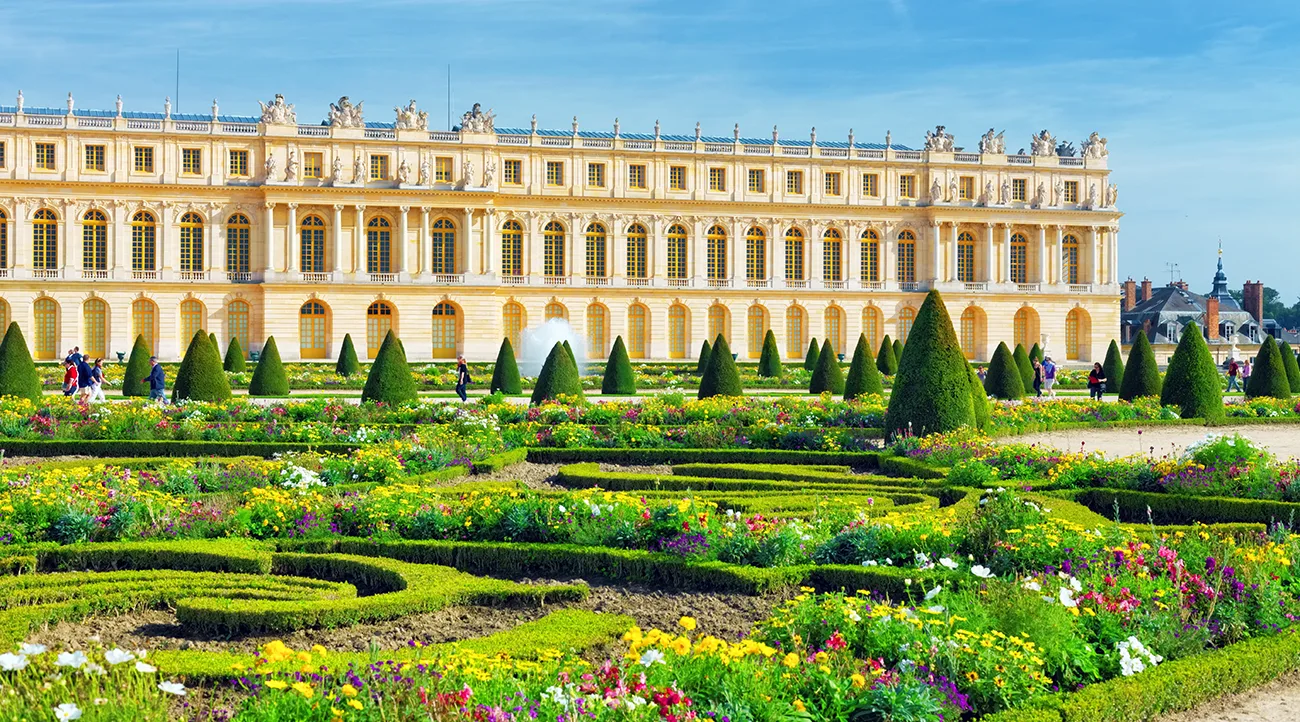
Commissioned by Louis XIV to distance the court from the turmoil of Paris, the Palace of Versailles is the undisputed masterpiece of French Baroque architecture. Its immense geometric flowerbeds extend as far as the eye can see around monumental water basins, while the interiors preserve the artistic splendor that celebrated the height of the monarchy.
-
Period: 17th century
-
Architecture: French Baroque style
-
Function: ancient royal residence
-
Best time: Early in the morning at opening to avoid queues
☰ Table of Contents
Opening hours and prices at the Palace of Versailles
Before setting off, take a few minutes to learn how timed ticket, a mandatory step to manage the daily influx of people into the palace.
Opening hours
-
Wednesday - Monday 09:30-18:30
Gardens 7:00 AM - 8:30 PM daily
-
Last access 45 minutes before
In the park last access 1h30m before
-
Ordinary closures
Tuesday, December 25, January 1, May 1
Prices
-
EU adults from €22
-
NON-EU adults from €25
-
Free entry Free
Minors under 18, disabled people with companion, EU under 26s
What to see at the Palace of Versailles
Every corner of this sumptuous Bourbon residence holds precious treasures that deserve to be discovered with attentive eyes.
The Hall of Mirrors
The monumental seventy-three-meter-long hall, where seventeen imposing mirrored arches reflect the light from the windows overlooking the gardens.
The King and Queen's Grand Apartments Not to be missed
The succession of state rooms richly decorated with polychrome marble, frescoed ceilings with mythological themes and gold brocade furnishings.
The Domaine de Trianon and Marie Antoinette's Hamlet
The private palaces where the sovereigns escaped court etiquette and the fake rural village with a mill built by the queen.
The Grand Canal
Be amazed by the gigantic cross-shaped aquatic infrastructure, over ametro and a half long, used in the summer for royal nautical celebrations.
The Groves and the Fountains
Explore the vegetal backdrop of the gardens designed by Le Nôtre, which conceal labyrinths, baroque statues, and complex automated water features.
A visit to the Palace of Versailles
Intelligent route planning will allow you to alternate the splendor of the interiors with the tranquility of the gardens, avoiding tiring yourself even in the first exhibition rooms.
Best moment
At nine o'clock to get in just before the tourist groups.
Crowding
Extremely loud in the Hall of Mirrors between 11am and 2pm.
Suitable for children
Yes for the gardens and the little train, tiring in the rooms.
What not to miss
The Apollo Fountain at sunset with its monumental bronzes.
Type of experience
Opulent, artistic, steeped in history and decidedly walkable and monumental.
What to expect
Slow security checks, shining golds and grandiose green parterres.
How to visit the Palace of Versailles
Start your day by passing through the Grid of Honor for security checks and entering the palace to visit the State Apartments. After visiting the interior, exit onto the upper parterres of the gardens and walk along the central axis to the Grand Canal; from there, you can continue on foot or by train to the Trianon Palaces. Find all the options in our in-depth article on Versailles tours.
Need to know
- The Sun King chose Versailles to flee from Paris.
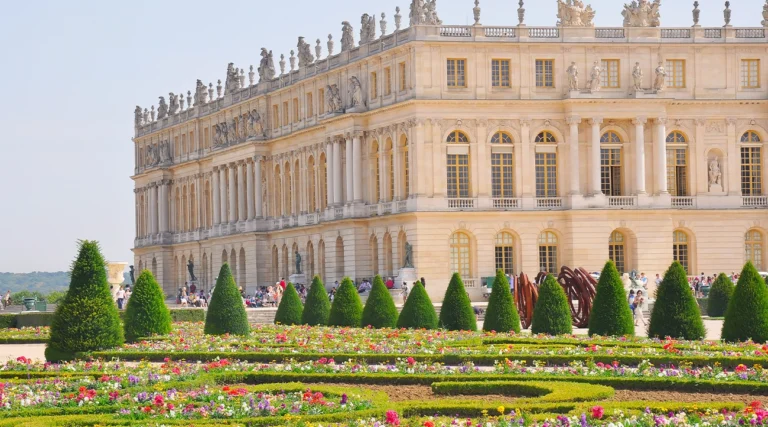
- The castle housed over ten thousand people including courtiers.
- The Treaty of Versailles of 1919 was signed here.
- The gardens required the moving of entire hills.
Practical advice
- Download the official app on your phone for the free audio guide.
- Bring a snack to enjoy in the Grand Canal area.
- Book your first morning slot without hesitation.
- Remember that the gardens are very exposed to the sun, so wear a hat or choose an early or late time to visit.
How to get to the Palace of Versailles
This extraordinary historic residence is located in the town of the same name, about twenty kilometers southwest of the French capital, excellently connected by a dedicated railway line.
Take the N line from Paris Montparnasse or the L line from Paris Saint-Lazare to Versailles Rive Droite station.
Take the RER C line and get off at Versailles Château Rive Gauche station, located a ten-minute walk from the gates.
Bus line 171 leaves from the metroPont de Sèvres
You can opt for a guided tour that also includes transportation from Paris via shuttle.
Place d'Armes, 78000 Versailles
Official Transport Paris
- Paris Metro Map
- RER tickets and fares
- Taxis in Paris (numbers and alternatives)
History of the Palace of Versailles
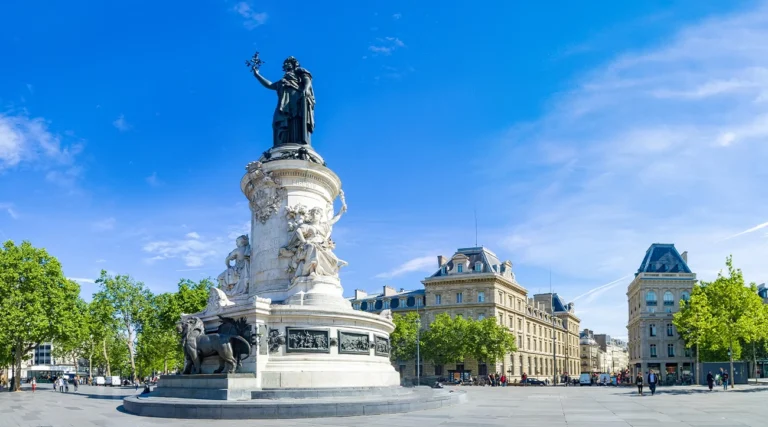
In 1623, King Louis XIII ordered the construction of a modest brick and stone pavilion in the marshy woods of Versailles as a resting place during his hunting trips. However, it was his son, Louis XIV, who decided in 1661 to radically transform that small building into the most sumptuous palace in Europe. The Sun King wanted a monument that would celebrate his absolute power and, at the same time, allow him to keep a tight grip on the French nobility, forcing them to live at court and distancing them from the political intrigues of Paris.
Read moreShow less
Read moreShow less
The expansion work lasted decades and involved the greatest geniuses of the era: architect Louis Le Vau, painter Charles Le Brun, and landscape artist André Le Nôtre, later joined by Jules Hardouin-Mansart for the construction of the Hall of Mirrors and the immense side wings. In 1682, the palace became the official seat of the French government and court, transforming an unhealthy swamp into a stage for baroque celebrations, military parades, and the complex daily rituals that governed the lives of the sovereigns.
The palace continued to be the residence of the monarchy under the reigns of Louis XV and Louis XVI, who enriched the complex with the Royal Opera House and the Trianon palaces. The fate of the palace changed forever on October 5, 1789, when an enraged mob of Parisian revolutionaries marched on Versailles, forcing the royal family to abandon the residence and move to Paris. During the years of the Revolution, the furniture was auctioned off and the art collections transferred to the Louvre, but the building survived the destruction.
In the 19th century, King Louis-Philippe saved Versailles from abandonment by transforming it into a Museum of French History, dedicating it "to all the glories of the nation." The palace was also the scene of crucial international events, such as the proclamation of the German Empire in 1871 within the Hall of Mirrors and, in the same hall, the signing of the Treaty of Versailles that ended the First World War. Today, the palace is protected by UNESCO and continues to host the solemn sessions of the French Parliament meeting in joint session.
Curiosities about the Palace of Versailles
Behind the solemn facade and rigid court etiquette lie daily chronicles of hygienic oddities, architectural gambles, and small state secrets.
-
The cost of precious mirrors: in the seventeenth century, France secretly recruited Venetian craftsmen, unleashing a real war of industrial espionage.
-
A freezing palace with no bathrooms: the palace had no toilets and was so cold that in winter the royal soups froze on the table.
-
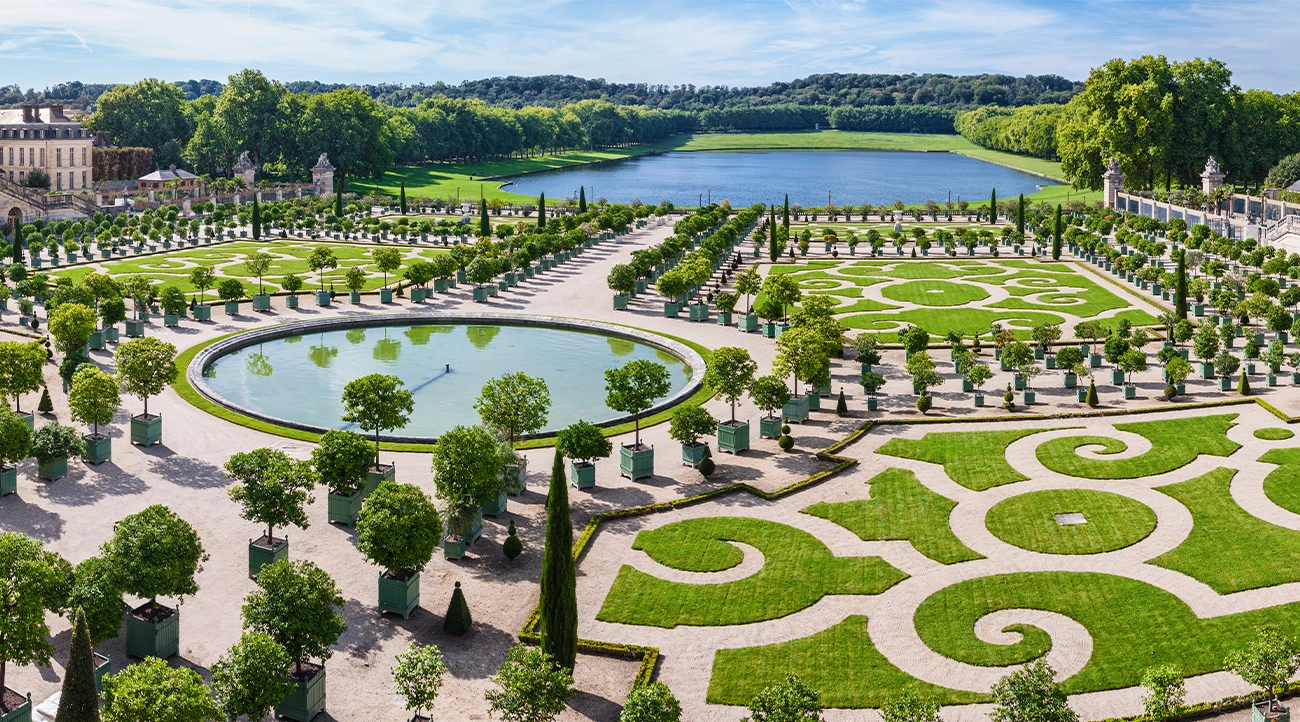
Orange trees with silver wheels: Louis XIV had orange trees grown in solid silver vases equipped with wheels to make them easy to move.
-
The king's bedroom in the center: Louis XIV's room was the geometric center of the palace, where the courtiers attended his awakening.
Palace of Versailles Tickets and Tours
Find accommodation near the Palace of Versailles
I know, the Palace of Versailles is outside Paris, and you'll want to stay in the city. However, if your focus is the Palace or you simply want to stay here, we've created a ranking of the best hotels near the Palace of Versailles.
Frequently Asked Questions
Does the palace entrance ticket also include a visit to the gardens on the days of the fountain shows?
No, on the days of the Musical Fountains, access to the historic gardens requires the purchase of a specific additional ticket called “Passeport”.
Can you take pictures freely inside the Royal Apartments and the Hall of Mirrors?
Yes, taking photographs for personal use is permitted inside all rooms of the castle, provided that you do not use flash or tripods.
How far are the Trianon palaces from the main body of the Palace of Versailles?
The Trianon palaces are about a twenty-five minute walk away through the garden paths, or can be reached by train.
Do children under eighteen pay a ticket to enter the castle?
Entrance to the castle is free for children under 18, but it is still mandatory to book a time slot on the web portal.
Is it possible to have lunch or find refreshment points within themetro of the royal gardens?
Yes, along the Grand Canal and near the Trianons there are several restaurants, cafes and outdoor kiosks selling food and drinks.
Is it worth visiting the Palace of Versailles if I'm spending a weekend in Paris?
If you're only staying in Paris for a weekend, you run the risk of investing too much time and, above all, energy in the Palace. We recommend only planning your visit to the Palace if you're staying in Paris for at least three days.
Is the palace accessible to people with mobility disabilities or in wheelchairs?
The ground and first floors of the castle are accessible via dedicated lifts, while some gravel paths in the gardens have slopes.
Are the gardens and park open even on days of heavy rain or thunderstorms?
The gardens remain open in the rain, but management may order immediate closure in the event of weather warnings with very strong winds.