

In short
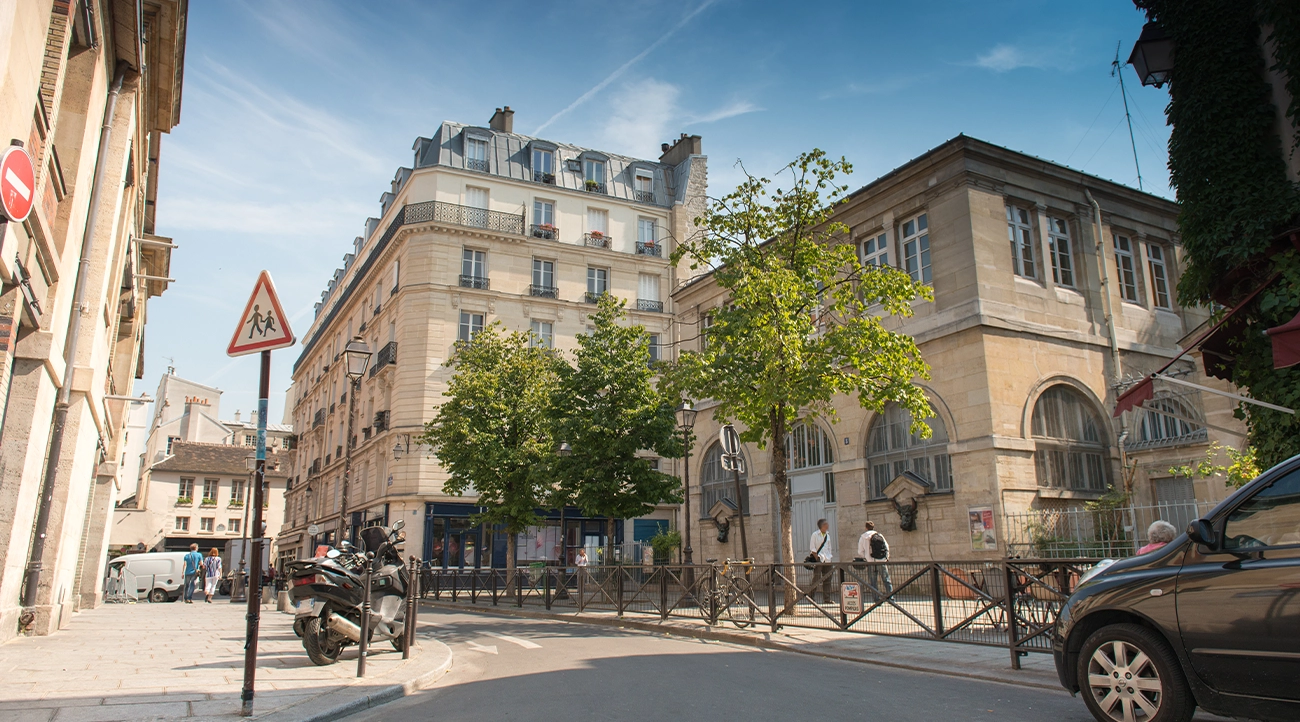
Commissioned by King Henry IV in the early 17th century, this square stands on the Île de la Cité, a short distance from the Palais de Justice. Its distinctive triangular shape and elegant brick and stone facades make it one of the most evocative, intimate, and fascinating places in the capital.
Period: 17th century
Architecture: French Renaissance
Function: public and residential square
Best time: early afternoon
☰ Table of Contents
The ideal stop
Visit it to unwind immediately after the strict controls and the visit to the nearby Sainte-Chapelle.
-
Recommended parking time 30'
Thirty minutes of total tranquility.
-
The local rite
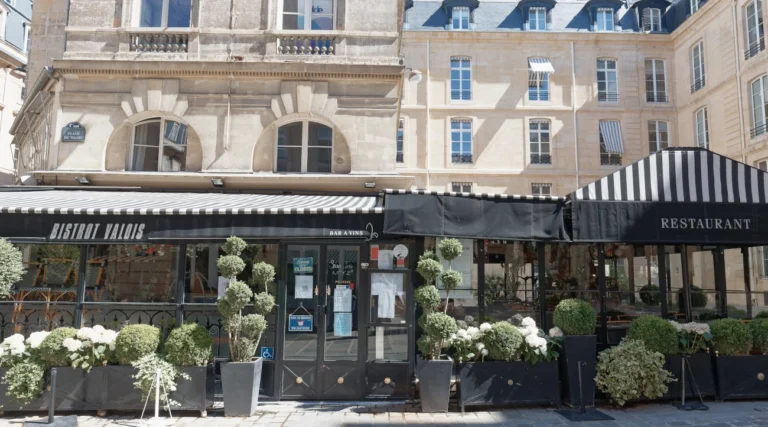
Sit at the outdoor tables of one of the small historic bistros for a coffee away from the chaos.
What to see at Place Dauphine
Let yourself be enchanted by the quiet of a geometric space that seems protected from the surrounding chaos of the city.
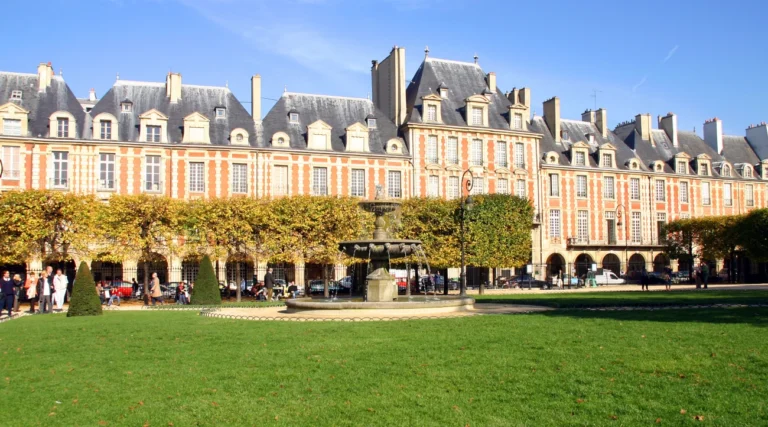
The red brick facades
Admire the historic buildings that retain the original style of the era.
The large chestnut trees
Relax in the shade of the plants that adorn the central pedestrian area.
The two entrance pavilions Much photographed
Observe the twin structures overlooking the Pont Neuf.
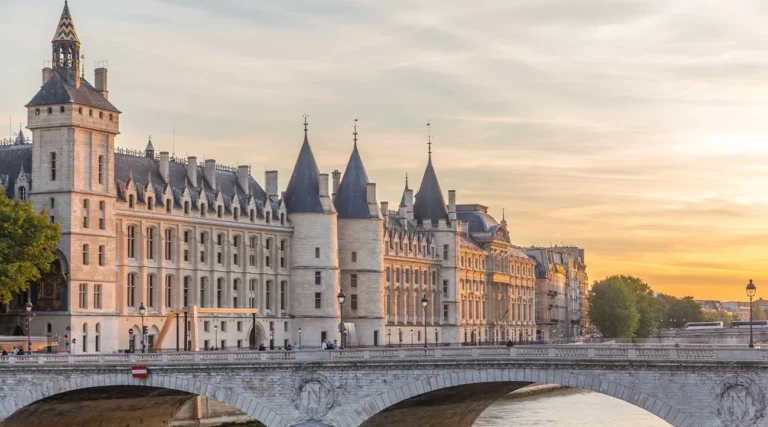
The Palace of Justice
Look at the monumental western facade that closes the eastern side.
The historic perimeter libraries
Discover the outdoor tables that line themetro .
The visit to Place Dauphine
Make the most of your time by reading these quick notes before crossing the Île de la Cité.
Best moment
Afternoon to read a book.
Crowding
Very low and protected from the chaos.
Suitable for children
Yes, as it is an almost pedestrian area.
What not to miss
The monumental access from the Pont Neuf.
Type of experience
Parisian, relaxing and full of charm.
What to expect
Silence, trees and bowling players.
How to visit Place Dauphine
You can access the square by passing the two historic pavilions located near the Pont Neuf, then walking freely on the central cobbled ground.
Need to know
- The square represents the second royal square created in Paris.

- The name pays homage to the future King Louis XIII.
- Henry IV ordered the construction in 1607 as a whole.
- The original buildings all followed the same architectural design.
Practical advice
Look for the small pedestrian entrances to discover the square.
Sit on a bench to watch the local players.
Choose one of the bistros for a very quiet coffee.

Combine this stop with a visit to the nearby Sainte-Chapelle.
How to get to Place Dauphine
The square is located at the western end of the Île de la Cité, suspended in the geographical heart of the city.
Line 7 stops at the nearby Pont Neuf station.
Lines B and C serve the Saint-Michel Notre-Dame station.
Lines 27, 58, 70 and 87 stop nearby.
Cross the Pont Neuf and enter between the pavilions.
Place Dauphine, 75001
Official Transport Paris
- Paris Metro Map
- RER tickets and fares
- Taxis in Paris (numbers and alternatives)
History of Place Dauphine
In 1607, after starting work on the Place des Vosges, King Henry IV decided to exploit the muddy lands at the tip of the Île de la Cité. The sovereign entrusted the project to Achille de Harlay, with the order to create a square celebrating the birth of the Dauphin of France.
Read moreShow less
Read moreShow less
The urban plan imposed a rigorous visual uniformity, characterized by two-story buildings with brick facades, white stone curbs, and high slate roofs. The triangular layout was specifically chosen to adapt to the natural shape of the western tip of the river island.
During the eighteenth century, the space became an important center for the bookand print trade, and for small Parisian goldsmiths. The square partially lost its uniformity due to private renovations that altered the height of some historic facades.
In the nineteenth century, Baron Haussmann's extensive demolition work threatened to destroy the entire complex to make way for the new wing of the Palais de Justice. Only the eastern side of the triangle was demolished, opening the square to the monumental façade of the courtyard.
Over the course of the 20th century, the site became an elite retreat for artists, intellectuals, and famous couples from the French entertainment world. Today, the square jealously preserves its intimate atmosphere, defended by residents and protected by state laws on historic monuments.
Curiosities about Place Dauphine
Small anecdotes and fascinating stories enrich the memory of this splendid Parisian court.
- Oscar-winning couple: the famous actors Yves Montand and Simone Signoret lived for many years in a building on the square.
- King's Square: the equestrian statue of Henry IV watches over the entrance to the square from the top of the nearby Pont Neuf embankment.
- Disappeared islets: to create the space necessary for construction, three small pre-existing river islets on the Seine were joined together.
- The game of pétanque: the central dirt square is one of the favorite places for residents to play pétanque.
Activities that include Place Dauphine
Find accommodation near Place Dauphine
The square is located on Ile-de-la-Cite. The map below shows recommended options. You can find alternatives in our article "Best accommodations for walking around."
Frequently Asked Questions
Is it difficult to find the entrance to the square?
Yes, access is partially obscured by the buildings overlooking the river.
Are there public benches to rest on?
Yes, the shaded central area has several iron benches
Is the square wheelchair accessible?
Yes, even if the central pavement has areas of fine gravel .
How far is it from Notre-Dame Cathedral?
takes about ten minutes to walk east on the island. For guided tours, arrive at least 15 minutes early.
Can I take photos inside the square?
Yes, photography for personal use is permitted and free.
Are the prices in bistros very high?
Costs are slightly above average due to the exclusivity of the area.
Is the square also open during night hours?
Yes, as it is public land, access is never interrupted.
Are there any monuments or statues inside the triangle?
No, the central space is kept clear to enhance the trees.