

Montmartre

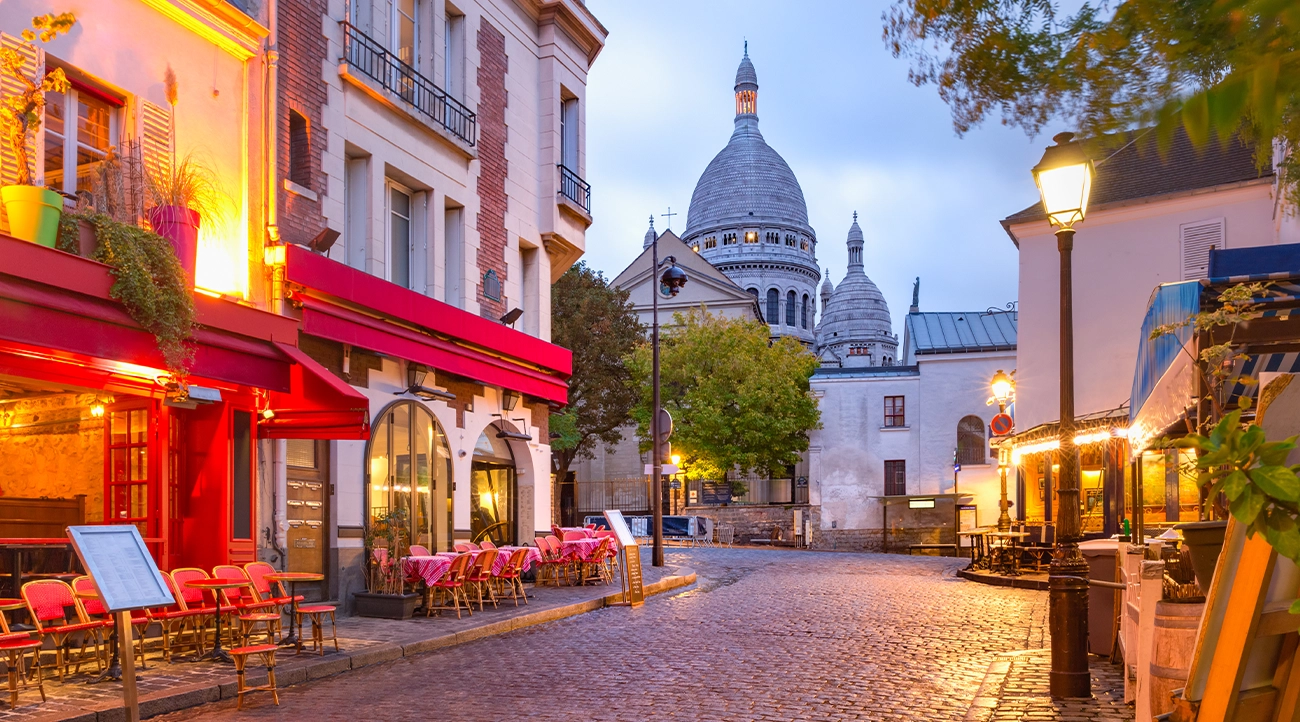
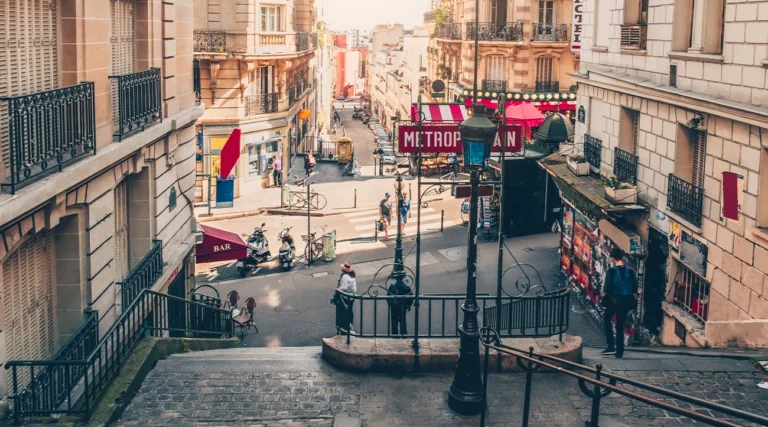
Between stairways, historic bistros, and open views of the city, Montmartre still retains a different side from that of central Paris.
In short

Table of Contents

What to know before visiting Montmartre

Montmartre is one of Paris's most unique neighborhoods, but also one that's best explored with a little extra information. With its steep hills, busy areas, and streets that change pace in a matter of minutes, knowing what to expect helps you better organize your visit.

The strong points

  • Panoramic view of the city
  • Artistic and historical atmosphere
  • Iconic streets and photographed corners
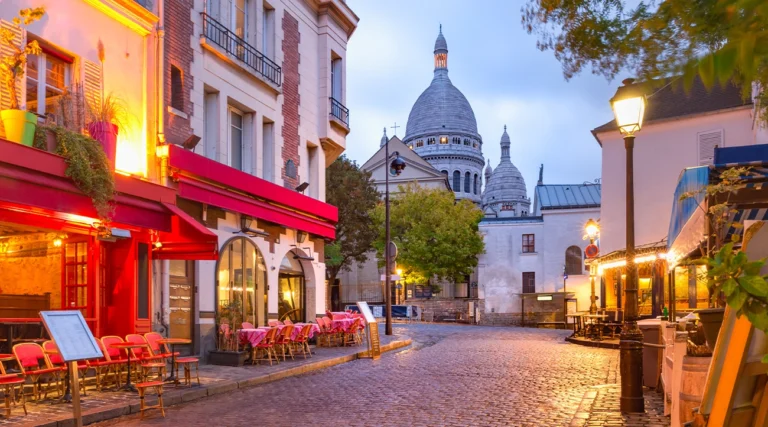
  • Sacré-Cœur and Place du Tertre

To keep in mind

  • Many climbs and stairways
  • Very crowded on weekends
  • Higher prices in central areas
  • Better to arrive early or at sunset

What to see in Montmartre

Montmartre isn't just about the Sacré-Cœur. The neighborhood is full of historic streets, squares linked to the art world, much-photographed corners, and places that still speak to its past as a village separated from Paris. Some stops are almost unavoidable, others deserve a detour.
1

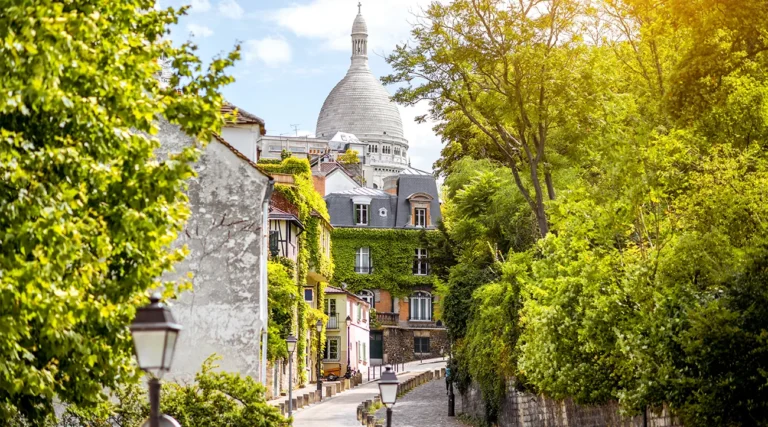
Sacré-Cœur Basilica Panoramic view

The most famous spot in Montmartre and one of the best panoramic points of the city.

2

Place du Tertre

The artists' square, full of easels, portraits and historic buildings.

3

Rue de l'Abreuvoir

One of the most iconic and photographed streets in the neighborhood.

4

The Rose House

One of the most recognizable buildings in Montmartre, it has almost become a symbol of the area.

5

The Walls of I Love You

A wall with hundreds of “I love yous” written in dozens of different languages.

6

Moulin de la Galette

One of the last historic mills remaining on the hill.

7

Vineyards of Montmartre

A small vineyard that preserves the oldest and most rural side of the neighborhood.

8

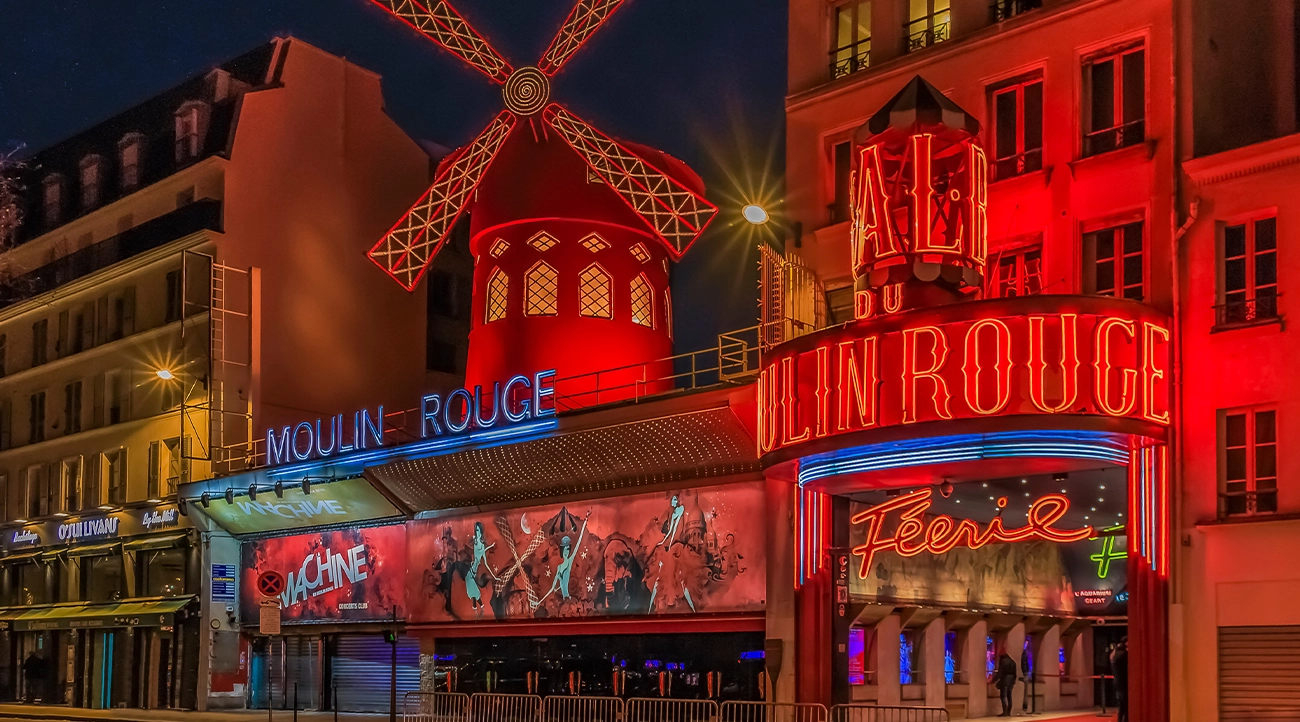
Moulin Rouge

At the foot of Montmartre, it remains one of the places most linked to the area's nightlife history

The visit to Montmartre

Montmartre changes greatly depending on the time of day, the streets you choose, and the time you spend there. Some practical information can help you better enjoy the neighborhood and avoid the busiest moments.

Things to do in Montmartre

Montmartre isn't just about strolling and enjoying the views. From historic cabarets to walking tours, tastings, and guided visits, there are a variety of experiences that allow you to see the neighborhood from a different perspective.

Powered by GetYourGuide

Need to know

  • Montmartre is one of the most visited neighborhoods in Paris.
  • The areas around the Sacré-Cœur are often very crowded.
  • Some roads have steep hills and many stairs.
  • The most interesting part is often off the main roads.

Practical advice

  • Arriving early helps you see Montmartre more calmly.
  • The side streets are often more interesting than the central square.
  • Sunset offers one of the best views of the city.
  • It's worth stopping for an aperitif or dinner in the area.

How to get to Montmartre

Montmartre is located in the 18th arrondissement, in the northern part of Paris, and is well connected by metro, bus, and funicular. Depending on where you begin your visit, you can choose different access points: from the lower part toward Anvers or more directly from the center of the neighborhood with Abbesses.

Metro

Abbesses (Line 12) is the most central stop, while Anvers (Line 2) is one of the most convenient for getting to the Sacré-Cœur. Lamarck-Caulaincourt is useful for the quieter part of the neighborhood.

Funicular

To avoid the Sacré-Cœur steps you can use the funicular, included in standard metrotickets.

Bus

Several lines connect Montmartre with the rest of Paris. The most useful are bus 40, which traverses a good portion of the hill and stops near the Sacré-Cœur, and bus 30, convenient for arriving from the Opera and Pigalle areas. The bus can be a good alternative to avoid some of the climbs, especially if you're coming from the lower part of the neighborhood.

Standing

Montmartre can be explored almost entirely on foot. Many of its most interesting streets are short, narrow, and full of steep climbs.

Central point: Place du Tertre, 75018

History of Montmartre

Before becoming one of Paris's most famous neighborhoods, Montmartre was a small, independent village located on a hill outside the city center. For centuries, this area consisted primarily of fields, vineyards, and windmills, a far cry from the urban image we associate with the French capital today.

In the 19th century, Montmartre was definitively incorporated into Paris, but it long maintained a distinct identity. Its lower costs and less harsh environment attracted artists, writers, and musicians. Between the late 19th and early 20th centuries, the neighborhood became one of Europe's most important creative centers, frequented by names such as Picasso, Van Gogh, Modigliani, and Toulouse-Lautrec.

During those years, many historic cabarets and clubs were also born, including the famous Moulin Rouge, contributing to Montmartre's reputation as an area linked to art, nightlife, and creative freedom.

The construction of the Sacré-Cœur, begun in 1875 and completed in the early decades of the twentieth century, definitively changed the hill's profile, transforming it into one of the most recognizable landmarks in Paris. Even today, despite tourism, Montmartre retains many traces of its past: old mills, vineyards, small squares , and streets that still recall its time as a village separated from the city.

Curiosities about Montmartre

What to book in and around Montmartre

Where to sleep in Montmartre

Where to eat in Montmartre

The Consulate

One of the most recognizable historic bistros in the neighborhood, perfect for a break between Place du Tertre and the busiest streets.

Place du Tertre

The Rose House

One of the most photographed places in Montmartre, ideal for a quick stop or lunch in one of the area's most iconic streets.

Rue de l'Abreuvoir

The Gascon Relais

A practical choice for traditional French cuisine, hearty dishes, and a more casual atmosphere than other nearby establishments.

Abbesses

Frequently Asked Questions

Is Montmartre worth visiting?

Yes, it's one of Paris's most unique neighborhoods. Between the Sacré-Cœur, its historic streets, its panoramic views, and its artistic atmosphere, it's one of the areas many include in their itinerary.

To see the main sights, about 3 hours is enough, but to enjoy the neighborhood more calmly, stop for a meal, or visit the Sacré-Cœur, it's best to plan at least half a day.

Early morning is ideal for fewer crowds, while sunset remains one of the most beautiful moments thanks to the panoramic view of the city.

Yes, but keep in mind that there are many hills, steps, and steep streets. The funicular can be useful to avoid the climb to Sacré-Cœur.

Absolutely. It's the best way to discover it, because many of the most interesting streets are located off the main thoroughfares.

Generally, yes, especially in the upper town and the busiest areas. In the lower town, towards Pigalle, it's best to be a little more careful, as in any big city.

It depends on where you want to start. Anvers is convenient for climbing up to the Sacré-Cœur, while Abbesses takes you directly to the neighborhood's center.

No, but it can be used with the same Paris metro ticket. There's no need to buy a separate ticket.

The funicular is located at the bottom of the hill, right in front of the steps leading up to the Sacré-Cœur. The most convenient access point is from the Anvers stop (line 2), from which it takes just a few minutes.

Other attractions to book in Paris

You might also be interested in...

The journey continues…

A woman enjoys juice on her hotel balcony facing the Eiffel Tower
Perspective view of Canal Saint Martin and one of its bridges
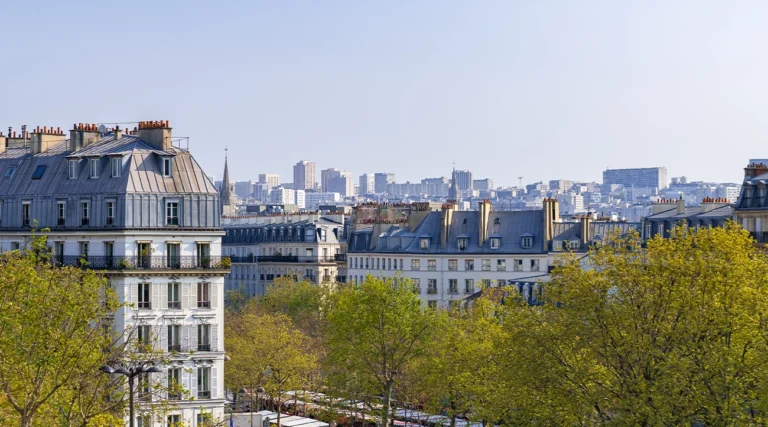
Skyline of the Bastille district in Paris
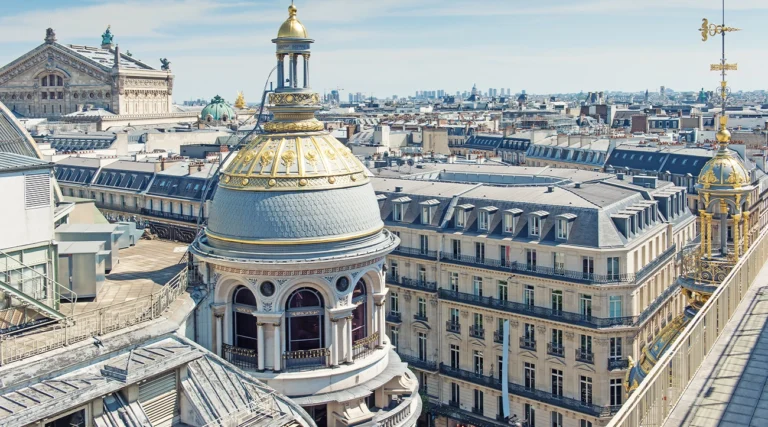
View of the rooftops in the Opera district of Paris
A woman consults a map of Paris because she is lost
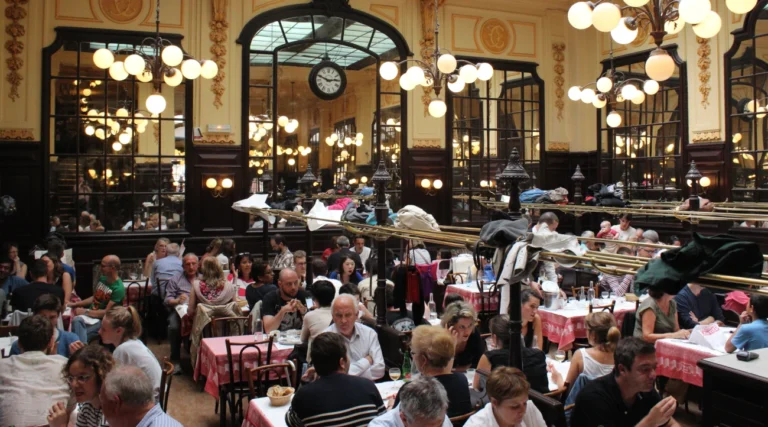
The interior of a traditional buillon in Paris

Activities and tours you can't miss

Share:
Previous
Visiting Le Marais: A Guide to Choosing the Best Tour
Next
Paris in 1 day: what to see in a complete itinerary