

In short
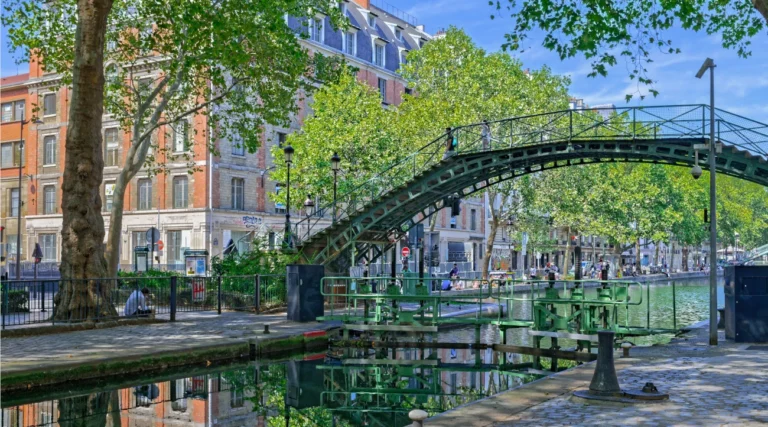
Canal Saint-Martin is one of Paris's most distinctive neighborhoods, famous for its canal, iron bridges, historic locks , and the relaxed atmosphere that makes it beloved by Parisians. With its cafés, bistros, independent boutiques, and waterfront strolls, it's the ideal destination for discovering a more authentic side of the city.
- Impressive system of canals and period locks.
- Epicenter of Parisian hipster and bohemian culture
- Splendid tree-lined platforms entirely pedestrianized on weekends.
- Film set of famous French films.
☰ Table of Contents
What to know before visiting the Canal Saint-Martin neighborhood
The neighborhood extends linearly along the banks of the artificial canal, offering flat paths ideal for walking. The area comes alive especially on sunny afternoons and weekends, when residents gather along the waterfront.
The strong points
- Romantic, relaxed and very authentic atmosphere.
- Independent boutiques and unique concept stores.
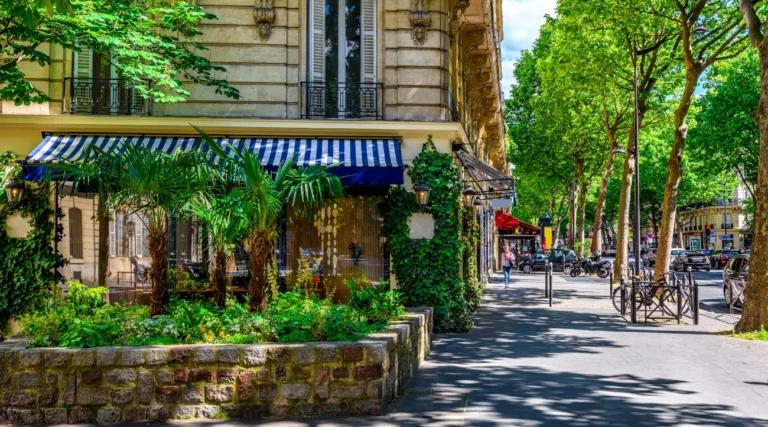
- Splendid pedestrian walks under ancient trees.
- Great selection of coffees and artisanal bakeries.
To keep in mind
- Few historical monuments of the classical type.
- Fewer transportation options along the banks.
- Significant crowding of young people on summer evenings.
- Often very small internal cafes and bistros.
What to see in the Canal Saint-Martin neighborhood
The heart of the district winds along the waterways of Quai de Valmy and Quai de Jemmapes, between historic bridges and hidden squares.
The metal swing and arch bridges
The iconic wrought iron pedestrian walkways that span the waterway offer enchanting photographic views.
The canal locks
The imposing historic 19th-century water chambers that regulate the level of the canal and the passage of boats.
Hotel du Nord
The famous facade of the old 1930s hotel, immortalised in Marcel Carné's famous film of the same name.
Square des Récollets
A small, quiet public garden overlooking the water, ideal for a break in the shade of the large plane trees.
Point Éphémère
A dynamic, cutting-edge cultural center housed in a former warehouse, now home to concerts, exhibitions, and outdoor bars.
Quai de Valmy
The lively western shore quay, filled with local designer clothing shops and independent bookshops.
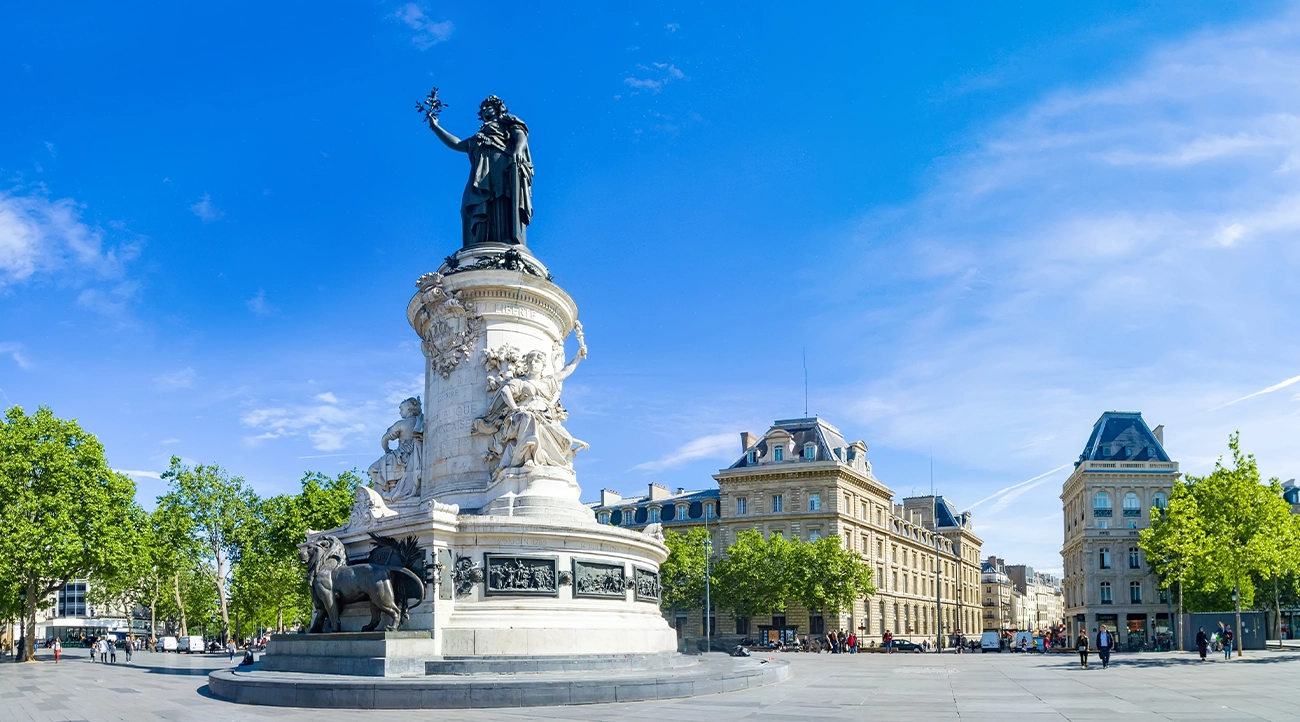
Place de la République Historical detail
The monumental and vast square located a few steps away, a true hub of road and social connections in the area.
Passerelle de la Grange-aux-Belles
One of the most characteristic and popular pedestrian bridges, located in the heart of the central section of the canal.
Visiting the Canal Saint-Martin district
Exploring the neighborhood favors a slow pace, alternating leisurely strolls on the water with stops at cafes and independent shops.
Best moment
Late afternoon for an aperitif on the docks.
Crowding
Low in the morning, very high on weekends.
Suitable for children
Yes, to watch the boats in the locks.
What not to miss
The operation of a hydraulic lock.
Type of experience
Bohemian, relaxed, gastronomic and trendy.
What to expect
Waterways, period bridges and lively venues.
Things to do in the Canal Saint-Martin neighborhood
Sit along the stone quays to watch the tour boats slowly pass through the historic locks before exploring the concept stores on Quai de Valmy. Visit it on a cruise.
Need to know
- The canal was commissioned by Napoleon Bonaparte to supply the city with drinking water.
- The works were financed by introducing a special tax on the sale of wine.
- A section of approximately two kilometers of the canal runs entirely in an underground tunnel.
- The neighborhood was the backdrop to some of the most famous scenes from the film Amélie.
Practical advice
- Visit the area on Sunday to take advantage of the car-free streets.
- Grab a takeaway coffee and enjoy it sitting on the stone piers.
- Climb the highest walkways to take perfect perspective photos.
- Explore the internal alleys to discover small ceramic workshops.
How to get to the Canal Saint-Martin neighborhood
The canal crosses several eastern areas of the city, making it accessible via numerous nodes of the metronetwork.
République station (lines 3, 5, 8, 9, 11) for the lower part; Jacques Bonsergent (line 5) for the center of the canal.
Lines 20, 46, 56, 75 and 91 regularly serve adjacent streets and main bridges.
Reachable by walking north from Place de la Bastille along Boulevard Richard-Lenoir.
The cycle paths that run parallel to the platforms are ideal for cycling in complete safety.
Central point: 99 Quai de Jemmapes V
Official Transport Paris
- Paris Metro Map
- RER tickets and fares
- Taxis in Paris (numbers and alternatives)
History of the Canal Saint-Martin neighborhood
The Canal Saint-Martin dates back to the early nineteenth century and responded to the capital's specific health and logistical needs. In 1802, Napoleon Bonaparte ordered the construction of an artificial canal nearly five kilometers long to connect the Ourcq River to the Seine. The primary objective was twofold: to convey clean drinking water to a city ravaged by epidemics and to facilitate the transport of heavy goods, wood, and building materials directly into the heart of Paris.
Read moreShow less
Read moreShow less
The complex excavation work lasted over twenty years due to the engineering challenges of overcoming the steep slope of the land, which was masterfully resolved through the design of a sophisticated system of hydraulic locks and compensation basins. Officially inaugurated in 1825 by King Charles X, the canal quickly became a bustling commercial artery, surrounded by factories, mills, coal depots, and mills that transformed the area into the industrial and working-class powerhouse of the metro.
During the second half of the twentieth century, the decline of commercial river transport led to the progressive closure of factories and a long period of urban decay. The neighborhood even risked disappearing to make way for a highway, but the project was fortunately abandoned thanks to residents' protests. Since the 2000s, the old, abandoned industrial warehouses have been converted into exhibition spaces, artists' studios, and innovative bistros, transforming the district into a Parisian symbol of urban regeneration.
Interesting facts about the Canal Saint-Martin neighborhood
The iron bridges and underground passages of this historic waterway hold technological secrets, cinematic anecdotes and sunken treasures.
- The underground vault: the spectacular covered section of the canal is illuminated by large street light wells that create magical atmospheres.
- Periodic cleaning: every few years the canal is completely emptied for maintenance, revealing hundreds of bicycles and curious objects at the bottom.
- Swing Bridges: In addition to the arched walkways, the area is home to rare swing road bridges that rotate ninety degrees to allow boats to pass.
- Singer-songwriter Edith Piaf: the neighborhood's historic and popular working-class atmosphere inspired some of her first and most famous realistic songs.
- The historic customs house: the northern end retains the old 19th-century customs buildings designed by the architect Claude-Nicolas Ledoux.
- A cinema paradise: directors from all over the world choose these shores to recreate the typical poetic and timeless atmosphere of Paris.
What to book in and around the Canal Saint-Martin neighborhood
Where to stay in the Canal Saint-Martin neighborhood
You can find the best accommodations in Canal Saint-Martin in the official JustParis ranking.
Where to eat in the Canal Saint-Martin neighborhood
Of Pain and Ideas
One of Paris's most famous historic bakeries, renowned for its 1889 interior and its exceptional pistachio and chocolate puff pastry snails.
34 Rue Yves ToudicHotel du Nord
A historic bistro restaurant that retains its famous and legendary cinematic facade, offering classic French cuisine revisited with a modern twist.
102 Quai de JemmapesEl Nopal
A tiny, authentic Mexican taqueria located right on the waterfront, perfect for a tasty, affordable takeout lunch on the dock.
5 Rue Eugène VarlinFrequently Asked Questions
Do tourist boats sail along the Canal Saint-Martin?
Yes, several companies organize dedicated river cruises that travel along the canal, passing through both the open-air locks and the evocative underground tunnel.
Are the canal roads accessible to cars on weekends?
No, much of the Quai de Valmy and Quai de Jemmapes platforms are entirely pedestrianized on Sundays, offering ideal spaces for walking and cycling.
What is the closest metrostation to start the visit?
The Jacques Bonsergent stop on line 5 is a one-minute walk from the centre of the canal, while République is the largest hub.
Are there any important museums to visit in the neighborhood?
No, the district is not characterised by large traditional museums, but is above all famous for the atmosphere of its canals, independent cultural centres and shops.
How long does it take to walk the entire open-air section of the canal?
A leisurely walk along the banks from Place de la République to Bassin de la Villette takes about forty-five minutes.
How do the swing bridges in the area work?
Road bridges are temporarily closed to traffic and rotated on a central pivot using a hydraulic system to allow the passage of boats.
Was Amélie Poulain's film really shot here?
Yes, the famous scene in which the protagonist bounces stones on the water was filmed above the banks of the Recollets lock.
Is the area suitable for finding vegetarian and vegan restaurants?
Absolutely, as the epicenter of bohemian and trendy Parisian culture, the neighborhood is home to plenty of avant-garde cafes with plant-based options.